When to Bake with Sourdough Starter: A Practical Timing Guide
Learn precise timing cues for sourdough starters, from readiness signs to final bake. Practical steps, troubleshooting, and expert tips from Bake In Oven.


Timing sourdough baking hinges on starter activity, temperature, and the recipe you follow. This quick answer helps you decide when to bake, read visual cues like doubling and aroma, and make small timing adjustments for warm or cool environments. You’ll get practical steps, common pitfalls, and benchmarks you can rely on from Bake In Oven.
Why timing matters when baking with sourdough starter
According to Bake In Oven, timing matters because sourdough flavor, texture, and crumb arise from a sequence of fermentation steps that must align with your environment and recipe. A starter that is too young or too exhausted will underperform, while overactive dough can overproof and collapse. The goal is to synchronize feeder schedules, dough development, and oven readiness so the loaf has a light, open crumb and pronounced aroma.
In practice, you’ll rely on visual cues: the starter should at least double in volume after a feeding, the surface should be bouncy, and the bubbles should form rings. The dough bulk should show a gentle rise with signs of gas retention, and the aroma should be pleasantly tangy rather than sour or dull. Temperature matters: warmer rooms speed fermentation; cooler rooms slow it. Hydration and flour type also influence timing, because higher hydration dough expands faster and requires gentler handling to avoid over-extending fermentation. Bake In Oven’s experiments with common home ovens show that consistent timing is less about clock hours and more about reading the dough and starter through their active stages.
Understanding your starter: activity, hydration, and flavor
Reading your starter means tracking activity, hydration, and flavor. Activity is the rise and fizz after feeding; hydration refers to the water-to-flour ratio in the starter; flavor ranges from mild to sharp depending on refresh frequency. A bubbly, foamy starter that has recently peaked is typically ready to begin dough mixing; if it’s sluggish or has an acidic, vinegary note, it may benefit from another refresh. Bake In Oven team notes that hydration influences how fast dough expands after mixing; stiffer starters develop slower but can yield tighter crumb, while wetter starters promote more open crumb. Consistency matters—feed on a regular schedule and maintain stable temperatures for repeatable timing. By tracking behavior across several feed cycles, you’ll gain practical readiness that’s more reliable than any single timer.
The timing cues: when to bake by starter stage
Timing your bake starts with the starter’s readiness and the dough’s development. The core cues to watch are: the starter doubles in volume and feels buoyant; it passes a float test (gently float in water and observe it rise to the surface); the surface shows an airy, patterned texture with visible gas; the aroma is tangy and inviting rather than alcoholic. Then, assess the dough: after mixing, the bulk should show a steady rise and a tapestry of bubbles; the dough should feel aerated but not overly slack. Finally, align these signs with your recipe’s expected fermentation window. The goal is to enter the oven when the dough can hold its shape and spring back when poked lightly.
Temperature and environment: how heat influences timing
Environment plays a crucial role. Warmer rooms speed fermentation, cooler rooms slow it. If your kitchen runs hot, expect faster development and shorter proofs; if it’s cool, you may need a longer bulk fermentation and extended final proof. Retarding fermentation with a fridge is a common tactic for busy schedules, but it shifts timing to overnight windows. Humidity also matters: higher humidity can soften dough surfaces and slightly alter expansion. A reliable room thermometer helps you track conditions, while an oven thermometer ensures you hit the target bake temperature. The aim is to keep fermentation within a flexible window rather than a rigid clock, so you can respond to the signs the dough and starter provide.
Scheduling your bake around feed times
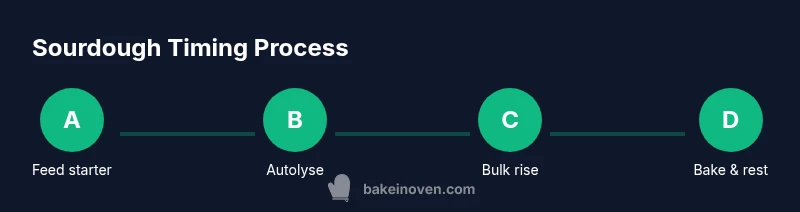
A practical approach is to plan your bake around your starter’s feeding schedule. Refresh the starter at a convenient time, then build your dough within a window when the starter shows peak activity. If you need to bake later, consider a fridge-retard option to stretch time without rushing the dough through critical stages. When planning, map out the major milestones—autolyse, starter integration, bulk fermentation, shaping, final proof, and bake—so you have a clear timeline that adapts to real-time cues rather than fixed hours.
Practical recipe timing: example schedules
Scenario A: Warm kitchen (around typical room temperature). Morning: refresh starter and let it become active. Midday: mix dough and run autolyse for 20-40 minutes. Bulk fermentation with gentle folds for 2-4 hours. Shape and begin final proof for 60-90 minutes. Preheat oven with steam, bake 30-40 minutes, then cool on a rack. Scenario B: Cooler kitchen with fridge retard. Evening: refresh starter and refrigerate dough after initial mixing. Overnight bulk fermentation with occasional folds. Early morning: shape, proof, and bake; allow dough to cool completely before slicing. These schedules illustrate how to align your bake with your household, not just the clock.
Common mistakes and how to fix timing issues
Overproofing typically results in dough that collapses before baking; adjust by shortening the final proof or refrigerating earlier. Underproofing yields a dense crumb and a tight inside with insufficient oven spring; extend bulk fermentation and proof, and ensure adequate warmth. Excessively aggressive fermentation can produce off flavors or a sour profile; mitigate by adjusting hydration or feed frequency. If temperatures shift unexpectedly, rely on visual cues rather than time-based targets. Finally, inconsistent starter vigor can throw off timing; maintain a stable feeding schedule and proper storage conditions to keep timing predictable.
Tools and techniques to monitor progress
Use a kitchen scale for precise measurements and a timer to track feeding and dough development. The float test is a quick diagnostic: drop a small amount of batter or starter into room-temperature water and observe buoyancy. Look for a domed loaf when baked, even coloring, and a hollow sound when tapped. A Dutch oven or cloche creates steam for a better oven spring. A thermometer helps verify dough temperature during bulk fermentation, while a bakers’ bench knife or dough scraper makes handling easier. Practice makes timing: log your results and refine your timing windows over several bakes.
Authoritative sources
- https://extension.oregonstate.edu
- https://extension.illinois.edu
- https://www.usda.gov
These sources provide foundational baking guidance and fermentation principles that support practical sourdough timing in home kitchens. Remember that real-world timing varies with flour, hydration, and environment; use these references to inform your own observations and schedules.
Tools & Materials
- Active sourdough starter(Refresh 6–12 hours before you start, depending on schedule.)
- Bread flour (or all-purpose)(Provide enough for the dough plus a small reserve.)
- Water(Cold or room-temperature water; adjust temperature for desired dough feel.)
- Digital kitchen scale(For precise hydration and ingredient ratios.)
- Large mixing bowl(Prefer a roomy bowl to allow for expansion.)
- Dough scraper(Helpful for folding and scraping.)
- Bench knife / lame(For shaping and scoring.)
- Proofing baskets (bannetons)(Gives structure during final proof.)
- Parchment paper(Lined or as a sling for transferring dough.)
- Oven thermometer(Pre-check oven accuracy before bake.)
- Dutch oven or cloche(Creates steam for oven spring.)
- Kitchen towels(Keep dough warm and tidy during proof.)
Steps
Estimated time: 6-9 hours
- 1
Refresh and prepare starter
Feed your starter according to your usual schedule and let it become active. This step ensures a strong lift and predictable timing for the dough to follow.
Tip: Use a thermometer to monitor room temperature; aim for a stable environment. - 2
Autolyse and mix
Combine flour and water; allow the mixture to rest 20–40 minutes to hydrate flour fully before adding starter and salt.
Tip: Autolyse helps develop gluten with minimal kneading and sets up better structure. - 3
Incorporate starter and salt
Add the active starter and salt to the dough, mixing until evenly distributed. The dough should feel cohesive but not stiff.
Tip: Use a gentle folding motion to integrate without tearing gluten. - 4
Bulk fermentation with folds
Let the dough ferment, performing a series of stretch-and-folds every 30–60 minutes for the first 2–3 hours.
Tip: Keep the dough in a warm spot but not hot; avoid overheating. - 5
Assess bulk progress
Check for a light rise, visible bubbles, and a slight jiggle when the container is moved.
Tip: If the dough is “pockety” or too loose, give it another fold before continuing. - 6
Shape dough
Turn dough onto a floured surface, shape into a tight boule or batard, and transfer to a proofing basket.
Tip: Tight shaping controls oven spring and crumb structure. - 7
Final proof and preheat
Proof dough until it holds its shape when gently pressed and looks slightly domed. Preheat the oven with a covered vessel for steam.
Tip: Avoid over-proofing; stay near the upper end of your window for ideal volume. - 8
Bake and cool
Bake with steam, then remove the lid to finish crust development. Cool completely on a rack before slicing.
Tip: Crumb develops further as the loaf cools; resist the urge to cut early.
Frequently Asked Questions
When should I bake after feeding my sourdough starter?
Bake when the starter has visibly risen, is bubbly, and passes the float test, then align with your dough’s fermentation window. Rely on signs rather than a strict timer for best results.
Bake when your starter is lively and buoyant, with visible bubbles and a positive float test. Use signs from your dough to time the bake.
How do temperature and environment affect timing?
Warmer environments speed fermentation while cooler ones slow it. Adjust bulk fermentation and final proof to the conditions, rather than forcing a fixed schedule.
Heat speeds things up; cool slows it down. Let the dough tell you when it's ready.
Can I bake with a starter that isn’t at peak activity?
You can, but results may vary: the loaf could be denser or rise less. Optimize by shortening proofs or using a slightly cooler environment to regain balance.
It's possible, but you might get denser results. Tweak proofs and environment if needed.
What are signs my dough is ready to bake?
The dough should hold shape, feel airy but not slack, and show some spring when poked gently. The aroma should be pleasant and tangy, not overly sour.
Dough should hold shape and spring back a little when poked; aroma should be inviting.
How can I plan baking around a busy schedule?
Use fridge retardation to slow fermentation, then bake when convenient. Mapping the stages (autolyse, bulk, shaping, final proof) helps you adapt to a busy day.
Retard fermentation in the fridge if needed, then bake when you have time.
What if my loaf has poor oven spring?
Check timing of bulk fermentation and final proof, ensure proper hydration, and ensure your oven is hot enough with steam at the start. Adjust shaping tension for better lift.
If the loaf lacks lift, adjust proofing and oven conditions and try again.
Watch Video
Key Takeaways
- Plan around starter activity and environment, not just clock time.
- Read signs: doubling starter, float test, and dough puff inform readiness.
- Control temperature to balance speed and flavor development.
- Document results to improve consistency over time.