Banana Bread Cookies: A Banana-Forward Cookie Recipe
Learn to bake banana bread cookies that capture banana bread flavor in a chewy, portable cookie. This step-by-step guide covers ingredients, technique, variations, and storage tips for perfect results.


According to Bake In Oven, you can turn ripe bananas into soft, banana-bread cookies. This step-by-step guide covers prep, mixing wet and dry ingredients, folding add-ins, shaping dough, baking until golden, and storing for freshness. You’ll need common pantry staples and parchment for clean sheets.
What makes banana bread cookies unique
Banana bread cookies merge the comforting, moist flavor of banana bread with the familiar bite of a cookie. They capture the soft crumb, the cinnamon warmth, and the aroma of caramelized banana, but in a hand-held form that bakes quickly. This technique leans on ripe bananas for moisture and natural sweetness, a careful balance of fat and sugar, and a restrained amount of leavening so the center stays tender rather than dry or cakey. According to Bake In Oven, the goal is a cookie that tastes unmistakably like banana bread while still behaving like a cookie—soft in the middle with a gentle chew at the edges. The result is perfect for breakfast on the go, an afternoon treat, or a comforting dessert. Proper technique ensures you don’t overwork the dough, which can toughen the crumb, or underbake, which leaves a gummy center. With the right ratio of banana, flour, sugar, and spice, these cookies become a reliable, crowd-pleasing bake that stays moist longer than many standard cookies.
Beyond flavor, the method emphasizes accessible ingredients and simple steps you can repeat in any home kitchen. You’ll notice that banana-forward taste dominates, but the cookie carries enough sweetness and spice to feel indulgent rather than heavy. If you’re new to banana-inspired baked goods, this approach provides a gentle introduction to fruit-forward cookie dough, where fruit plays a starring role without overwhelming the structure of the cookie. The result is a balance between the essence of banana bread and the convenience of cookies that travels well in lunchboxes, picnics, or snack bags.
Ingredient spotlight: flavors & substitutions
The core ingredients for banana bread cookies mirror a classic banana bread with adaptations that fit cookie form. Ripe bananas provide moisture and a deep banana aroma; aim for 2 medium bananas mashed to about 1 cup. All-purpose flour forms the cookie’s structure, while brown sugar adds moisture and a caramel note that pairs beautifully with banana. A touch of granulated sugar helps with spread and browning, and melted butter or a neutral oil keeps the crumb tender. An egg (or a flax egg for vegan) binds the dough, and vanilla enhances the recognition of banana aroma. Leavening comes from baking soda, which helps the cookies rise just enough for a soft center. Ground cinnamon adds warmth, and a pinch of salt balances sweetness.
Optional add-ins open up variations: rolled oats for extra chew, chocolate chips for classic sweetness, or chopped nuts for texture. If you’re gluten-free or dairy-free, swap in a 1:1 GF flour blend and choose dairy-free butter and an egg substitute. For a stronger banana flavor, increase the bananas by a small amount or use a bit of banana puree in place of part of the butter. The key is to keep the dough cohesive without loosening it so much that it spreads into a flat disk.
Ingredients can be scaled for batch needs, but keep the ratio of wet to dry consistent to preserve texture. For the best results, measure ingredients by weight when possible and consider using spices like nutmeg or allspice for a deeper flavor profile. The banana notes should be present but not overpowering, so keep aromatics balanced with the sweet, fruity base.
Equipment and bake setup
To achieve consistent results with banana bread cookies, start with gear you can trust. Preheat the oven to 350°F (175°C) and prepare two rimmed baking sheets with parchment paper or silicone mats. A medium mixing bowl for dry ingredients and a separate bowl for wet ingredients help keep your process clean and organized. A handheld mixer or stand mixer makes creaming butter and sugars easier, while a spatula helps you scrape sides and fold in add-ins gently. For portioning, a medium cookie scoop (about 2 tablespoons) ensures uniform cookies that bake evenly and stay the same size. A cooling rack lets baked cookies rest without becoming soggy from trapped steam. Measuring cups and spoons keep ingredients accurate, and a kitchen scale can improve precision if you prefer by-weight measurements. Finally, parchment-papered sheets reduce sticking and simplify cleanup, preserving nonstick surfaces for future batches. This setup keeps your workflow efficient and ensures the dough maintains the right texture through each stage.
Mise en place and dough handling
Before mixing, ensure all ingredients are ready and measured. Mash bananas thoroughly to avoid lumps, which can create uneven texture. When combining wet ingredients, avoid overmixing at this stage to prevent excessive gluten development; mix just until the batter looks cohesive. Cream butter and sugar until pale and fluffy to introduce air that helps lightness. Sift or whisk dry ingredients to break up clumps and distribute the spices evenly. Gently fold dry into wet in two or three additions, stopping as soon as there are no visible flour pockets. If the dough looks very stiff, a drop more banana or a teaspoon of milk can help hydrate the mixture. Let the dough rest for 10 minutes; this helps hydrate the flour and yields a more controlled bake. Finally, fold in optional add-ins like chips or oats if desired. Resting the dough slightly also reduces the risk of excessive spreading in the oven, producing a more cookie-like crumb structure.
During shaping, keep portions uniform to ensure identical bake times. If you’re a neat-freak about cookie shapes, chill the dough for 20 minutes before scooping; this makes handling easier and helps cookies hold their shape during baking. When you’re ready, portion dough onto the prepared sheets with generous spacing so edges don’t collide while spreading. A light press on top of each mound can help create an even, rounded appearance without flattening the center.
Common mistakes and fixes
Cookies that spread too much typically indicate overly warm dough or too much liquid relative to dry ingredients. If you notice excessive flattening, refrigerate the dough for 20 minutes to slow spread and re-chill the dough between batches. Crumbly cookies usually come from overbaking or insufficient fat; ensure the butter is accurately measured and not melted beyond the point of sauciness. Wet centers can occur if the dough is too wet, so you might add a tablespoon or two of extra flour or oats to balance moisture. Center firmness is often a function of bake time; start with a conservative bake window (9–11 minutes) and extend in 1–2 minute increments if centers remain underdone. For a softer center with a mild chew, remove cookies when the edges are just set and centers still look slightly underbaked—they will firm up during cooling on the rack. If you want a stronger banana aroma, increase the banana puree slightly or add a dash more vanilla. Finally, for even browning, rotate the sheets halfway through baking and ensure even thickness of dough portions.
Bake In Oven analysis shows that parchment and even spacing greatly contribute to consistent texture across ovens, so don’t skip these steps. Maintaining consistent dough portions is another lever you can pull to ensure a uniform crumb and a predictable bake for every batch.
Doneness, storage, and make-ahead tips
Watch for edges that appear lightly golden and centers that look just set when you lift a sheet from the oven. The cookies will continue to set as they cool on the baking sheet for a few minutes. Transfer them to a cooling rack to finish firming. If you prefer a chewier center, remove a minute or two earlier; for crisper cookies, bake a minute longer. Once completely cooled, store in an airtight container at room temperature for up to 5 days. For longer storage, freeze baked cookies in a single layer on a tray, then transfer to a freezer-safe bag; they freeze well for up to 2–3 months. If you want to bake-ahead, you can freeze scooped dough portions on a tray, then transfer to a bag. Bake directly from frozen, adding 1–2 minutes to the bake time. If you’re planning to bake in batches, keep dough chilled between runs to preserve texture and flavor. Use a scale to portion dough for consistent results and to ensure you’re not over- or under-measuring ingredients when you batch-cook.
Regardless of the batch size, the aroma of banana and spice will fill your kitchen, creating a sensory cue that says “comfort food” without being heavy. With careful technique, you can enjoy these cookies as a quick breakfast bite or a cozy dessert option that travels well and pairs beautifully with coffee or tea.
Variations and add-ins for flair
Banana bread cookies are highly adaptable. Add chocolate chips (semi-sweet or milk) for a classic pairing, or mix in white chocolate for a softer bite. Chopped pecans or walnuts introduce a satisfying crunch that counterbalances the softness of the centers. For a spiced punch, increase cinnamon to 1 1/2 teaspoons or add a pinch of nutmeg or allspice. If you love coconut, fold in toasted shredded coconut for a tropical twist. For an egg-free version, replace the egg with a flax-egg or chia-egg mixture; use a 1:1 gluten-free flour blend to maintain crumb. Rolled oats add chew and structure, making cookies feel closer to a mini banana bread slice. You can also stir in a tablespoon of creamy peanut butter or a small amount of sour cream or Greek yogurt to enrich flavor and tenderness. The goal is to keep the dough cohesive while allowing banana and spice to shine through. Finally, consider finishing the cookies with a light sprinkle of flaky sea salt to heighten sweetness and balance flavors.
When experimenting, start with incremental changes and bake a small test batch to assess texture and taste before committing to a full-size bake. The flavor profile should remain recognizably banana-forward, while the added components deliver pleasing textures and aroma.
Scaling, batch planning, and timing
If you’re baking for a crowd, scale the recipe in roughly equal parts and maintain the same wet-to-dry ratio to preserve texture. Prepare sheets in advance and plan for multiple bake runs if you don’t have enough space. Maintain a 2-inch spacing between dough balls to accommodate spread, and keep dough portions uniform for even baking. Time management matters: you may need to chill dough between batches to manage spread and ensure consistent results. For a larger yield, consider staging dough in the fridge for up to 24 hours and baking in batches as your oven allows. If your oven runs hot or cool, adjust the temperature by +/- 25°F (about 15°C) in small increments and test with a small batch first. When doubling or tripling a batch, use a scale for accuracy to keep moisture and structure consistent.
Batch planning also includes considering how to store the dough for later use. Dough can be formed into balls and frozen on a tray, then bagged for future baking sessions. This approach lets you bake fresh cookies with minimal effort, while still delivering banana-bread-inspired flavor and texture. A well-planned batch strategy minimizes waste and ensures you can serve warm, bakery-style cookies whenever you desire.
Serving ideas and presentation
Banana bread cookies pair wonderfully with coffee, milk, or a warm dessert wine. For serving, arrange cookies in a neat stack or on a platter lined with parchment for a rustic look. Consider pairing with sliced bananas, a dusting of powdered sugar, or a light drizzle of caramel for an indulgent finish. Present cookies as a gift or party favor by stacking them in clear cellophane bags tied with a ribbon; label the bag with a simple “banana bread cookies” tag for a personal touch. If you’re hosting a brunch, serve cookies alongside yogurt parfaits or a fruit salad to balance richness with freshness. For storage, keep cookies in an airtight container; reheating briefly in a 300°F (150°C) oven helps revive their soft, fluffy centers and fragrant aroma. A well-made batch should maintain its best texture for several days, so tasting them fresh is ideal, but the cookies will still be enjoyable after several days if stored properly.
Tools & Materials
- Ripe bananas(2 medium; about 1 cup mashed)
- All-purpose flour(2 1/4 cups (280 g))
- Brown sugar(1/2 cup; packed)
- Granulated sugar(1/4 cup)
- Unsalted butter(1/2 cup (115 g); melted or softened)
- Egg(1 large; or 1 flax egg for vegan)
- Vanilla extract(1 teaspoon)
- Baking soda(1 teaspoon)
- Salt(1/2 teaspoon)
- Ground cinnamon(1 teaspoon (optional))
- Rolled oats(1/2 cup (optional))
- Chocolate chips(1 cup (optional))
- Parchment paper(2 sheets per sheet pan)
- Baking sheets(2 sheets, lined)
- Mixing bowls(2 bowls (wet/dry))
- Measuring cups/spoons(Set for dry and liquid)
- Spatula(For mixing and scraping)
- Cookie scoop(2-tablespoon size recommended)
- Cooling rack(To cool cookies after baking)
Steps
Estimated time: 40-50 minutes
- 1
Preheat and prep baking sheets
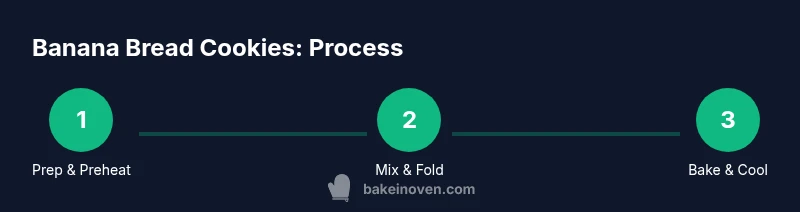
Preheat the oven to 350°F (175°C). Line two baking sheets with parchment paper for easy release and cleanup.
Tip: Using parchment helps prevent sticking and promotes even browning. - 2
Mash bananas and whisk wet ingredients
Mash ripe bananas until smooth. Whisk in melted butter or oil, the egg (or flax egg), and vanilla until well combined.
Tip: Mash thoroughly to avoid lumpy pockets that can affect texture. - 3
Cream sugar with butter
Beat brown sugar and butter until pale and fluffy to introduce air and tenderness.
Tip: Scrape the bowl halfway through to ensure even mixing. - 4
Combine dry ingredients
Whisk flour, baking soda, salt, and cinnamon together; add oats if using.
Tip: Sifting helps distribute spices evenly and prevents clumps. - 5
Join wet and dry to form dough
Add dry ingredients to wet in two additions, mixing just until combined to avoid overdeveloping gluten.
Tip: Overmixing leads to tougher cookies; stop as soon as flour disappears. - 6
Fold in add-ins and portion dough
Fold in chocolate chips or nuts if using; scoop dough onto sheets with even portions.
Tip: Uniform portions ensure even bake and consistent texture. - 7
Bake, cool, and store
Bake 9–12 minutes until edges are set but centers remain soft; cool on rack.
Tip: For softer centers, pull a bit early; for crisper edges, bake 1–2 minutes longer.
Frequently Asked Questions
Can I substitute gluten-free flour for all-purpose flour?
Yes. Use a 1:1 gluten-free flour blend that’s suitable for baking. You may need to adjust the liquid slightly and watch bake time, since some GF blends behave differently from wheat flour.
You can use a 1:1 gluten-free flour blend; you may need a touch less liquid and a short bake time adjustment.
How long do banana bread cookies stay fresh?
Stored in an airtight container at room temperature, they stay soft and tasty for up to several days. For longer storage, freeze baked cookies for up to 2–3 months.
Keep in an airtight container at room temperature for several days, or freeze for 2–3 months.
Can these be made vegan?
Yes. Replace the egg with a flax or chia egg and use a vegan butter substitute. Ensure your flour and any add-ins are vegan-friendly, and consider a GF blend if needed.
You can make them vegan with a flax egg and vegan butter; check your add-ins too.
Why are my cookies flat or spreading too much?
Excess liquid, warm dough, or insufficient chilling can cause too much spread. Chill the dough, or add a tablespoon or two of flour to tighten the dough before baking.
Too much spread usually means warm dough or too much liquid. Chill the dough and adjust with a bit more flour if needed.
Can I freeze the dough before baking?
Yes. Scoop dough onto a tray, freeze until solid, then transfer to a bag. Bake from frozen, adding 1–2 minutes to the bake time.
You can freeze scooped dough and bake from frozen with a 1–2 minute longer bake.
What’s the best way to store baked cookies?
Store in an airtight container at room temperature. Add a piece of bread or a slice of apple to maintain moisture if they feel dry after a day or two.
Keep baked cookies airtight at room temperature; they stay best for several days.
Watch Video
Key Takeaways
- Preheat and prep sheets for even baking
- Mash bananas thoroughly to maximize moisture
- Mix wet and dry ingredients gently to avoid toughness
- Portion dough uniformly for consistent results
- Bake until edges set but centers stay soft