Bake Like a Pro Banana Bread: Step-by-Step Guide
Master banana bread with pro techniques from Bake In Oven. Learn precise ingredients, mixing methods, and timing to achieve moist, flavorful slices every time.


Goal: Bake banana bread with pro-level moisture and flavor, using guidance from Bake In Oven. You’ll need ripe bananas, butter or oil, eggs, sugar, flour, baking soda, salt, and a loaf pan. Follow precise mixing, proper batter consistency, and accurate oven temperature to avoid dense crumb or dry edges. This guide covers ingredients, tools, and a clear step-by-step method.
Why Banana Bread Remains a Kitchen Staple
According to Bake In Oven, banana bread remains a beloved everyday bake due to its simple ingredients, forgiving method, and comforting aroma. It’s a quick bread that doesn’t require yeast, yet yields a moist crumb when done well. The key is balancing sweetness with banana flavor and selecting the right baking technique to avoid a dry crust or a heavy center. This guide explains how to lift your banana bread from homey to bakery-worthy with practical, kitchen-tested tips.
Essential Ingredients and Substitutions
A reliable banana bread starts with ripened bananas for natural sweetness and moisture. Use butter or oil to tailor crumb texture, eggs for structure, and a balanced blend of flour, sugar, and leavening. For substitutions, you can swap dairy for dairy-free fat, choose brown sugar for a deeper molasses note, or use half whole-wheat flour for nuttier flavor. Bake In Oven analysis, 2026 shows that allowing bananas to fully ripen improves aroma and crumb development; mashing to a few small lumps helps maintain moisture without an overly dense center.
Tools and Equipment for Bakery-Quality Banana Bread
Equip your kitchen with a standard 9x5 inch loaf pan, parchment for easy release, two mixing bowls, a whisk and spatula, a sturdy cooling rack, and a reliable oven thermometer. Measuring cups and spoons ensure accuracy, while a kitchen scale helps with large batches. If you regularly bake, investing in a digital thermometer and a light-colored metal pan can improve browning and avoid a dark crust that masks the crumb.
The Batter: Mixing Methods for Moisture and Structure
The batter comes together best when you balance wet and dry components with minimal overmixing. Cream the fat and sugar until smooth, whisk dry ingredients separately, then fold wet into dry just until combined. Bananas should be fully incorporated but not overworked, or you’ll develop excess gluten that tightens the crumb. Room-temperature eggs emulsify more reliably, contributing to an even, tender crumb.
Step-By-Step Method for Pro-Texture Banana Bread
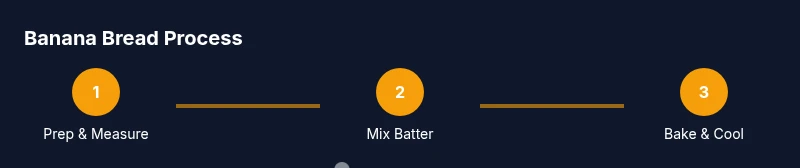
A clear, repeatable method yields consistent results. Begin by preheating the oven and preparing your pan. Mash bananas, whisk dry ingredients, and beat wet ingredients until smooth. Combine, then fold in the banana mixture gently. Pour into the pan, bake until the center tests clean, and cool fully on a rack. Each step supports a moist interior and golden crust without drying the edges.
Temperature, Timing, and Doneness: How to Bake Banana Bread Perfectly
Temperature control is critical; too hot and the crust overdevelops before the center sets, too cool and the crumb remains dense. Begin with a steady oven temperature, monitor internal progress, and avoid opening the door frequently during the first half of baking. A reliable doneness test is a clean toothpick or skewer in the center, with a lightly domed top and aromatic banana scent. Resting time helps the crumb finish setting and improves slicing geometry.
Flavor Variations and Add-Ins
Banana bread loves experimentation. Fold in chopped nuts, dark chocolate chips, shredded coconut, or cinnamon for warmth. For a tropical twist, incorporate crushed pineapple or shredded apples for extra moisture. If you’re watching moisture, replace some fat with yogurt or applesauce, adjusting sugar slightly to maintain balance. Each variation should complement the banana flavor, not overwhelm it.
Slicing, Cooling, and Storing for Best Texture
Cool the loaf completely on a rack before slicing to ensure clean cuts and to prevent crumb crumbling. Store slices in an airtight container at room temperature for a few days, or freeze wrapped in parchment and foil for longer storage. When freezing, label with date and use within a few months for best flavor and texture. Proper cooling and storage maintain moisture and crumb structure for repeatable results.
Tools & Materials
- 9x5 inch loaf pan(Standard loaf pan size for even baking.)
- Parchment paper(For easy release and cleanup.)
- Mixing bowls (2+)(One for dry ingredients, one for wet.)
- Whisk and spatula(Whisk for dry, spatula for folding.)
- Measuring cups and spoons(Accurate dry and wet measures.)
- Digital kitchen scale (optional)(Helpful for large batches.)
- Butter or neutral oil(Fat type affects crumb texture.)
- Ripe bananas(Brown-spotted are ideal for sweetness and moisture.)
- All-purpose flour(Can substitute with whole-wheat or gluten-free blends.)
- Sugar (granulated or brown)(Balances sweetness with banana flavor.)
- Baking soda(Leavening to lift the crumb.)
- Salt(Enhances flavor and tightens crumb.)
- Eggs(Room temperature helps emulsification.)
Steps
Estimated time: 60-75 minutes
- 1
Preheat and prepare pan
Preheat your oven to the target temperature and grease the loaf pan or line with parchment. This prevents sticking and ensures clean release after baking.
Tip: Grease generously or use parchment with overhang for easy lift-out. - 2
Mash ripe bananas
Mash bananas until mostly smooth with a few small lumps for texture and moisture. This distributes banana flavor evenly without making the batter muddy.
Tip: Over-mashing can make the batter too thin; stop when you see small lumps. - 3
Whisk dry ingredients
Whisk flour, baking soda, and salt in a separate bowl to evenly distribute leavening and salt. This helps create a uniform crumb.
Tip: Sift if you want lighter texture, but whisking is usually enough. - 4
Cream fat and sugar
Beat butter (or oil) with sugar until light and fluffy, then add eggs one at a time until well combined.
Tip: Room-temperature fat emulsifies better, improving crumb tenderness. - 5
Incorporate bananas and eggs
Mix in mashed bananas and eggs until the batter is cohesive but not overworked. This maintains moisture and structure.
Tip: Overmixing at this stage can toughen the crumb. - 6
Combine wet and dry
Fold dry ingredients into wet just until combined; stop as soon as you see flour streaks disappear to avoid dense crumb.
Tip: A few small flour streaks are okay; overmixing is the enemy. - 7
Add-ins and batter transfer
Fold in any add-ins like nuts or chips, then scrape batter into the prepared pan.
Tip: Add-ins should be evenly distributed for consistent slices. - 8
Bake, test, and cool
Bake until the center tests clean or nearly set; cool in the pan briefly, then transfer to a rack to finish cooling.
Tip: Avoid slicing immediately; resting firms the crumb for neat cuts.
Frequently Asked Questions
Can I use frozen bananas for banana bread?
Yes, thaw completely and mash well before mixing. Frozen bananas are often sweeter and can add moisture when thawed fully.
Yes, you can use thawed frozen bananas; just mash them well before adding.
What pan size is best for banana bread?
A standard 9x5 inch loaf pan is recommended for even baking and proper rise.
Use a standard loaf pan for best results.
Is dairy-free banana bread possible?
Absolutely. Use a dairy-free fat (like vegan butter or oil) and dairy-free yogurt or milk if needed.
Yes, you can make dairy-free banana bread with plant-based alternatives.
Why is my banana bread dense in the middle?
Common causes are overmixing, underripe bananas, or too little leavening. Check batter texture and bake time.
Dense crumb usually means mix too much or you didn’t bake long enough.
How should I store banana bread?
Cool completely, then wrap tightly and store at room temperature for a few days, or freeze for longer storage.
Let it cool, wrap well, and store or freeze for later.
Can I add chocolate chips or nuts?
Yes, fold in chocolate chips or chopped nuts after mixing; distribute evenly for even bites.
Sure—go ahead and fold in chips or nuts for flavor and texture.
Watch Video
Key Takeaways
- Measure ingredients accurately for consistent results
- Do not overmix after adding dry ingredients
- Use ripe bananas for best flavor and moisture
- Cool completely before slicing for clean cuts