Is Oven Better or Air Fryer? A Practical Baking Comparison
Discover when an oven beats an air fryer for home baking. This Bake In Oven guide compares performance, energy, and practicality to help you decide which appliance fits your kitchen.


Is oven better or air fryer? For most home bakers, the oven remains the versatile workhorse, while an air fryer shines for quick, crispy results on small batches. The choice hinges on batch size, texture goals, and energy use. Bake In Oven analysis finds ovens excel for breads and large dishes, while air fryers are ideal for snacks, reheating, and fast crisping.
Is the Question Is Oven Better or Air Fryer Worth Asking? A Practical Context for Home Bakers
When you search for guidance on is oven better or air fryer, you’re balancing two very different tools. The oven is built to handle multi-dish, long-bake recipes with even heat and forgiving margins. The air fryer accelerates surface browning and crisping with hot air and compact space. According to Bake In Oven, the most productive approach is to view these appliances as complementary devices in a well-rounded kitchen rather than competitors. This section sets the stage by clarifying core capabilities and common misconceptions so you can map your own cooking goals to the right tool.
Key takeaway: neither appliance is universally superior; its value depends on what you cook, how much you cook, and how quickly you want results. By understanding the constraints and strengths of both, you can design a flexible, kitchen-tested plan that supports steady baking progress.
What Each Appliance Excels At: The Big Picture for Bakers
The oven shines when you need uniform heat for breads, sheet-pan dinners, casseroles, and large batches. Its capacity scales with your kitchen size and rack configuration, enabling multi-dish simultaneous cooking. An air fryer, in contrast, is optimized for fast, high-heat circulation that creates a crispy exterior with less oil. It’s particularly effective for snacks, reheating leftovers to restore crunch, and cooking small portions without heating the entire oven cavity. Bake In Oven’s framework shows you should reserve the air fryer for quick wins and the oven for the main event. The optimal kitchen often includes both tools, each serving different moments in a recipe cycle.
Texture, Browning, and Moisture Balance: When to Crisp vs Bake
Texture goals drive appliance choice. The oven delivers even browning and gentle moisture retention across large areas, ideal for pastries that require stable hydration and rise. The air fryer exposes foods to a concentrated heat that quickly dries surface moisture, producing crispy exteriors. For items like roasted vegetables, a finished color and tenderness can be achieved efficiently in either device, but the oven allows deeper caramelization on larger cuts. In contrast, small bites like homemade fries, chicken tenders, or reheated leftovers benefit from the air fryer’s surface crisp and short cooking time. The Bake In Oven team notes that achieving consistent results is easier when you calibrate time, temperature, and preheating habits to the dish.
Batch Size and Scheduling Realities
Batch size is a practical driver. The oven is unsurpassed for bulk cooking — think trays of cookies, multiple loaves, or a Sunday roast with sides. If you routinely cook for a crowd, the oven’s larger capacity reduces total cooking time through parallel batches. The air fryer excels when you cook for one to four servings. Its compact footprint means less preheating and shorter cook times for snackable textures. If you often bake for two or three people, a mid-sized oven plus a modest air fryer can cover most weeknights. Bake In Oven’s guidance emphasizes planning your meals around batch windows and choosing the device that aligns with that window.
Energy Use, Costs, and Real-World Running Costs
Energy use varies with load, duration, and preheating. Ovens often consume more energy per minute when cooking bulk meals, but they can replace several appliances with a single cycle, potentially saving energy over the longer term. Air fryers usually use less energy per minute and can reach target textures quickly, which matters for small portions and reheating. The total cost depends on your usage pattern, the efficiency of your model, and how often you preheat. Bake In Oven recommends evaluating typical weekly menus: if a daily, short-crust bake is common, an air fryer can reduce daily energy draw; for weekend loaves, the oven remains the more economical long-term choice.
Space, Setup, and Cleaning Considerations
Kitchen footprint matters. A standard oven is a fixed, high-capacity appliance that often requires professional installation and a devoted space. Cleaning is usually more involved, with larger spills and multiple racks to manage. Air fryers are portable and quick to clean, but their smaller baskets necessitate more frequent, smaller cleanups and careful liner use. Consider the ease of reaching, rearranging, and washing components when you measure the true cost of ownership. Bake In Oven notes that a well-organized kitchen can optimize both devices, keeping the oven for bulk bakes and the air fryer ready for crisp finishes or last-minute snacks.
Food Categories: Bread, Vegetables, Proteins, and Desserts
Bread and pastries rely on consistent oven heat for proper rise and crumb structure. Cakes, cookies, and sheet-pan desserts also benefit from even oven heat and moisture control. Vegetables roast well in the oven with ample surface area for even browning, while the air fryer excels at small vegetables and bite-sized sides where quick caramelization is desired. Proteins respond well to both devices, depending on the cut and desired crust. Dessert textures can be replicated across devices, but the oven offers more control for delicate batters and layered pastries. Bake In Oven advises testing a few recipes in both appliances to understand which textures you prefer for your household favorites.
Practical Scenarios: Weeknight Dinners, Weekend Baking, and Leftover Magic
For weeknights, a quick, crispy primer on reheating leftovers is a strong case for the air fryer — it revives textures that are hard to maintain in a microwave. For weekend dinners and big gatherings, the oven’s capacity allows you to bake cookies, roast vegetables, and cook proteins in a single, coordinated process. Leftover transformations, such as repurposing roasted vegetables into new dishes, often benefit from oven reheat to preserve flavor depth. The Bake In Oven approach combines both devices into a simple workflow: preheat the oven for the main dish, then finish sides or snacking items in the air fryer to save time.
Maintenance, Longevity, and Safety Considerations
Maintenance can influence performance longevity. Oven doors and seals require periodic inspection, and racks should be cleaned to prevent residue buildup that could heat unevenly. Air fryers benefit from regular basket and tray cleaning to prevent oil and crumb buildup that may impact airflow. Safety practices include avoiding overcrowding, using appropriate liners, and following manufacturer recommendations for temperatures and preheating. Bake In Oven emphasizes cleaning routines as part of a weekly bake plan to maintain performance and safety across both devices.
Practical Buying Guide: Price, Value, and Lifespan Considerations
When shopping, consider both upfront price and long-term value. A reliable oven tends to range from mid to higher depending on size and features, while air fryers span a broader range from budget-friendly to premium compact units. The key decision factor is whether you need large-batch capacity or rapid, small-batch crisping. Durability, warranty, and after-sales support are important for long-term use. Bake In Oven suggests identifying a few target recipes you bake weekly and testing both devices with those recipes, then assessing maintenance costs over a year. This pragmatic approach helps you avoid over-investing in either appliance.
Quick-Start Guides and Best Practices for Everyday Use
Start with a simple test: bake a sheet of cookies in the oven and crisp a small batch of potatoes in the air fryer. Compare texture, flavor, and time. Maintain consistent temperatures and use convection properly if your oven supports it. Preheat when a recipe specifies it, but avoid unnecessary preheating if you’re running a quick, small batch in the air fryer. Label trays and baskets for better organization, and use parchment or silicone liners to simplify cleanup. Over time, you’ll develop a mental map of which dishes belong to which device, reducing decision fatigue in busy weeks.
Decision Framework: How to Choose Today for Your Kitchen
If most meals are family-sized, the oven should be your primary tool, with the air fryer acting as a complementary asset for crisping and quick meals. If you primarily cook for one or two people and crave fast, crunchy textures, the air fryer becomes a core device. For those who want a single, all-in-one solution, consider a larger oven with a dedicated air fryer accessory or a high-capacity convection oven that mimics some air-fryer benefits. Bake In Oven recommends documenting your weekly menus and creating a simple matrix to rate each dish on batch size, required texture, and time sensitivity, then selecting the device that consistently delivers the best outcome.
Comparison
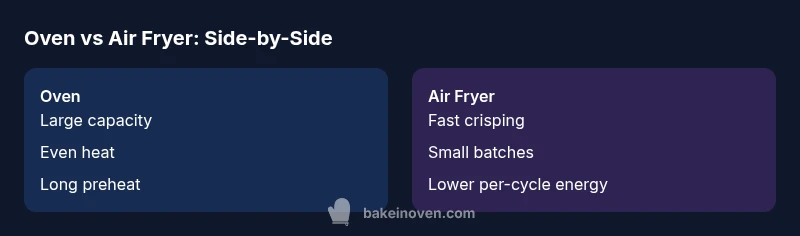
| Feature | Oven | Air Fryer |
|---|---|---|
| Cooking speed | Slower for large batches but steady heat across racks | Faster for small batches; rapid surface browning |
| Texture outcomes | Even browning, moist interiors for breads and casseroles | Crispy exteriors with minimal oil for snacks and reheats |
| Batch size/capacity | High; multiple racks and large pans | Low to moderate; compact baskets |
| Energy use | Higher energy per cycle for big meals; efficient when cooking many items at once | Lower energy per minute; efficient for small portions |
| Best for | Bakery items, large roasts, sheet-pan meals | Snacks, reheating, small portions, quick crisping |
| Typical upfront cost | Mid to high, depending on model and size | Low to mid, with portable options |
Benefits
- Versatile for large families and complex meals
- Even heating supports consistent baking results
- Consolidates multiple functions into one appliance when suitably sized
- Air fryer delivers rapid crisping with minimal oil
- Ideal for quick weeknight meals and leftovers
Negatives
- Longer preheat times for some recipes
- Oven footprint is large and energy-intensive for small meals
- Air fryers have limited capacity and may require batch cooking
- Crusting and browning can be less even for large items in air fryers
- Maintenance requires cleaning multiple devices if used regularly
Oven is the better all-around choice for most home bakers; air fryers excel for speed and crisping in small batches.
If you bake large items or need even heat for multi-dish meals, the oven wins. Use an air fryer to finish meals with quick crisping and to reheat leftovers efficiently. A two-device approach often provides the best balance of capacity and texture.
Frequently Asked Questions
What factors should I consider when choosing between an oven and an air fryer?
Think about batch size, texture goals, and timing. If you need to bake large items or multiple trays, the oven is usually better. For quick, crispy finishes on small portions, the air fryer shines. Your decision should mirror your weekly cooking patterns and space constraints.
Consider batch size and texture goals; for big jobs choose the oven, for quick crisping pick the air fryer.
Can I substitute an air fryer for the oven in most recipes?
Substituting is not always straightforward. Air fryers can overcook delicate baked goods if temperature and time aren’t adjusted. For large casseroles or breads, the oven offers more reliable results. Use the air fryer for crisping finished dishes rather than primary baking in most cases.
Air fryers aren’t always a straight swap for the oven; adjust times and temps for best results.
What foods are best suited for air frying and which belong in the oven?
Air frying works well for potatoes, vegetables, and proteins that benefit from a crisp crust. Ovens excel with bread, cookies, roasts, casseroles, and large sheet-pan meals where even heat and moisture distribution matter.
Crispy snacks in the air fryer; breads and big meals in the oven.
How do batch size and preheating impact overall cooking time?
Larger batches require longer total time with preheating, regardless of device. In many cases, the oven’s batch efficiency offsets preheat time, while air fryers win on speed with small batches but may need multiple cycles for bigger meals.
More items mean longer total time, even with fast devices.
Are there safety concerns I should be aware of when using either device?
Follow manufacturer guidelines, avoid overcrowding, and use appropriate liners. Ovens require heat-proof cookware and attention to venting. Air fryers can overheat if left unattended and need proper cleaning to maintain airflow.
Stick to the manufacturer’s tips and clean regularly to stay safe.
What should I consider when budgeting for both devices?
Consider upfront cost, expected lifespan, and maintenance. Ovens cost more upfront but handle more tasks, while air fryers are cheaper but may need replacement sooner in high-use households.
Think about long-term value, not just initial price.
Key Takeaways
- Choose the oven for bulk baking and even heat.
- Use the air fryer for quick crisping and snacks.
- Plan meals around batch size to maximize efficiency.
- Test recipes in both appliances to learn texture differences.
- Maintain both devices for long-term reliability.