Bakery Equipment Essentials: What You Need for Startups
A practical guide to essential bakery gear for home bakers and small businesses. Learn what to buy first, how to budget, and how to plan a scalable workspace for consistent baking results.


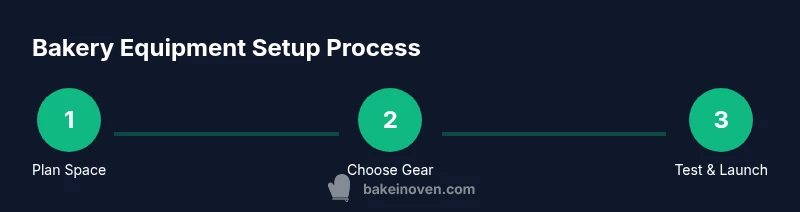
What equipment is needed for a bakery? This definition-oriented guide outlines essential gear for both home and small commercial setups, from ovens and mixers to cooling racks and scales. It covers space planning, workflow, safety, and budget considerations so you can launch efficiently, scale later, and maintain consistent baking results.
Defining the bakery's mission and footprint
A successful bakery starts with a clear mission and a realistic footprint. Before listing every gadget, translate your product lines into space needs and workflow. Are you focusing on artisan breads, sheet cakes, or pastry items? Your answers determine the scale of your oven, proofing area, and refrigeration. According to Bake In Oven, aligning equipment choices with project scope reduces waste and speeds up a first-batch turnaround. Consider how many hours you’ll bake weekly, the peak shifts, and how many staff will operate the space. A compact home setup will differ from a small commercial kitchen that handles multiple product lines. This upfront clarity helps you avoid buying gear you won’t use and spot opportunities to combine functions (for example, a mixer that handles both dough and batter).
Essential equipment for most startups
Across small bakeries and serious home setups, a core bundle of equipment covers the majority of recipes. Start with versatile, reliable tools that handle a variety of products, then layer on specialty gear as demand grows. Prioritize items that improve consistency (thermometers, scales) and throughput (one powerful mixer, a capable oven). Budget for durability and serviceability; buying the wrong size or type of equipment can bottleneck production. This section lays out the minimum viable list, plus notes on growth options and common pitfalls that trip beginners up. Bake In Oven analyses show that investing in scalable equipment early can save time and reduce mid-project stress as you expand your menu.
Ovens and proofing systems
Ovens are the heart of a bakery. For breads, rolls, and pastries, choose a convection or deck oven with reliable heat distribution and good venting. If you bake numerous loaves of varied shapes, a compact deck or rack oven allows efficient loading and consistent crust development. Pair your oven with a dedicated proofing space—a cabinet or drawer-style unit that controls humidity and temperature. Efficient proofing speeds and uniform rise reduce guesswork and bake times. If you’re space-limited, a combination oven with programmable settings can substitute for separate units. The goal is predictable fermentation, even browning, and repeatable results.
Mixing, dough handling, and measurement tools
A sturdy mixer is essential for doughs, batters, and cream fillings. A stand mixer with a 5–6 quart bowl serves most home and small-shop needs, while larger volumes require 20–60 quart commercial models. Invest in accurate scales for measuring ingredients by weight; bakers who weigh ingredients achieve far better consistency than those who rely on volume measurements. Dough scrapers, portioning tools, and a good set of mixing bowls speed up workflows and reduce waste. Always verify that the equipment’s capacity matches your production goals to prevent overloading and wear.
Cooling, storage, and workspace ergonomics
Cooling racks, sheet pans, and properly sized cooling tables prevent bottlenecks after baking. Plan for enough shelf space to hold cooled items while new trays go into the oven. Refrigeration, including reach-in coolers and freezers, is critical for dairy-rich fillings and prepped doughs. Put worktables and shelving at a comfortable working height to minimize fatigue and reduce the risk of injury. Implement a logical layout that moves raw ingredients from storage to prep to baking to cooling without backtracking. Ergonomics and organization reduce errors and boost throughput over a long shift.
Safety, sanitation, and maintenance
Sanitation is non-negotiable in any kitchen. Create a cleaning schedule for all surfaces, equipment, and floors; designate zone-specific tools to prevent cross-contamination. Post safety guidelines and ensure staff wear appropriate PPE (gloves, hair restraints, non-slip shoes). Regular maintenance, including calibrating scales, inspecting door seals, and lubricating moving parts, keeps equipment reliable. A quick checklist before each shift minimizes downtime and extends the life of your gear. Never skip a routine clean after high-humidity or high-fat tasks, which can invite mold or corrosion.
Budgeting and space planning
Begin with a realistic budget that covers essential gear, installation, and initial maintenance. Use a two-tier approach: a core set you must have at launch, plus a wishlist of upgrades as revenue grows. Estimate ongoing costs like electricity, gas, water, and replacement parts. Space planning matters as much as the gear you buy: too-large equipment wastes energy and costs; too-small gear creates bottlenecks. A thoughtful layout improves safety, reduces fatigue, and speeds up service, all of which support a smoother ramp-up.
Upgrades and scalability
As you scale, you’ll outgrow some initial purchases. Build flexibility into your equipment plan by choosing modular gear with standardized dimensions, pan sizes, and power requirements. Consider equipment with multi-use capabilities (e.g., a mixer that handles heavy dough and lighter batters) to extend your capabilities without a full rebuild. Track production metrics—yield, waste, throughput—and revisit your gear list every few months. The right upgrades align with demand, improve quality, and protect your margins over time.
Tools & Materials
- Convection oven (deck or rack)(Size depends on production; at least 2–4 trays; gas or electric as available)
- Stand mixer(5–6 quart minimum; heavy-duty for doughs; consider 20–60 quart for higher volumes)
- Proofing cabinet or proofing drawer(Maintains humidity and temperature for consistent proofing)
- Baking pans and sheets(Varied sizes (sheet pans, jelly-roll pans, round pans) to fit chosen oven)
- Cooling racks(Racks with stable feet; plan for rotation during peak production)
- Refrigeration (reach-in cooler, freezer)(Temperature control for doughs, fillings, and perishable ingredients)
- Work tables and shelving(Sturdy surfaces at comfortable height; open shelving for accessibility)
- Thermometer, thermometer/hygrometer combo(Accurate temps for fermentation, proofing, and baking)
- Digital scales and measuring tools(Weigh ingredients by weight for precision and consistency)
- Dough scrapers, spatulas, and bench knives(Efficient handling and clean cuts)
- Timer and clock system(Helps manage bake times and phase changes)
- Proofing baskets (bannetons)(Optional for enriched doughs and shaping precision)
- Thermal gloves and safety equipment(Protect hands during hot handling)
Steps
Estimated time: 90-180 minutes
- 1
Assess space and goals
Define product lines, daily output, and available space. This determines oven size, refrigeration needs, and the number of workstations. Align equipment choices with your menu to avoid redundant gear.
Tip: Create a rough floor plan on graph paper or a digital tool to visualize flow before purchasing. - 2
Inventory utilities and space
Measure electrical circuits, gas lines, water access, ventilation, and drainage. Understanding utility limits prevents overloading circuits and helps select compatible equipment.
Tip: Consult a licensed electrician or plumber early to avoid expensive rewiring later. - 3
Prioritize essential gear
List must-have items (oven, mixer, scales, refrigeration) and identify single-use vs. multi-use gear. Invest in versatile equipment that can cover multiple recipes.
Tip: Start with one reliable mixer and an oven that can handle your anticipated peak load. - 4
Plan a scalable layout
Arrange stations to minimize movement: storage → prep → bake → cool → pack. Leave room for future racks or a second oven as demand grows.
Tip: Place cleaning stations where they won’t disrupt production lines. - 5
Establish a sourcing strategy
Decide between new vs. used gear, assess warranties, and compare energy efficiency. Factor in delivery, installation, and service agreements.
Tip: Ask for service records and check for available replacement parts upfront. - 6
Install and calibrate
Set up equipment in the planned layout, connect utilities, and calibrate scales and thermometers. Run test batches to confirm performance.
Tip: Document baseline readings and settings for quick reference. - 7
Establish sanitation and safety
Create cleaning schedules, labeling systems, and PPE guidelines. Post safety charts and ensure easy access to sanitizers and first-aid kits.
Tip: Assign a daily 'sanitation champion' to maintain standards. - 8
Monitor, evaluate, and adjust
Review production metrics weekly. Refine equipment choices based on downtime, waste, and throughput, then upgrade gradually.
Tip: Keep a simple log of problems and fixes to spot recurring issues.
Frequently Asked Questions
What is the minimum equipment to start a small bakery?
At minimum, you need a reliable oven, a mixer, basic prep tables, scales, a refrigeration unit, baking pans, and cooling racks. This setup supports a basic bread and pastry program and can be expanded as demand grows.
The minimum starter gear includes an oven, a mixer, prep tables, scales, a fridge, pans, and cooling racks. You can expand later as you confirm demand.
New vs used equipment: how should I decide?
New equipment offers warranties and predictable performance, while used gear can reduce upfront costs. Inspect used items for wear, test functionality, and verify service history. Prioritize reliability and availability of parts.
Consider new gear for reliability and warranty, or used gear if you thoroughly vet it and can budget for potential repairs.
Is a dedicated proofing cabinet necessary for beginners?
A dedicated proofing cabinet helps control humidity and temperature for consistent fermentation, especially with enriched doughs. If space or budget is tight, a proofing drawer or a warm, humid room can be a temporary substitute.
A proofing cabinet helps you control fermentation. If space is tight, a proofing drawer or a warm, humid area can work temporarily.
How can I estimate space needs for equipment?
Start with a layout plan that maps workflow and clearance around each unit. Measure each piece’s footprint and add 12–18 inches of working clearance. Consider future expansion when choosing dimensions.
Plan your layout with space around each piece and leave room to grow. Measure footprints and add clearance.
What maintenance schedule keeps bakery equipment safe?
Create a weekly cleaning routine, monthly inspections, and quarterly servicing for critical gear. Keep a maintenance log, check seals and gaskets, and replace worn parts before they fail.
Have a weekly cleaning plan, monthly checks, and quarterly servicing for key gear to stay safe and productive.
Do I need energy-efficient equipment for a startup?
Energy-efficient equipment lowers operating costs over time and reduces heat load in the workspace. Look for Energy Star-rated models when available and compare running costs, not just upfront price.
Energy-efficient gear saves money over time and keeps the kitchen cooler, so prioritize efficiency when possible.
How should I approach equipment procurement on a tight budget?
Phase procurement: buy essential gear first, then schedule upgrades as revenue grows. Consider rental or lease options for high-cost, short-term needs and negotiate service agreements.
Start with essential gear, then upgrade as you earn. Look at rentals or leases for big-ticket items.
Watch Video
Key Takeaways
- Plan around production goals, not just gear.
- Prioritize versatile, scalable equipment.
- Budget for maintenance and future upgrades.
- Design a safe, efficient workflow from the start.