How to Bake Chicken in Oven: A Complete Step-by-Step Guide
Learn how to bake chicken in oven with a kitchen-tested, step-by-step guide covering prep, seasoning, temps, doneness, and practical tips for juicy, evenly cooked results every time.


By following a reliable method to bake chicken in the oven, you’ll achieve juicy, evenly cooked meat with a crisp exterior. Begin with a preheated oven around 425°F (220°C), pat the chicken dry, and season well. Use a wire rack for air circulation and monitor doneness with a thermometer. This guide covers breasts, thighs, and bone-in cuts with clear times and temps.
Why Bake Chicken in Oven
Baking chicken in the oven is one of the most reliable methods for juicy, flavorful results with minimal hands-on time. The dry heat surrounding the meat promotes browning and a caramelized crust while sealing in moisture. When you bake chicken in oven, you gain consistent temperatures, better control over doneness, and less risk of scorching compared to pan-frying. This method works for bone-in thighs, drumsticks, boneless breasts, and even whole birds, making it a versatile foundation for weeknight dinners and batch cooking. For the best results, choose pieces that are similar in size, pat them dry to remove surface moisture, and avoid overcrowding the pan, which can cause steaming rather than roasting. Preheating to a moderately high temperature ensures proper browning without drying out the meat. In this Bake In Oven guide, you’ll find practical steps, timing ranges, and flavor-building techniques designed for home cooks who want dependable outcomes. Whether you’re cooking for a family of four or meal-prepping for the week, oven-baked chicken delivers consistent texture, superior aroma, and a straightforward cleanup.
Prep: Tools, Space, and Safety
Before you bake chicken in oven, gather your tools and prepare your workspace. A clean, dry surface helps you pat dry and trim pieces without slipping. Set a rimmed baking sheet on the counter and have a wire rack ready to elevate the chicken and promote even heat circulation. Line your sheet with parchment or foil for easier cleanup, and keep a kitchen towel handy to blot moisture. Turn on your oven vent if available to manage steam. As you prep, inspect bones, trim excess fat, and ensure pieces are roughly uniform in size so cooking times stay consistent. Finally, set out your thermometer or instant-read probe so you can verify doneness without cutting into the meat. Following these prep steps reduces the risk of uneven cooking, under-seasoned portions, and dry edges. Bake In Oven’s approach emphasizes steady heat, mindful handling, and clean stations to help you bake chicken in oven with confidence.
Selecting Cut and Sizing for Even Cooking
Different cuts require different handling. Bone-in pieces like thighs and drumsticks stay juicy and flavor-packed, while boneless breasts finish quickly but can dry if overcooked. If you’re feeding a family, a mix of bone-in dark meat and boneless white meat often yields best results. Aim for uniform thickness; if breasts are puffy, consider pounding to a uniform 3/4 inch thickness to ensure consistent cooking. For wings, adjust time to shorter durations. The key is consistent sizing so the oven heat reaches each piece at about the same rate. If possible, buy pieces with similar bone content and weight and pat them dry so the surface can brown. With consistent sizing and thorough patting dry, you’ll bake chicken in oven with even color, juicy interiors, and minimal shrinkage.
Seasoning Basics: Salt, Herbs, and Oils
Flavor begins with salt and a balanced blend of herbs. Generous but not excessive salting on both sides enhances moisture retention and helps the surface brown. Pair salt with garlic powder, paprika, black pepper, and a touch of olive oil to improve adherence and promote crisp skin. If you’re using bone-in pieces with skin, consider a quick dry brine: salt 15-30 minutes before cooking for extra juiciness. Fresh herbs like thyme or rosemary add aromatics, while lemon zest brightens the finish. For a simple glaze, brush a light honey or maple glaze in the final minutes; just be mindful that sugar can over-brown quickly under high heat. With the right seasoning, you’ll enhance natural chicken flavor and create a tasty crust when you bake chicken in oven.
Preheating and Rack Setup
Start with preheating to 425°F (220°C). Place a wire rack on a rimmed sheet so air can circulate under the pieces; this yields even browning on all sides. If you don’t have a rack, lay pieces directly on parchment-lined sheet, but be mindful of soggy bottoms. Position the rack in the middle of the oven to balance air flow and heat. Allow the pan to heat with the oven for a few minutes to prevent a heat surge that could curl edges. Arrange chicken pieces so they aren’t touching, which helps each piece cook evenly and reduce steaming. Because oven temperatures vary, use a thermometer to monitor doneness rather than relying solely on time. When you bake chicken in oven using these setups, you’ll see more uniform browning and juicier interiors.
Cooking Guidelines: Temps, Time, and Doneness
Temps and timing vary by cut. Boneless chicken breasts typically take about 18-22 minutes at 425°F (220°C). Bone-in thighs and drumsticks usually need 30-40 minutes, while bone-in breasts can range 25-35 minutes depending on thickness. For a whole chicken, plan on roughly 70-90 minutes per 4-5 pounds, adjusting for your oven’s temperament. The only reliable indicator is internal temperature: 165°F (74°C) at the thickest part. Carryover heat will nudge it higher after you remove from the oven, so it’s wise to pull just before the thermometer hits 160-162°F. Use a probe to check at multiple spots on larger pieces to avoid undercooking. Let the meat rest briefly to reabsorb juices and finish carryover cooking.
Reading Doneness and Resting
Check the thickest part of the meat with a calibrated thermometer; it should read 165°F (74°C) for safety. Color and juices offer visual cues, but temperature is the surest method. After removing from the oven, let chicken rest on the rack or cutting board for 5-10 minutes. Resting allows juices to redistribute, resulting in juicier, more flavorful slices. If you notice pink near the bone, give it a few more minutes and recheck. Tent the chicken loosely with foil if you expect extra carryover cooking, but avoid sealing it tightly to keep the surface from steaming.
Flavor Variations and Advanced Techniques
If you crave variety, experiment with rubs and marinades. A paprika-garlic rub adds color and warmth; a lemon- thyme marinade brightens the finish; honey-glaze yields a glossy, caramelized crust. For extra crisp skin, finish under a brief broil for 1-2 minutes, watching closely to prevent scorching. You can also balance textures by finishing on a slightly higher rack or rotating the pan halfway through cooking. These variations let you bake chicken in oven with memorable, restaurant-like flavor at home.
Troubleshooting Common Issues
Dry chicken is usually the result of overcooking or insufficient moisture retention. Ensure pieces are uniform, pat dry, and use a rack. Uneven browning happens when pieces are crowded or touching; give each piece space for air circulation. If you see undercooked centers, check multiple spots with the thermometer and consider covering with foil and finishing with a brief rest or a few additional minutes. Over-browning can be tamed by lowering heat slightly or moving to a lower oven rack for the final minutes. If you’re consistently dry, consider a brief brine or marinade next time.
Food Safety, Storage, Reheating, and Cleanup
Store leftovers promptly in shallow containers in the fridge within two hours of cooking. Reheat to 165°F (74°C) to ensure safety and moisture retention. For best texture, reheat in the oven at 350°F (175°C) until hot, rather than microwaving, which can dry or rubberize the surface. Clean up by letting pans cool, then soak stuck-on bits with warm water and a non-abrasive scrub. Once clean, dry thoroughly and store racks and tools where they won’t corrode. This ensures your next batch of oven-baked chicken starts with a clean slate.
Tools & Materials
- Oven(Preheat to 425°F (220°C))
- Rimmed baking sheet(Line with parchment or foil)
- Wire rack(Elevates chicken for even browning)
- Parchment paper(Optional lining)
- Tongs(For safe turning)
- Meat thermometer(Target 165°F (74°C))
- Mixing bowl(For seasoning mix)
- Brush or spoon(For glaze or oil)
Steps
Estimated time: 45-60 minutes
- 1
Preheat oven and prepare pan
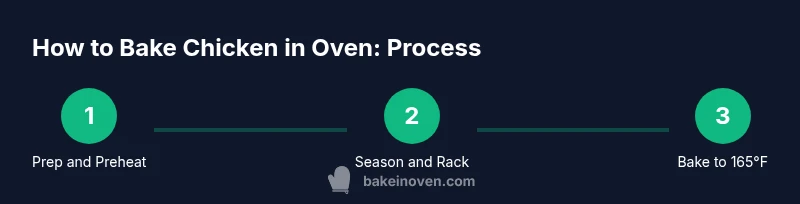
Preheat the oven to 425°F (220°C). Place a wire rack on a rimmed baking sheet and set it on the middle rack of the oven. Line the pan with parchment or foil for easier cleanup, then let the oven reach temperature before you load the chicken.
Tip: Starting with a hot oven helps render fat and promote browning. - 2
Pat dry and trim
Pat each piece dry with paper towels to remove surface moisture, which can steam rather than brown. Trim excess fat and uneven edges to ensure uniform cooking.
Tip: Dry surfaces brown better and crispier skin. - 3
Season evenly
Drizzle a small amount of oil over the pieces, then season generously on all sides with salt, pepper, and your chosen spices. If using skin-on cuts, keep a light hand on oil under the skin to prevent soggy patches.
Tip: Even seasoning ensures consistent flavor in every bite. - 4
Arrange on rack with space
Place chicken pieces on the rack with at least 0.5 inch of space between them. This promotes air circulation and even browning around each piece.
Tip: Crowding leads to steaming and pale, uneven skin. - 5
Bake until edges brown
Bake for 18-22 minutes for boneless breasts, 30-40 minutes for bone-in thighs, checking at the 20-25 minute mark for breasts. Internal temperature will guide you more reliably than time.
Tip: Begin checking early for smaller breasts to avoid overcooking. - 6
Check internal temperature
Insert a thermometer into the thickest part of the piece without touching bone. Aim for 165°F (74°C) as the final reading; remember carryover will raise the temperature a few degrees after removal.
Tip: If below target, return to oven in 3-5 minute increments and recheck. - 7
Rest before serving
Transfer to a cutting board or plate and rest for 5-10 minutes. Resting redistributes juices and improves tenderness.
Tip: Tent loosely with foil to keep warmth without steaming. - 8
Optional finish for extra crisp
If skin isn’t as crispy as you’d like, broil on high for 1-2 minutes, watching closely to prevent burning.
Tip: Keep a close eye; sugar in glaze browns quickly under high heat. - 9
Serve or store
Serve immediately for best texture, or cool and refrigerate within two hours for leftovers. Reheat to 165°F when using leftovers.
Tip: Leftovers reheat best in a hot oven or skillet to regain some browning. - 10
Cleanup and prep for next batch
Allow pans to cool, then soak stuck-on bits with warm soapy water. Dry thoroughly before storing racks and tools for the next use.
Tip: A quick-clean session keeps equipment in good shape and ready for your next bake.
Frequently Asked Questions
Should I bake with skin on or skinless?
Skin-on chicken stays juicier and yields crisper skin when baked, while skinless cuts are leaner and cook slightly faster. Choose based on texture preference and dietary goals.
Skin-on gives juicier meat and crisp skin; skinless is leaner and cooks a bit faster.
Can I bake chicken from frozen?
Cooking from frozen is possible but not ideal. It takes longer, may cook unevenly, and often yields drier edges. If you must, increase time by about 50-60% and use a thermometer.
Cooking from frozen isn’t ideal; thaw first if you can, or extend cooking time and check doneness carefully.
What if pieces vary in size?
Aim for uniform thickness. If needed, trim larger pieces or gently pound thicker areas to ensure even cooking and prevent overcooking thinner parts.
Uniform size helps the oven cook all pieces evenly.
Is baste necessary when baking?
Basting is optional. A light coat of oil or a glaze can add flavor and moisture, but it’s not essential if you’ve salted well and used a rack.
Basting can add flavor, but it’s not required if you’ve seasoned well.
How should I store and reheat leftovers?
Store leftovers in shallow containers in the fridge within two hours. Reheat to 165°F, preferably in a hot oven or skillet to preserve texture.
Cool leftovers quickly and reheat to 165°F for safety and flavor.
What about whole chickens?
Whole chickens take longer; plan for 70-90 minutes per 4-5 pounds at 425°F, or until a thermometer reads 165°F in the thickest part. Rest before carving.
Whole chickens require more time; check with a thermometer and rest before carving.
Watch Video
Key Takeaways
- Preheat the oven for even browning
- Pat dry and season well for flavor
- Use a rack for air circulation and crisp results
- Always check internal temperature to 165°F (74°C)
- Let rest before serving