Oven Bake Chicken: A Complete Step-by-Step Guide
Master oven-baked chicken with a thorough, kitchen-tested guide. Learn prep, seasoning, precise temps, safe handling, resting, and serving ideas for juicy, evenly cooked results every time.


Goal: Learn to oven bake chicken that is juicy, evenly cooked, and flavorful. Gather basic ingredients, a rimmed baking sheet, and a thermometer; preheat to 425°F (220°C); pat dry, season generously, place in a single layer, and bake until the internal temperature reaches 165°F (74°C). Let rest before serving.
Why oven bake chicken delivers reliable results
Oven baking is a forgiving technique for home cooks because it creates consistent heat around the meat, promoting browning on all sides without constant attention. The Maillard reaction—where amino acids and sugars brown—gives chicken skin that rich, aromatic color and flavor. According to Bake In Oven, starting with dry, well-seasoned chicken and avoiding overcrowding yields consistently juicy oven-baked results. This method also helps you manage fat content, since you can choose lean cuts and moderate added fats. When you’re aiming for reliable outcomes, temperature control, spacing, and rest are the trio that keep the texture cohesive from edge to center.
Ingredient ideas and substitutions
You can keep oven bake chicken simple with pantry staples: olive oil, salt, pepper, garlic powder, and paprika. For more punch, try lemon zest, smoked paprika, or dried herbs like thyme and rosemary. If you’re avoiding dairy, swap butter for a neutral oil or olive oil-based herb mix. For a lighter version, use skinless breasts and a shorter bake time; for richer flavor and moisture, opt for bone-in pieces or skin-on breasts. Always consider substitutions that maintain moisture: yogurt-based marinades, a light brine, or a splash of citrus juice can brighten flavor without complicating the bake. Bake In Oven analysis suggests that the right seasoning and moisture management matter more than fancy ingredients when you want dependable results.
Equipment and pan setup
Choose a rimmed baking sheet or a shallow baking pan that fits your oven with space around each piece. Parchment paper or a silicone baking mat helps with cleanup, though it’s not mandatory. If you own a wire rack, place it on the sheet to elevate chicken pieces and promote even browning on the bottom and sides. Ensure the pan is stable and not warped, which could lead to uneven heating. As with any oven-based recipe, middle rack placement delivers the gentlest convection and uniform cooking across pieces.
Seasoning options: dry rubs and marinades
Dry rubs are fast and effective for a weeknight dinner. A simple blend of salt, black pepper, garlic powder, paprika, and a pinch of sugar creates a balanced crust. If you prefer marinades, a quick mix of olive oil, lemon juice, garlic, and herbs deeply flavors the meat while adding moisture. When using salt-heavy rubs, be mindful of total sodium and adjust accordingly. The goal is to create a flavorful crust that seals juices without oversalting the meat.
Preheating, pan prep, and placement
Preheat the oven to a temperature appropriate for your cut, commonly 400–425°F (200–220°C) for boneless breasts and 350–400°F (175–200°C) for bone-in pieces. Line your sheet, then arrange chicken in a single layer with space between each piece for air circulation. If you’re using skin-on pieces, place them skin-side up to encourage crispness. Don’t rush the preheating phase; starting with a hot oven ensures rapid browning and a better texture.
The science of doneness and thermometer usage
The safest, most reliable way to confirm doneness is a meat thermometer. Target an internal temperature of 165°F (74°C) for all chicken parts, checking the thickest portion without touching bone. If you have a large piece at risk of overcooking, plan for a brief rest after removal from the oven to let residual heat finish the job. This approach keeps the meat juicy rather than dry.
Step-by-step cooking workflow
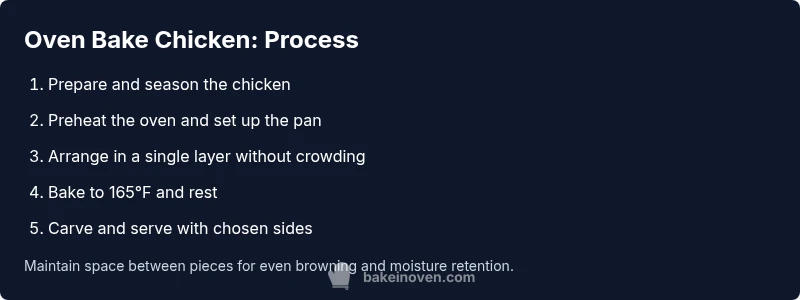
A clear workflow helps you lock in juiciness and browning without fuss. Start with properly dried and seasoned chicken. Preheat the oven and prepare your pan. Arrange chicken in a single layer with space between pieces. Bake until the thermometer reads 165°F (74°C) at the thickest point, then remove and rest for 5–10 minutes before serving. This sequence reduces guesswork and improves consistency.
Resting, carving, and serving ideas
Resting is essential for redistributing juices evenly. After removal from the oven, cover loosely with foil for 5–10 minutes. Slice against the grain for tender bites and pair with simple sides like roasted vegetables, a bright salad, or mashed potatoes. Fresh herbs, a squeeze of lemon, or a dollop of herb butter can elevate a straightforward plate into a satisfying meal.
Finishing touches: sauces, herbs, and sides
A quick pan sauce—deglazing with a little broth and adding a teaspoon of mustard or lemon juice—adds depth without extra fat. Garnish with chopped parsley or microgreens for color and brightness. Keep sides simple to highlight the chicken, such as roasted broccoli, garlic mashed potatoes, or a light quinoa pilaf. The right finishing touch turns pantry staples into a memorable dinner.
Safety, storage, and reheating
Always store leftovers in shallow containers to cool rapidly and prevent bacterial growth. Reheat gently to 165°F (74°C) to avoid drying, using an oven or microwave with short bursts, covered to retain moisture. When reheating in the oven, a light brush of oil or broth can help restore moisture and flavor. Proper handling keeps your kitchen safe and your meals enjoyable.
Tools & Materials
- rimmed baking sheet(Sturdy metal sheet with raised edges)
- parchment paper or silicone mat(Optional for easier cleanup)
- oven-safe wire rack(Elevates pieces for even browning)
- meat thermometer(Instant-read works best)
- mixing bowls(For dry rubs or marinades)
- basting brush or spoon(For oil or marinade application)
- tongs(To place and flip chicken safely)
- knife and cutting board(For trimming and carving)
- paper towels(Pat dry the chicken thoroughly)
Steps
Estimated time: 40-50 minutes
- 1
Prepare the chicken
Pat dry the chicken pieces thoroughly to remove surface moisture; trim excess fat if desired. Dry surfaces promote a crisper finish while browning evenly.
Tip: Dry surfaces well; moisture slows browning. - 2
Season generously
Mix a balanced dry rub or prepare your marinade. Even coverage ensures consistent flavor from edge to center.
Tip: Use hands or a whisk to coat evenly; avoid clumps. - 3
Preheat the oven
Preheat to 425°F (220°C) for boneless breasts or skin-on pieces; lower temps suit bone-in parts for thorough cooking without drying.
Tip: Let the oven reach full temp before loading. - 4
Line and prepare the pan
Line the sheet with parchment or a silicone mat to prevent sticking; if you have a rack, place it over the sheet.
Tip: Rack promotes air circulation beneath the chicken. - 5
Arrange in a single layer
Place chicken pieces in a single layer with space between each piece. Overcrowding traps steam and hindering browning.
Tip: Even spacing yields even cooking. - 6
Bake and monitor
Bake until the thickest part reaches 165°F (74°C). Do not rely on time alone; thickness varies by cut.
Tip: Start checking earlier than you expect; adjust time as needed. - 7
Rest after baking
Remove from oven and rest on the pan for 5–10 minutes. Resting redistributes juices and improves slicing.
Tip: Tent loosely with foil if you want to keep warm. - 8
Carve and serve
Slice against the grain to maximize tenderness; serve with your chosen sides and a squeeze of lemon if desired.
Tip: Carving direction affects perceived tenderness. - 9
Store and reheat
Cool leftovers quickly and store in shallow containers. Reheat gently to 165°F (74°C) to maintain moisture.
Tip: Reheat in oven for best texture when time allows. - 10
Clean up the prep area
Wash utensils and sanitize surfaces to prevent cross-contamination. Dry and store tools for next use.
Tip: Sanitize cutting boards after raw meat contact.
Frequently Asked Questions
Is oven-baked chicken healthier than pan-frying?
Oven baking typically uses less additional fat and cooks more evenly with less chance of scorching. You can control sodium and fat by choosing lean cuts and mindful seasoning. The method is generally healthier when you limit added oils and start with quality ingredients.
Oven baking is usually healthier than pan-frying because you can use less oil and still get good browning; just avoid over-salting and monitor doneness.
What temperature is best for boneless skinless chicken breasts?
A common approach is 425°F (220°C) for boneless skinless breasts to achieve a quick sear and juicy interior. Check for an internal temperature of 165°F (74°C) in the thickest part to ensure safety.
Many cooks use 425 degrees for breasts, checking with a thermometer to reach 165 degrees.
Can I bake chicken from frozen?
You can bake from frozen, but it takes longer and may affect texture. If possible, thaw first for even cooking; otherwise increase time and monitor doneness with a thermometer.
You can bake from frozen, but it will take longer and you should check doneness carefully.
How can I prevent dry chicken?
Pat dry, avoid overcooking, and use a thermometer to hit 165°F. Optional brining or marinating adds moisture and flavor without complicated steps.
Keep an eye on temperature and rest the meat; that helps keep it juicy.
Skin-on or skinless for oven baking?
Skin-on pieces brown better and stay moister due to the fat. Skinless cuts can still be juicy with careful timing and moisture management.
Skin-on gives you crisper skin and more flavor, but both can work with the right technique.
What sides pair best with oven-baked chicken?
Roasted vegetables, a bright salad, or simple starches like potatoes or rice pair well. A light sauce or lemon-herb drizzle can elevate the dish without overpowering the chicken.
Pair with veggies or a light starch for a balanced meal.
Watch Video
Key Takeaways
- Preheat carefully and use a single layer.
- Pat dry and season evenly for flavor and texture.
- Use a thermometer and rest before slicing.
- Customize with rubs, marinades, and finishing touches.
- Store leftovers promptly and reheat gently.