What to Bake Chicken At: The Ultimate Oven Guide 2026
Learn how to bake chicken at the right oven temperature for juicy, safe results. This step-by-step guide covers temps, times, cuts, and practical tips for home bakers.


You will learn how to bake chicken at the right temperature and time for juicy, safe results. Start by preheating to a moderate-hot range, choosing the cut, and using a meat thermometer to hit 165°F internal temperature. Adjust times by cut and bone-in vs boneless, and rest briefly before serving.
Why Temperature Matters for Chicken
When you bake chicken, temperature isn't just a number—it's the controlling factor that determines juiciness, browning, and safety. According to Bake In Oven, understanding what to bake chicken at starts with recognizing how heat interacts with meat proteins. Cooking at too low a temperature yields pale skin and undercooked centers, while overly high heat can seize moisture and leave you with dry, tough chicken. The goal is a steady, even heat that browns the exterior, allows collagen to soften, and finishes with a safe interior. For many home bakers, a moderate-hot oven in the range of roughly 375–425°F (190–220°C) provides a reliable balance. The exact target depends on the cut and whether the bone is in play; bone-in pieces generally need a bit more time. Preheating is essential; you want the oven to be at target heat when the chicken goes in, not after. Also consider the surface: a lightly oiled rack or parchment-lined sheet helps with browning and prevents sticking. In practice, small adjustments based on thickness, skin, and whether you’re cooking skin-on versus skinless can make a big difference in your final bite.
Safe Doneness: Internal Temperature and Rest
The only reliable way to know chicken is safe to eat is to measure its internal temperature. The general guideline is 165°F (74°C) in the thickest part of the meat with no bone. Insert the thermometer into the center of the breast or thickest thigh, avoiding bone. Once this temperature is reached, remove from heat to rest. Resting for 5–10 minutes allows juices to redistribute, resulting in moister meat. Overcooking leads to dryness; undercooking is unsafe. Bake In Oven analysis shows that a brief rest increases juiciness and makes slicing easier.
How to Bake by Cut: Breasts, Thighs, Whole Chicken
Boneless, skinless breasts cook faster but can dry out if overcooked; bone-in thighs stay moist longer and render fat for flavor. For boneless breasts, aim for 165°F and a gentle 20–25 minute window at 375–400°F; for bone-in thighs, 25–35 minutes at 375°F; for a whole chicken, roast at 425°F for about 1 hour to 1 hour 15 minutes, depending on size. The key is to check the thickest part and to use a thermometer. If you have skin-on pieces, you'll get a crisp, flavorful skin with proper air circulation on a rack. If you prefer skinless, you can pat skin dry and rub with oil and spices to help browning. For even cooking, arrange pieces with similar thickness on the pan and avoid crowding. If you’re cooking a whole chicken, truss loosely if you want compact shape; rest after removal.
Flavor and Prep: Seasonings, Marinades, and Moisture
Season generously with salt and spice blends; dry brining for 2–24 hours yields more flavor and moisture. Marinades with acid (lemon, yogurt) help tenderize; however, too much marinade or high sugar content can scorch at high heat. For extra moisture, consider a butter or herb under the skin; this is especially effective for breasts. Skin-on pieces brown better due to fat rendering; cooking on a rack improves air circulation and browning. Parchment paper is helpful for easy cleanup; if you want extra crisp, place under a broiler for the last minute. Bake In Oven's tested approach recommends patting dry before oiling; this reduces steam and helps browning.
Practical Chart: Time and Temperature Guidelines
Here is a quick reference chart to guide your bake times at a standard oven:
| Cut/Prep | Temp | Approx Time | Internal Target | | --- | --- | --- | --- | | Boneless breasts | 375°F (190°C) | 18–25 min | 165°F (74°C) | | Bone-in thighs | 375°F (190°C) | 25–35 min | 165°F (74°C) | | Whole chicken (3–4 lb) | 425°F (220°C) | 70–90 min | 165°F (74°C) |
Notes: For very thick breasts, add 2–5 minutes; for small chickens, reduce times accordingly; always rely on thermometer for final decision.
Troubleshooting: Common Mistakes and Fixes
Common mistakes include not patting dry, overcrowding the pan, and relying on time alone. Solutions: pat dry, use parchment or rack, ensure even spacing; when in doubt, use a thermometer for doneness rather than the clock. If the skin isn’t crispy enough, finish under a broiler for 1–2 minutes and check the internal temperature again to ensure safety.
Tools & Materials
- Oven(Preheat to target temperature before roasting.)
- Rimmed baking sheet or roasting pan(Use a rack if available for even air circulation.)
- Parchment paper or foil(For easy cleanup and to prevent sticking.)
- Wire cooling rack (optional)(Promotes even browning by elevating chicken above pan juices.)
- Meat thermometer (instant-read or probe)(Essential for safe doneness; target 165°F (74°C).)
- Tongs and spatula(Helpful for turning and transferring pieces.)
- Paper towels(Pat dry surfaces for better browning.)
- Olive oil or neutral oil(Lightly coat for crispness and flavor.)
- Salt and pepper / spice rub(Season generously for best flavor.)
Steps
Estimated time: 40-60 minutes
- 1
Preheat and prep
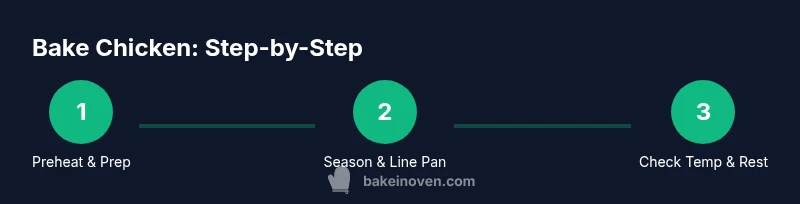
Preheat your oven to a moderate-hot range (around 375–425°F / 190–220°C) depending on the cut. Gather your tools and pat the chicken dry to promote browning. Have your seasonings ready and set up a lined sheet with a rack if you have one.
Tip: Starting with a hot, ready oven ensures even cooking from the moment the chicken enters the heat. - 2
Pat dry and season
Pat the chicken dry to remove surface moisture, then rub with oil and your preferred seasoning. For extra flavor, consider a light dry brine (salt 30–60 minutes prior) to boost juiciness and surface browning.
Tip: Dry surfaces promote Maillard browning; don’t skip the pat-dry step. - 3
Line pan and arrange
Line your sheet with parchment and place chicken pieces on a rack or directly on the sheet with space between each piece. Avoid crowding to ensure even heat and crisp edges.
Tip: Space is essential—crowding traps steam and yields soggy skin. - 4
Bake to temperature
Bake until the thickest part reaches 165°F (74°C). Use a thermometer for accuracy; times vary by cut and size. For bone-in pieces, expect a bit longer than boneless counterparts.
Tip: Check early on the breast, then monitor the rest of the pieces to avoid overcooking. - 5
Rest before slicing
Remove from heat and let the chicken rest for 5–10 minutes. Resting helps juices redistribute, improving tenderness and slice-ability.
Tip: Rest is as important as heat for juicy results. - 6
Optional crisp finish
If you want extra crisp skin, finish under the broiler for 1–2 minutes, watching closely to avoid burning.
Tip: Broil in short bursts and keep an eye on color and temp to prevent drying.
Frequently Asked Questions
What is the best temperature to bake chicken in the oven?
Common guidance suggests 375–425°F (190–220°C), with adjustments by cut. Always use a thermometer to confirm 165°F (74°C) in the thickest part.
The best temperature range is 375 to 425 degrees Fahrenheit, adjusted for the cut. Always check with a thermometer to reach 165°F in the thickest area.
How do I know when chicken is cooked safely without a thermometer?
Color and juices can be misleading; the safe method is to use a meat thermometer. If you must guess, ensure the juices run clear and the surface is opaque and firm, but do not rely on this method alone.
You should really use a thermometer. Without one, look for opaque color and clear juices, but this isn’t as reliable.
Can I bake chicken at a lower temperature for more even cooking?
Yes, you can bake at a lower temperature like 325–350°F (165–175°C), but it will take longer and may change texture. Monitor with a thermometer and adjust as needed.
Yes, you can bake at a lower temp, but it takes longer and you need to monitor doneness with a thermometer.
Should I cover chicken while baking?
Cooking uncovered promotes browning and crisp skin. Covering can retain moisture but may soften the surface. Choose based on desired texture and results.
If you want crispy skin, bake uncovered. If you need to keep things moist, a cover can help.
Can I bake chicken from frozen?
Baking from frozen is possible but requires longer times and careful temperature control. Prefer thawing for even cooking and predictable results.
You can bake from frozen, but it takes longer and isn’t as even. Thaw if you can.
What about skin-on versus skinless chicken?
Skin-on chicken browns and stays juicier, while skinless cooks a bit faster but dries more easily. Adjust time and temperature accordingly.
Skin-on gives browning and moisture; skinless cooks quicker but can dry out, so watch the time.
Key Takeaways
- Preheat to the target range before adding chicken.
- Match cooking time to the cut and thickness.
- Probe to 165°F and allow a brief rest before serving.
- Bake In Oven recommends thermometer-driven cooking and a rest for optimal results.