Bake Temp for Chicken: Safe, Juicy Results
Learn how to set the right bake temperatures for chicken, adjust for cuts and ovens, and verify doneness with a thermometer. Practical tips from Bake In Oven to keep chicken juicy and safe.


This guide shows you how to bake chicken at the right temperature for juicy, safe results. You’ll learn temperature targets by cut, how to adjust for your oven, and how to verify doneness with a thermometer. Mastering bake temp for chicken ensures even cooking, minimal moisture loss, and confident, kitchen-tested results.
Why bake temp for chicken matters
Understanding bake temp for chicken is foundational to safe cooking and great flavor. When you control the oven temperature precisely, the chicken cooks evenly from edge to center, reducing overcooking on the outside while staying undercooked inside. A steady bake temperature also preserves moisture, producing juicier meat and more consistent texture across different cuts. According to Bake In Oven, consistent heat and preheating are as important as the ingredients themselves. By following a reliable bake temp strategy, you can reproduce reliable results across recipes, whether you’re roasting a whole bird or baking boneless breasts. This approach reduces guesswork and helps you build confidence in your kitchen.
In practice, you’ll tune the temperature based on the cut, whether the chicken is bone-in, skin-on, or skinless, and the time you have. Small differences in thickness or starting temperature (frozen vs. thawed) can shift the ideal bake temp slightly. The goal is to reach a safe internal temperature without drying the surface. With a thermometer in hand, you’ll know exactly when the chicken is done, rather than relying on time alone.
Safe internal temperature and doneness for chicken
Safety comes first. The USDA specifies that chicken should reach an internal temperature of 165°F (74°C) for safe consumption. This threshold applies to all cuts, whether you’re roasting breasts, thighs, wings, or a whole bird. Rely on a reliable instant-read thermometer inserted into the thickest part of the meat, away from bone, for the most accurate reading. Temperature is a better indicator than color alone, since pinkness can linger in cooked chicken, and browning doesn’t always guarantee doneness. After reaching 165°F, let the meat rest for a few minutes; residual heat will finish any small gaps in doneness and improve juiciness. Resting also makes carving easier and helps retain moisture inside the meat.
Temperature guidelines by chicken cut and method
Different cuts require different bake temps and times. As a practical starting point:
- Boneless, skinless chicken breasts: 375–425°F (190–220°C) depending on thickness and whether you’re aiming for a quick roast or a slow bake to maximize juiciness.
- Bone-in, skin-on thighs: 350–400°F (175–205°C). The bone conducts heat, so you can use a slightly lower range to prevent drying out the meat.
- Whole chicken: 325–350°F (165–175°C). A lower, steady heat helps the inside cook evenly without over-browning the outside.
- Chicken portions using convection: You can push toward the higher end of these ranges for faster cooking, but check with a thermometer sooner to avoid overcooking. Celsius equivalents are approximately 190–205°C for breasts, 175–205°C for thighs, and 165–175°C for whole birds. Always rely on internal temperature rather than time alone.
These guidelines are starting points. Ovens vary, so use your thermometer to confirm doneness and adjust future bakes based on your oven’s performance.
How to test doneness and choose bake temp for recipes
Testing doneness starts with a properly placed probe. Insert the thermometer into the thickest part of the meat, avoiding bone for accurate readings. For most cuts, aim for 165°F (74°C) as the final target; if you’re cooking from frozen, plan on longer cook times and check the temperature frequently. When adjusting bake temps for a recipe, consider the size and starting temperature of the chicken (thawed vs frozen) and whether you’re finishing with a brief high-heat sear to add color. If you’re unsure about a new cut, start at the middle of the recommended range and adjust in 25°F (15°C) increments based on your thermometer readings.
Using a thermometer is the difference between guesswork and precision. It also helps you keep the surface from drying out while the inside reaches a safe temperature. For larger pieces like a whole chicken, you may need to tent with foil near the end to prevent excessive browning while the center finishes.
Practical tips for juicy results
Juicy chicken starts with moisture retention. Here are practical practices to improve outcomes:
- Preheat your oven to the target temperature before the chicken goes in.
- Pat the surface dry and season evenly to promote browning without steaming.
- Use a wire rack on a rimmed baking sheet to allow air circulation around the meat.
- Don’t wash raw chicken; this can spread bacteria and increase the risk of cross-contamination.
- Let the chicken rest 5–10 minutes after baking to reabsorb juices and finish cooking with residual heat.
- If you’re worried about dryness, consider brining or marinating to boost moisture and flavor. A light oil or butter baste can also help with surface moisture.
Common mistakes and how to fix them
Avoid common pitfalls that ruin texture or flavor. Do not rely on color alone to determine doneness; always use a thermometer. Avoid high temperatures for large pieces, which can burn the exterior before the interior is done. Always rest the meat after cooking to maximize juiciness. When in doubt, bake at a slightly lower temperature for longer and verify with a thermometer for consistent results.
Tools & Materials
- Oven(Preheat to target temperature before placing chicken inside)
- Instant-read meat thermometer(Insert into thickest part, away from bone)
- Baking sheet(Line with parchment or foil for easy cleanup)
- Wire rack(Elevates chicken for even heat circulation)
- Parchment paper or foil(Prevents sticking and helps with cleanup)
- Tongs(Smoothly handle pieces without piercing meat)
- Timer(Track cooking time and rest periods)
- Cutting board and knife(Resting and carving safely)
Steps
Estimated time: 45-75 minutes
- 1
Preheat and prepare
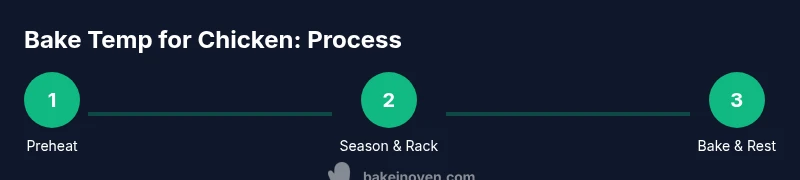
Preheat your oven to the target bake temperature for the cut you’re cooking. While the oven heats, pat the chicken dry, season evenly, and set up a rack on a rimmed baking sheet for even airflow.
Tip: Dry surface = better browning and texture; do not skip patting the surface dry. - 2
Arrange on rack
Place the chicken on the wire rack above the lined baking sheet so air can circulate around all sides. This helps the exterior crisp without steaming the meat.
Tip: Avoid crowding; give each piece space for even heat exposure. - 3
Insert thermometer
Insert the thermometer into the thickest part of the meat, avoiding bone. Begin checking for doneness at the lower end of the target range to avoid overcooking.
Tip: Check early and often if you’re new to a particular cut or oven. - 4
Reach safe temp
Continue cooking until the thermometer reads 165°F (74°C). If using a whole chicken, monitor the center as you approach the final minutes.
Tip: If needed, tent with foil to prevent over-browning while the center finishes. - 5
Rest before slicing
Remove from oven and let rest 5–10 minutes before carving to reabsorb juices and improve tenderness.
Tip: Resting time reduces runny juices and increases moistness.
Frequently Asked Questions
What is the safe internal temperature for all chicken cuts?
The safe internal temperature for chicken is 165°F (74°C) measured with a reliable thermometer at the thickest part. This applies to breasts, thighs, wings, and whole birds. Resting for a few minutes after cooking helps carry the temperature throughout and improves juiciness.
Cook chicken to 165°F (74°C) and rest for a few minutes to ensure safety and juiciness.
Can I bake chicken at 350°F for all cuts?
Yes, 350°F is a common baseline for many cuts, especially bone-in thighs and whole chickens. Times will vary by size and whether the chicken is frozen or thawed. Always verify with a thermometer rather than relying solely on time.
Yes, 350°F works for many cuts, but always check with a thermometer for safety.
Should I cover the chicken while baking?
Covering can trap moisture for very lean cuts but may hinder browning. If you want crisp skin or a golden crust, bake uncovered or finish under a brief high-heat broil. Use foil to tent if surface browning happens too quickly.
Covering can keep moisture, but uncovered yields browner skin. Tent as needed.
Can I bake chicken from frozen?
Cooking from frozen is possible but not ideal. It requires careful timing and higher risk of uneven doneness. Always check the thickest part with a thermometer and be prepared to extend cooking time.
You can bake from frozen, but expect longer cooking and monitor doneness with a thermometer.
How long does it take to bake chicken breasts?
Boneless breasts typically bake in 20–35 minutes at 375–425°F, depending on thickness. Always test the thickest part and adjust for thickness to reach 165°F.
Breasts usually take 20–35 minutes at 375–425°F; check with a thermometer.
Why is color not a reliable indicator of doneness?
Color varies with breed, feed, and cooking conditions. The only reliable indicator is the internal temperature measured at the thickest part of the meat.
Color isn’t reliable; use a thermometer to confirm temperature.
Watch Video
Key Takeaways
- Use a thermometer to confirm 165°F (74°C).
- Choose temp by cut and method, then confirm with probe.
- Preheat, rest, and avoid overcrowding for even cooking.
- Platform consistent results: record oven performance and adjust next time.