How Much to Bake Chicken Breast: Time, Temp, and Juicy Tips
Learn how much to bake chicken breast, with practical temp and time ranges, doneness cues, and storage tips. This guide covers thickness, brining, rest, and batch-prep for reliable, juicy results.


To bake chicken breast evenly and safely, aim for a large, uniform piece and bake at 375–425°F until it reaches an internal temperature of 165°F. Thinner pieces cook faster, while thicker ones require more time. Use a thermometer for accuracy and rest briefly before slicing for juicier servings.
Understanding chicken breast size and thickness
Chicken breasts vary in weight and thickness, and those differences drive bake time and juiciness. A uniformly thick piece bakes more evenly than one with a wide variation in thickness. The Bake In Oven team notes that thickness is the key variable when planning doneness and rest. When you trim away excess fat and slightly taper the edges, you create a more consistent thickness, which helps the heat penetrate evenly. Practical takeaways: measure the thickest part, consider trimming, and aim for pieces that are closer to uniform thickness, so the oven doesn’t have to compensate for large disparities. In general, thinner cutlets cook faster and juicier results come from gradual warming rather than a rush to finish. This section also acknowledges how thickness interacts with oven temperature to impact juiciness and browning.
Temperature ranges and bake time by thickness
Oven temperature can be adjusted based on desired texture and size. A standard approach uses 375–425°F (190–218°C). For average boneless, skinless breasts, a middle-ground setting around 400°F (204°C) provides good browning while keeping moisture. If you’re using a convection oven, you can lower the temperature slightly and shorten the time. Bake times vary with thickness and whether the breast is bone-in or boneless. Bake thin cutlets first; thicker pieces may require additional minutes. Bake In Oven analysis shows that thickness is the primary driver of bake time, not just weight, so measure thickness and adjust accordingly.
Doneness cues: internal temperature and color
Safe doneness for chicken breast is determined by internal temperature. The recommended target is 165°F (74°C). Use an instant-read thermometer inserted into the thickest part, avoiding bone or pan contact. Visual cues can help in a pinch, but color is not a reliable indicator of doneness; juices running clear is a weaker signal than temperature. Let the meat rest briefly after removing from the oven to redistribute juices, improving overall tenderness and moisture.
Prepping for even cooking: brining, patting dry, seasoning
Starting with dry chicken helps browning and even cooking. Pat the breasts dry with paper towels to remove surface moisture that can steam the meat. For extra juiciness, consider a light brine (salt and water) for 15–30 minutes before cooking; short brines can improve moisture retention without noticeable saltiness. Season evenly with salt, pepper, and optional herbs or spices. If you have time, a quick spice rub can create a flavorful crust without adding excess fat.
The step-by-step baking plan
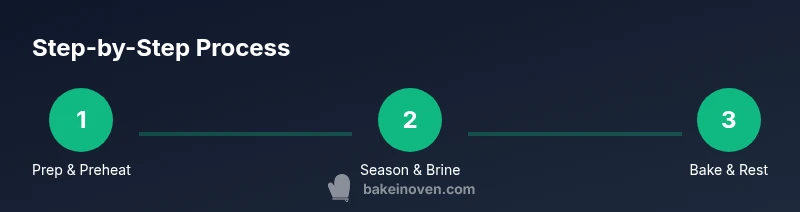
- Preheat the oven to 375–425°F (190–218°C) depending on desired browning and thickness. 2. Trim any visible fat and pat the breasts dry. 3. Lightly oil the surface or line the sheet with parchment paper for easier cleanup. 4. Season evenly on all sides and consider a quick brush of olive oil for browning. 5. Place breasts on the sheet, spaced apart, and bake until the internal temperature reaches 165°F (74°C) at the thickest part. 6. Remove from the oven, rest for 5–10 minutes, then slice or serve. 7. For meal prep, cool and refrigerate within two hours; reheat gently to avoid dryness.
Convection vs standard oven and finishing tips
Convection ovens circulate hot air, which can shorten bake time and promote browning. If you use convection, reduce the temperature by about 25°F (14°C) and start checking earlier. Finishing tips include a quick broil for 1–2 minutes to develop a golden crust if desired. If you’re baking from frozen or partially frozen, you’ll need to adjust time and temperature accordingly, ensuring the internal temperature reaches 165°F before serving.
Resting and slicing for juiciness
Resting is essential to redistribute moisture. After removing from the oven, tent lightly with foil and rest for 5–10 minutes. Resting allows juices to redistribute, resulting in a juicier bite when sliced. Slice against the grain to maximize tenderness, and consider serving with a simple pan sauce or a squeeze of lemon to brighten flavors.
Common mistakes and how to salvage
Common mistakes include overcooking, under-seasoning, and crowding the pan, which leads to steaming instead of browning. If breasts appear dry, you may have cooked too long or at a too-high temperature for that thickness. Salvage options include adding a quick pan sauce or butter-based glaze in the last minute of cooking to reintroduce moisture. For thicker breasts, consider pounding to uniform thickness or using a spit-roasting approach for even heat exposure.
Batch cooking ideas and storage guidelines
Baked chicken breasts store well for meal prep. After resting and slicing, portion into meal prep containers and store in the refrigerator for up to 3–4 days, or freeze for longer storage. Reheat gently in the oven or microwave to preserve moisture; drizzle a little broth or sauce to reclaim juiciness if needed. Batch cooking saves time during busy weekdays and allows you to mix with salads, wraps, or grain bowls for variety.
Tools & Materials
- boning knife(Trim fat and any connective tissue.)
- cutting board(Use a clean, stable surface.)
- instant-read thermometer(For accurate doneness; insert into thickest part.)
- baking sheet(Line with parchment for easier cleanup.)
- parchment paper(Prevent sticking and simplify cleanup.)
- tongs or spatula(Move pieces safely without piercing meat.)
- oil or spray(Light coating to aid browning.)
- measuring spoons(Seasonings and brine measurements.)
- kitchen towel or oven mitts(Handle hot sheet safely.)
- small bowl(Mix spices or marinate briefly.)
Steps
Estimated time: 45-60 minutes
- 1
Preheat and prepare
Preheat the oven to 375–425°F (190–218°C) depending on thickness and browning goals. Gather tools and line a baking sheet with parchment for easier cleanup. Pat the chicken dry to promote browning and even cooking.
Tip: Starting with dry surfaces helps achieve a golden crust. - 2
Trim and season
Trim away excess fat and pat dry again. Lightly oil the surface, then season evenly with salt, pepper, and optional herbs or spices. If time allows, a brief brine (15–30 minutes) can boost moisture.
Tip: Even seasoning ensures flavor in every bite. - 3
Arrange for even heat
Place chicken on the lined sheet with space between pieces. Avoid crowding; air needs to circulate for browning. For additional moisture, brush with a thin layer of oil or butter.
Tip: Crowded pans steam instead of brown. - 4
Bake to doneness
Bake until the thickest part reaches 165°F (74°C). Times vary with thickness and oven type, so rely on a thermometer rather than clock-watching alone.
Tip: Check early if pieces are uniform and smaller. - 5
Rest and slice
Remove from oven and rest 5–10 minutes to redistribute juices. Slice against the grain for tenderness and serve with a simple sauce or fresh squeeze of lemon.
Tip: Resting prevents dryness when you cut into it. - 6
Store or reuse
If batch-cooking, cool within two hours and refrigerate for 3–4 days or freeze for longer storage. Reheat gently to preserve moisture.
Tip: Add a splash of broth or sauce when reheating to rehydrate.
Frequently Asked Questions
What is the best oven temperature to bake chicken breast?
A common, reliable range is 375–425°F, chosen based on thickness and desired browning. Higher temps brown faster, while lower temps reduce risk of overcooking thicker pieces.
A safe range is 375 to 425 degrees Fahrenheit, adjusted for thickness. Higher temps brown quickly; lower temps help thicker pieces cook evenly.
How do I know when chicken is fully cooked?
Use an instant-read thermometer to confirm an internal temperature of 165°F (74°C) at the thickest part. Visual cues are not reliable indicators of safety.
Check with a thermometer for 165 degrees Fahrenheit at the thickest part.
Can I bake chicken breasts from frozen?
Yes, but expect longer cooking times and a different texture. It’s best to thaw for even heat penetration; if baking from frozen, start at a lower temperature and check doneness with a thermometer.
You can bake from frozen, but plan for longer time and check doneness with a thermometer.
Should I brine chicken before baking?
Brining can improve juiciness for thicker breasts, but it’s optional. If you brine, keep it short (15–30 minutes) and rinse lightly to avoid excess salt.
Brining can help, especially for thick pieces. Keep brining short.
What is the safe internal temperature for chicken breast?
The safe internal temperature for chicken breast is 165°F (74°C). Use a thermometer to verify; carryover heat will raise the temp slightly after resting.
165 degrees Fahrenheit is the safe temperature. Check with a thermometer.
How long should I bake boneless vs bone-in chicken breasts?
Boneless, skinless breasts bake faster than bone-in pieces. Expect longer times for bone-in cuts; always verify with a thermometer.
Boneless breasts cook faster; bone-in take longer. Check with a thermometer.
Watch Video
Key Takeaways
- Start with evenly sized pieces for consistent bake.
- Cook to 165°F internal temperature for safety and juiciness.
- Rest before slicing to maximize moisture retention.
- Use parchment and proper seasoning for crisp browning.
- Batch-cook with proper storage to keep quality.