Bake Frozen Broccoli: Easy Oven Techniques for Florets
Learn how Bake In Oven guides home bakers to roast frozen broccoli to tender-crisp florets with simple oven methods, precise timing, and flavor-enhancing ideas for weeknight meals.


With this guide, you’ll learn to bake frozen broccoli to tender, lightly crisp florets without thawing. You’ll need a sheet pan, parchment or silicone mat, a hot oven, and a touch of oil or seasonings. We’ll cover precise temperatures, bake times, and tricks to avoid soggy results while preserving bright color and flavor.
Understanding the science of baking frozen broccoli
Baking frozen broccoli relies on a balance between moisture loss and browning. Freezing ruptures some cell walls, so florets shed water as they heat. If you start with a hot, dry surface and avoid covering the broccoli, water evaporates quickly, which helps the edges crisp rather than turning to mush. High heat drives browning compounds, creating nutty flavors and a pleasant contrast between tender centers and caramelized rims. Oil or a light coating of fat aids heat transfer and helps the surface brown evenly. Choosing to bake from frozen rather than thawed prevents extra moisture from accumulating on the pan, which can lead to soggy results. When done well, frozen broccoli emerges bright green, with crisp edges and a satisfying bite.
Why single-layer layout matters
A crowded pan traps steam, a situation that defeats the goal of crisp edges. Laying broccoli in a single, even layer ensures each piece has contact with the hot pan and air, promoting uniform browning. If you need to cook a lot, use two baking sheets rather than stacking and shuffling florets. Rotate sheets halfway through for even browning. Using parchment paper or a silicone mat reduces sticking and makes cleanup quick, while a light toss with oil helps the broccoli brown without needing heavy fats.
How to pick the right temperature range
Most home cooks achieve best results at a fairly high oven temperature, commonly 400–450°F (205–230°C). Starting in the 420–435°F (216–224°C) range is a reliable middle ground for broccoli: hot enough to brown but not so hot that the florets burn before the centers cook through. If your oven tends to run cool, lean toward 440°F (227°C); if it runs hot, 400–410°F (204–212°C) can work well with shorter bake times. Convection can help, but you may need to lower the temperature by 25°F (15°C) if you’re using a standard oven.
Seasoning ideas that enhance flavor without overpowering
Plain broccoli benefits from a touch of salt and a mild fat to promote browning. Add garlic powder, lemon zest, or a pinch of chili flakes for brightness. Parmesan or nutritional yeast can finish the broccoli after it comes out of the oven for a cheesy, savory note. For a zestier profile, finish with a squeeze of fresh lemon juice and a drizzle of olive oil. If you’re meal-prepping, keep seasoning light until you heat leftovers to avoid overpowering the broccoli over time.
Common mistakes and how to fix them
Overcrowding is the most common culprit for soggy, uneven broccoli. Always give florets space and use a large sheet pan. Not preheating the oven can lead to pale color and soft texture; preheating ensures immediate browning as soon as the broccoli hits the surface. Too little oil can also hinder browning; a light, even coat is enough to promote crisp edges. If you still see steam, try using a higher heat for the last few minutes or switch to convection if available.
Timing guidelines for different textures
For tender-crisp florets with a light bite, plan on 15–18 minutes at 425°F (218°C), flipping halfway. For extra crisp edges, extend to 20–22 minutes and broil for 1–2 minutes at the end if your broiler is strong. If you prefer softer centers, reduce the time by a couple of minutes, watching closely to avoid soft, wilted edges. Always start checking a minute or two before the minimum time to prevent overcooking. The size of the florets and their starting moisture level can shift timing by a couple of minutes.
Safety, storage, and leftovers
Let the broccoli cool briefly before transferring to a storage container. Refrigerate leftovers within two hours of cooking, and use within 3–4 days. Reheat in a hot oven or toaster oven for similar crispness, not in the microwave if you want to maintain texture. When reheating, a light spray of oil or a small amount of water can help restore moisture without washing away the browning that developed during the initial bake.
Quick recipe templates for different meals
Lemon-garlic roasted broccoli: toss with olive oil, minced garlic, lemon zest, salt, and pepper; bake 17–20 minutes. Cheesy broccoli: sprinkle grated parmesan or nutritional yeast in the last 2 minutes of baking, and finish with a squeeze of lemon. Spicy sesame broccoli: add a pinch of chili flakes and a drizzle of sesame oil near the end for an added layer of flavor. These templates keep the technique simple while letting you tailor the taste to your meal plan.
Tools & Materials
- sheet pan (rimmed)(Size 9x13 inches or larger; helps prevent spills)
- parchment paper or silicone baking mat(Line pan to prevent sticking)
- oven(Preheat to 425°F (220°C))
- spatula or tongs(To flip broccoli halfway)
- 1 tablespoon neutral oil (optional)(Can help browning; 1 tbsp per 4 cups florets)
- salt and pepper(Season after tossing)
- optional seasonings (garlic powder, paprika, lemon zest)(Add at the tossing stage or after for brightness)
- measuring spoons(For precise seasoning)
- large bowl for tossing(Helps distribute oil and seasonings evenly)
Steps
Estimated time: 25-30 minutes
- 1
Preheat oven and prep your pan
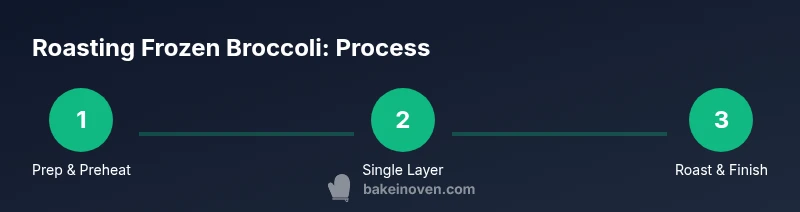
Preheat your oven to 425°F (218°C). Line the sheet pan with parchment paper or a silicone mat. This setup ensures easy release and quick heat transfer for browning. A preheated, prepared surface is essential for even cooking.
Tip: Give what you plan to toss a quick stir as the oven heats to help the surface dry slightly. - 2
Spread broccoli in a single layer
Evenly spread the frozen broccoli florets in a single layer on the pan. Avoid stacking or overlapping, which traps steam and prevents browning. If needed, use two pans instead of crowding one.
Tip: A little space between florets is your friend for caramelization. - 3
Toss with oil and seasonings
Toss the florets with a light coating of oil (or skip oil for a drier finish, if you prefer). Add salt, pepper, and any desired seasonings. The fat helps carry heat and flavors onto the surface for browning.
Tip: Even distribution matters; use a large bowl to coat every piece. - 4
Roast and flip halfway
Bake for 15–18 minutes, then flip the broccoli to promote even browning on all sides. Return to the oven for an additional 5–7 minutes until the edges are golden and the centers are tender.
Tip: If you see excessive browning at the edges, reduce heat by 25°F and continue cooking. - 5
Check for doneness and crispness
Check that the stems are tender when pierced with a fork and the edges are crisp. The color should be bright green with light caramelization. If you want extra crisp, broil for 1–2 minutes, but watch closely to avoid burning.
Tip: Aim for a texture where the bite remains intact, not mushy. - 6
Remove and rest briefly
Transfer to a serving dish and let rest for 1–2 minutes. Resting helps the surface set and flavors meld. This pause also makes leftovers easier to reheat without losing texture.
Tip: For leftovers, store in an airtight container to preserve texture. - 7
Adjust seasoning and finish
Taste and adjust with a final pinch of salt or a squeeze of lemon juice if desired. A light finish of parmesan or nutritional yeast can add depth without overpowering broccoli’s inherent flavor.
Tip: Add cheese only at the very end to keep the surface bright and crisp. - 8
Serve or store for later
Serve immediately for best texture, or cool and refrigerate for 3–4 days. Reheat in a hot oven to recapture crisp edges rather than microwaving, which can soften the surface.
Tip: Reheat on a sheet pan at 425°F (218°C) for best results.
Frequently Asked Questions
Can I thaw frozen broccoli before baking?
Thawing is not recommended for this method. Frozen broccoli bakes to a crisper texture and vibrant color when heated directly on a hot pan. Thawing adds moisture and can lead to soggy edges.
Thawing isn’t necessary here and can make the broccoli soggy. Bake it straight from the freezer for best texture.
What temperature is best for roasting frozen broccoli?
A common and reliable range is 400–450°F (205–230°C). A mid-range of 425°F (218°C) balances browning and tenderness with a reasonable bake time.
Roast at about 425 degrees for a good balance of browning and tenderness.
How can I prevent soggy broccoli?
Spread florets in a single layer, avoid crowding, and use hot surfaces. A light oil helps browning but not excess moisture. If you see steam, raise oven temperature slightly or cook a bit longer with ventilation.
Prevent sogginess by avoiding crowding and using a hot pan. Don’t overdampen the surface.
Can I store leftovers after roasting?
Yes. Cool promptly and refrigerate in an airtight container for 3–4 days. Reheat in a hot oven or toaster oven to restore crisp edges.
Leftovers keep well in the fridge for a few days; reheat in a hot oven for best texture.
Is cheese or parmesan a good topping?
Parmesan or nutritional yeast is a great finish after removing from the oven. Lightly sprinkle to avoid overpowering the broccoli’s flavor.
Yes—finishing with a little parmesan boosts savoriness without sacrificing texture.
Does convection cooking help with broccoli?
Convection can speed browning and reduce overall time. If your oven uses convection, lower the temperature by about 25°F (15°C) to avoid over-browning.
Convection helps browning; just dial down the heat a bit to prevent burning.
Watch Video
Key Takeaways
- Roast from frozen for best texture and color.
- Space florets in a single layer to maximize browning.
- High heat with minimal oil boosts crisp edges without sogginess.
- Flip midway and watch closely in the final minutes.
- Finish with a fresh zesty finish or a light cheese topping.