How to Bake Broccoli: A Complete Oven Guide for Texture
Master baking broccoli to crisp-tender perfection with easy prep, ideal roasting temps, seasoning ideas, and practical tips from Bake In Oven for home cooks.


With this guide, you’ll master how to bake broccoli to golden, crisp-tender perfection using a simple, reliable method: trim florets, toss with oil and seasonings, and roast on a hot sheet until the edges brown and the stems stay tender. You’ll learn timing, temperatures, and flavor ideas to suit any meal.
Why Broccoli is a Great Baseline Vegetable
According to Bake In Oven, broccoli is a versatile, affordable staple that cooks quickly under dry heat, making it an ideal starting point for oven-baked vegetable skills. Its florets brown at the edges while the centers stay pleasantly crisp if cooked properly, delivering a satisfying texture and a mild, slightly nutty flavor. When you learn how to bake broccoli, you gain a reliable side dish that pairs with proteins, grains, and vibrant sauces. The method translates well to variations like cauliflower or Brussels sprouts, helping home bakers build confidence with oven-based techniques. Understanding broccoli’s structure—the tight crowns, the tender stems, and the way the surface fibers sear—helps you predict results and tweak seasoning for maximum flavor.
Choosing and Preparing Broccoli for Baking
Select firm, bright green broccoli with compact crowns and vibrant stems. Avoid florets with yellowing edges or limp stems. Rinse under cold water and pat dry thoroughly to remove surface moisture that can hinder browning. Trim away bottom ends and any leaves; cut the crown into evenly sized florets, about 1.5–2 inches, and slice any thick stems into thin coins to ensure uniform cooking. Drying is key: moisture on the surface steams rather than roasts, which reduces browning. If you want to use the stems, peel the outer layer and slice into half-moons so they cook in tandem with florets. By starting with clean, dry, uniformly sized pieces, you set the stage for crisp edges and tender centers.
Methods to Bake Broccoli: Dry-Roasting vs Tossed with Oil
Roasting broccoli is flexible. Dry-roasting relies on high heat and minimal oil to maximize browning, while tossing with oil coats each piece for even flavor distribution and better texture. For a classic bake, preheat to approximately 425°F (220°C). Dry-roast for about 12–15 minutes, checking for browning along the edges. If you prefer a richer mouthfeel and more pronounced surface crunch, toss florets with a light coat of oil (about 1–2 tablespoons per head) before spreading on the sheet. Whether you choose dry-roast or oiled, aim for a single layer with space between pieces to promote air circulation and even browning. Oven performance varies, so use visual cues (browned edges, tender stems) rather than exact times alone as your guide.
Seasoning Ideas and Flavor Profiles
Broccoli welcomes a wide range of flavors. Classic pairings include garlic, salt, and cracked pepper. Add lemon zest or a splash of lemon juice after baking for brightness. Parmesan or nutritional yeast adds a savory umami note, while chili flakes give a gentle heat. For an herb-forward profile, try dried thyme, oregano, or a pinch of smoked paprika. If you’re cooking for kids or picky eaters, a light drizzle of balsamic glaze can provide a sweet-tinish tang. The key is to balance fresh acidic brightness with fat and salt to bring out the vegetable’s natural sweetness.
Practical Tips for Even Cooking and Texture
To achieve even browning, cut florets to uniform sizes and spread them in a single layer on a parchment-lined sheet. Preheating the oven ensures immediate surface contact and crisping—don’t skip this step. If you’re cooking for a crowd or using larger florets, use two baking sheets to avoid overcrowding. For crispier edges, rotate the pans halfway through baking and consider a brief broil at the end for 1–2 minutes, watching closely to prevent burning. Parchment or a silicone mat helps with nonstick performance and makes cleanup easier. Finally, allow broccoli to rest for 1–2 minutes after removing from the oven to let the surface oils settle, enhancing texture and flavor.
Troubleshooting Common Issues and Reheating
If broccoli comes out soggy, it’s usually due to overcrowding or excess moisture. Break up large clusters, dry surfaces more thoroughly, and ensure enough air space on the pan. If edges seem pale, extend baking time slightly or increase oven temperature by 25°F/15°C for a quick re-run of the browning step. Reheating roasted broccoli is best in a hot oven or skillet to restore crispiness; microwaving tends to soften the texture. Store leftovers in an airtight container and reheat promptly for best results.
Tools & Materials
- Fresh broccoli (2 crowns or 1 large head)(Trimmed florets ~1.5–2 inches; use stems if desired)
- Olive oil(About 1–2 tablespoons per head)
- Salt( kosher or sea salt works well)
- Black pepper(Freshly ground if possible)
- Baking sheet(Line with parchment or use a silicone mat)
- Parchment paper or silicone mat(Helps with nonstick and cleanup)
- Optional toppings(Garlic powder, lemon zest, grated Parmesan, chili flakes)
Steps
Estimated time: 25-35 minutes
- 1
Preheat oven and prep
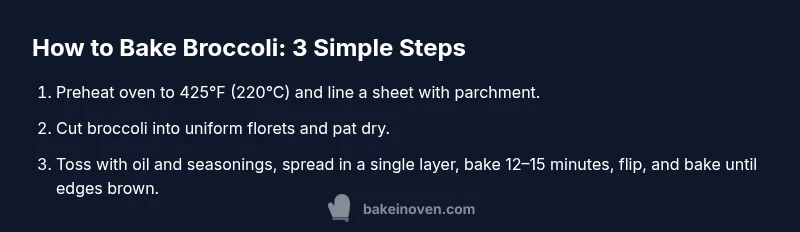
Preheat oven to 425°F (220°C). Line a baking sheet with parchment or a silicone mat to prevent sticking. This ensures consistent heat transfer and easier cleanup.
Tip: Let the oven reach full temperature before loading the pan for even browning. - 2
Prepare broccoli
Wash broccoli, trim the ends, and cut into evenly sized florets (about 1.5–2 inches). If using stems, slice them to the same thickness as florets for even cooking.
Tip: Uniform pieces cook more evenly; avoid oversized chunks. - 3
Oil and season
Toss florets with 1–2 tablespoons oil until lightly coated. Season with salt and pepper; add optional garlic powder or lemon zest for extra flavor.
Tip: Oil helps with browning; too little oil can lead to uneven texture. - 4
Arrange on sheet
Spread broccoli in a single layer on the prepared sheet, leaving space between pieces. Crowded pans steam rather than roast, leading to softer results.
Tip: If needed, use two sheets to maintain airflow. - 5
Bake and flip
Roast 12–15 minutes, then flip or shake the pan to promote even browning. Continue cooking until edges brown and stems are tender, about 3–5 more minutes.
Tip: Check for browning around the edges; time varies by oven and broccoli size. - 6
Finish and serve
Remove from oven and season to taste. Finish with lemon zest or grated Parmesan if desired; serve hot.
Tip: Let rest 1–2 minutes to enhance texture and flavor.
Frequently Asked Questions
Can I bake broccoli from frozen?
Yes, you can roast broccoli from frozen, but expect extra moisture and possible sogginess. Thaw and pat dry if you can, then extend the cooking time slightly and spread the pieces out.
Yes, you can roast frozen broccoli, but you may get more moisture and less browning. Thaw if possible and dry before baking.
What is the best oven temperature for baking broccoli?
A hot oven around 425°F (220°C) is ideal for browning and crisp edges; you can lower to 400°F (205°C) for softer texture.
About 425 degrees is best for browning; lower if you want softer texture.
Should I cover broccoli while baking?
No, bake uncovered to allow dry heat and browning; covering traps steam and softens the texture.
Don't cover; uncovered roasting gives browning.
How do I store roasted broccoli?
Let it cool, then refrigerate in an airtight container for up to 3-4 days; reheat in an oven or skillet to regain crisp.
Cool, store in an airtight container for up to 3-4 days; reheat in oven.
Can I add cheese or lemon after baking?
Yes, finishing with Parmesan or lemon zest after baking adds brightness and flavor; sprinkle while hot to help melting.
Finish with Parmesan or lemon zest after baking.
What are some good flavor add-ins for broccoli?
Garlic, lemon juice, chili flakes, cumin, or other herbs pair well; start small and adjust to taste.
Garlic and lemon zest pair well with roasted broccoli.
Watch Video
Key Takeaways
- Cut broccoli into uniform pieces for even cooking.
- Roast at high heat to achieve browning and crisp edges.
- Oil and seasonings enhance flavor and texture.
- Do not overcrowd the pan; air circulation matters.
- Finish with optional toppings to tailor flavor.