Can Pasta Bake Be Reheated: A Practical Guide
Learn how to safely reheat pasta bakes, whether you have leftovers or batch-cooked meals. Oven, microwave, and stovetop methods covered with storage tips, texture hacks, and safety checks.


Yes—pasta bake can be reheated safely and deliciously, whether you’re reviving a leftover casserole or a batch you cooked ahead. For best results, store it promptly in the fridge, reheat to at least 165°F (74°C), and choose an method that preserves creaminess and texture: oven for even heating, microwave for speed, or stovetop to freshen the sauce. Bake In Oven recommends reheating in portions to avoid drying out.
Understanding Reheating Safely and Quality
Reheating a pasta bake isn’t just about getting hot food on the plate; it’s about retaining flavor, texture, and safety. Leftovers should be cooled promptly and stored in shallow containers to promote rapid, even chilling. When you reheat, the goal is to bring the dish to an internal temperature of 165°F (74°C) throughout without turning the pasta mushy or the sauce greasy. In practice, this means choosing a method that suits the amount you’re reheating and the type of sauce—cream-based sauces can separate if overheated, while tomato-based sauces tend to re-emulsify more easily. According to Bake In Oven, consistent heating and proper temperature checks are the keys to a satisfying result, especially when dairy or cheese is involved. Textural balance is often easier to achieve in the oven, but modern microwaves can do the job quickly with careful technique.
Storage and Safety Basics for Leftovers
Store pasta bake leftovers in shallow, airtight containers to promote rapid cooling and even reheating. Refrigerate within two hours of cooking, and keep the dish covered to prevent the pasta from drying out and the sauce from absorbing fridge odors. If you’re unsure how long it’s been in the fridge, err on the side of caution and discard items that show signs of spoilage such as off smells, unusual textures, or visible mold. Bake In Oven analysis emphasizes always reheating to a safe temperature and avoiding multiple reheats, which can degrade texture and increase bacterial risk. Labeling leftovers with the date helps you track freshness and plan consumption.
Reheating in the Oven: Even Heating for Texture Retention
The oven is the most reliable method for reheating pasta bake because it heats evenly and preserves the crust or top layer of cheese. Start by preheating to 350–375°F (175–190°C). Transfer the portion to a shallow baking dish, add a splash of water or milk if the sauce looks thick, and cover tightly with foil to trap moisture. For larger portions, consider reheating in the middle rack to prevent scorching. Bake until the center reaches 165°F (74°C) and the top is hot and bubbly, usually 20–30 minutes depending on the amount. If the top looks dry, uncover for the last 5–10 minutes and broil briefly to re-crisp the cheese.
Reheating in the Microwave: Speed with Gentle Care
Microwave reheating is fast but can lead to uneven heating and dry edges if not done carefully. Slice portions into even, shallow layers and place in a microwave-safe dish. Cover with a microwave-safe lid or damp paper towel to trap moisture. Heat on medium or 70% power in 1–2 minute bursts, stirring or rotating halfway through to promote even warming. Let the dish rest for a minute after heating to allow the heat to distribute, then check that every portion has reached at least 165°F (74°C). For creamier sauces, a quick swirl of milk or cream can help re-emulsify fats that separated during microwaving.
Reheating from Frozen or Thawed Pasta Bake: Planning Ahead
Frozen pasta bakes should be thawed safely in the refrigerator before reheating if possible, especially dairy-rich recipes. If you’re reheating from frozen, plan for longer heating times and use a low-and-slow approach, typically 350°F (175°C) in the oven for 60–75 minutes, covered, then uncover to finish and crisp the top for 5–10 minutes. If thawed, reduce the oven time to about 20–25 minutes depending on portion size. The sauce may appear separate when initially heated; give it a gentle stir to re-emulsify and blend the flavors.
Texture Hacks: Achieving Creamy Centers and Chewy Edges
Texture is the hardest part of reheating. To keep pasta from drying, add a splash of sauce, cream, or broth before reheating and cover the dish to trap steam. For a crisp top, uncover in the last few minutes in the oven or finish with a brief broil. If using the microwave, consider applying a cheese layer or breadcrumb topping after reheating to restore a desirable crust. Avoid overcooking; the goal is to heat through without turning pasta into rubber. Regularly checking internal temperature helps you stop heating as soon as 165°F (74°C) is reached.
Batch Cooking and Meal Prep: Practical Planning for Reheats
Batch-cooked pasta bakes are convenient when you portion into single servings for the week. Use stackable, microwave-safe containers and label with date. Freeze individual portions, then thaw in the fridge before reheating for best texture. Reheating in portions promotes even heating and reduces the risk of overcooking. When planning ahead, consider adding moisture carriers like extra sauce or a splash of stock to maintain creaminess after reheating. Bake In Oven notes that portioning also helps manage food safety by limiting time spent in the danger zone.
Safety Checks and Common Pitfalls: Do’s and Don’ts
Always reheat to 165°F (74°C) throughout; use a food thermometer to verify. Do not reheat leftovers more than once, as repeated heating increases safety risks and texture degradation. Avoid letting pasta bake sit at room temperature for more than two hours before refrigeration. If your pasta bake contains seafood, ensure it’s fully heated and check for any off smells. By following these checks, you protect taste and safety, while reducing waste and enhancing kitchen efficiency.
Serving Tips: Finishing Touches Before the First Bite
Let reheated pasta bake rest for a couple of minutes to settle and redistribute heat. A sprinkle of fresh herbs, grated parmesan, or a drizzle of olive oil can brighten flavors that seem muted after reheating. Pair with a light salad or steamed vegetables to balance richness, and consider offering lemon wedges to brighten the dish. The goal is to enjoy reheated pasta bake without compromising taste or texture, turning leftovers into a satisfying second meal.
Tools & Materials
- Oven(Preheat to 350-375°F (175-190°C).)
- Microwave(Use a microwave-safe dish with a lid or cover.)
- Thermometer(Target 165°F (74°C) internally.)
- Aluminum foil(For covering and moisture retention in the oven.)
- Dish or baking tray(Shallow to promote even heating; larger volumes may require stacking.)
- Milk, cream, or broth(Optional moisture boosters if the sauce looks thick or dry.)
Steps
Estimated time: 45-60 minutes total (varies by method and portion size)
- 1
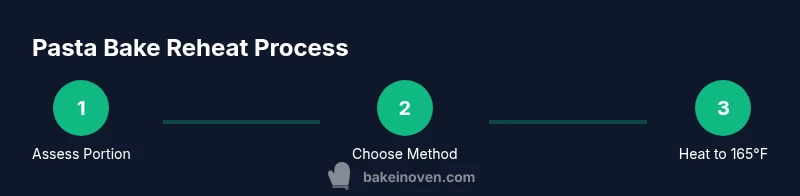
Assess the portion
Choose a reasonable portion size to heat evenly. Smaller, thinner layers heat more uniformly than a large block. This prevents cold centers and reduces overall reheating time.
Tip: Even layers promote consistent temperature throughout. - 2
Choose your method
Decide between oven, microwave, or stovetop based on time and texture goals. The oven yields even heating and a better crust; the microwave is fastest for small portions; the stovetop is good for sauce re-emulsification and quick reheats.
Tip: If texture is priority, favor the oven. - 3
Prepare the dish
Transfer pasta bake to a shallow dish, add a splash of water or milk if the sauce looks thick, and cover with foil or a microwave-safe lid.
Tip: Covering traps moisture to prevent drying out. - 4
Reheat in the oven
Place in preheated oven on the middle rack. Heat until 165°F (74°C) in the center, usually 20–30 minutes depending on portion size. Uncover for the last 5–10 minutes if you want a crisper top.
Tip: Check after 15 minutes to avoid overcooking. - 5
Reheat in the microwave
Heat in 1–2 minute bursts at 70% power, stirring or rotating halfway. Rest for a minute before checking temperature. Repeat if needed until 165°F (74°C) is reached.
Tip: Moisture helps; a damp towel on top can aid even heating. - 6
Finish and rest
Let the reheated dish stand for 2–3 minutes to let heat distribute. A final cheese shake or herbs can refresh flavor and texture.
Tip: Rest time improves texture and flavor. - 7
Check safety before serving
Use a thermometer to confirm the center is at least 165°F (74°C). If not, reheat a bit longer using the same method, avoiding scorching.
Tip: Always rely on a thermometer for safety. - 8
Serve and enjoy
Slice evenly and serve hot with complementary sides. Store any leftovers promptly and reheating again only if necessary, following the same safety steps.
Tip: Keep leftovers portioned to reduce waste.
Frequently Asked Questions
Can I reheat pasta bake with dairy in it?
Yes, you can reheat dairy-containing pasta bakes, but heat gently and to a safe temperature to prevent curdling or separation. Let the dish rest briefly after reheating to improve texture. If the sauce looks separated, stirring or adding a splash of milk can help re-emulsify.
You can reheat dairy pasta bakes, but heat gently and check the temperature. Rest briefly after reheating to improve texture.
Is it safe to reheat pasta bake more than once?
It's best to reheat leftovers once. Each subsequent reheating raises safety risks and can degrade flavor and texture. If you must, reheat only freshly stored portions and discard any leftovers after the final reheating.
It's best to reheat leftovers once. If you reheat again, ensure it’s still safe and within flavor tolerance.
What’s the best method to reheat pasta bake for texture?
The oven is generally the best for texture, especially if you want a hot, bubbling sauce and a lightly crisp top. For speed, the microwave works but may soften edges. Stovetop reheating can re-emulsify sauce, especially for dairy-based recipes.
For texture, the oven is usually best; microwaving is faster but can soften edges.
How long can I store pasta bake leftovers?
Refrigerate leftovers promptly and use within 3-4 days for best quality. For longer storage, freeze portions and thaw safely in the fridge before reheating.
Store in the fridge for 3-4 days, or freeze portions for longer storage.
Can frozen pasta bake be reheated?
Yes, but reheating from frozen takes longer. Oven reheating from frozen typically requires about 60-75 minutes at 350°F (175°C) covered, then uncover to finish. Frozen portions can also be thawed in the fridge before reheating for more even heat.
It can be reheated from frozen; expect longer times and consider thawing first for best results.
Watch Video
Key Takeaways
- Reheat pasta bake to 165°F (74°C) safely.
- Choose oven for best texture, microwave for speed.
- Portion reheating to ensure even heating.
- Avoid reheating leftovers more than once.