Can You Bake Salmon From Frozen? A Step-by-Step Guide
Learn how to bake salmon from frozen safely and deliciously with practical steps, tips, and science-backed guidance from Bake In Oven.


Yes — you can bake salmon from frozen, and it can come out moist and flavorful with a straightforward oven method. This approach saves time and reduces prep steps, provided you follow safe handling and doneness guidance. We’ll outline a reliable bake-from-frozen technique and explain how to adjust heat, time, and seasoning for best results.
Can You Bake Salmon When It's Frozen? What to Expect
If you’re pressed for time or stocking your freezer for quick meals, you may be asking yourself can you bake salmon when it's frozen. The simple answer is yes. In Bake In Oven’s kitchen tests, frozen salmon can bake into a tender, flaky dinner without thawing first, as long as you manage heat and doneness carefully. This approach is especially handy for weeknights, meal-prep, or when you forgot to thaw in advance. The goal is even cooking from edge to center, so start with a hot oven and a shallow tray, and keep a close eye on the fish as it cooks. Throughout this guide, you’ll find practical steps, flavor ideas, and warning signs to help you achieve reliable results every time.
Why Freezing Changes Texture and Flavor
Freezing alters the texture of salmon by forming ice crystals that can puncture muscle fibers. This can lead to slightly drier or more opaque flesh if not cooked with attention. However, when you bake frozen salmon, you lock moisture more quickly on the surface and gradually finish the center, which can keep the fish juicy if you don’t overcook. Flavor wise, the frozen state can mellow brightness, but a bright finishing touch—lemon, herbs, and a dab of butter or olive oil—restore vibrancy. The practical takeaway is simple: expect a modest texture shift, but with careful timing and proper doneness checks, the result can still be delicious.
Thawing vs. Baking Frozen: Pros and Cons
Thawing salmon first reduces total cooking time and can improve skin texture for some recipes, but it requires planning and space in your fridge. Baking from frozen eliminates thawing, which is ideal for last-minute meals or busy days. The trade-off is longer overall cook time and a higher likelihood of slight over-drying if you rush the finish. If you’re aiming for a crisp crust or a very delicate glaze, thawing may give you more control. Bake In Oven recommends choosing the method that best fits your schedule, then sticking to proper doneness checks to ensure safety and flavor.
The Safe, Effective Method: Bake Frozen Salmon in the Oven
To bake frozen salmon safely, begin with a clean workspace and a preheated oven. Use parchment-lined sheet pans to minimize sticking and easy cleanup. Place fillets in a single layer with space between pieces. Lightly oil and season the surface, using salt, pepper, and citrus zest or fresh herbs if you like. Bake until the flesh turns opaque and flakes easily—and verify with a thermometer that the internal temperature has reached a safe minimum per health guidelines. For fish, many authorities recommend reaching 145°F (63°C). If your fillets are thick, you may need more time; thinner portions will cook faster. Allow a brief rest before serving to reabsorb juices and maintain moisture.
Seasoning and Finishing Touches
Seasoning from frozen can be quick and flavorful. A simple mix of salt, pepper, and lemon zest works well, or whisk a quick herb butter for a glossy finish. A light crust of breadcrumbs or crushed nuts adds texture without adding lengthy cooking time. Finish with fresh herbs like dill or parsley and a squeeze of lemon for brightness. If you want an extra glossy top, broil for the last 1–2 minutes, but watch closely to prevent burning. The aim is balanced seasoning that enhances the salmon’s natural flavor without overpowering it.
Troubleshooting Common Issues
If the salmon dries out, check the oven temperature and avoid overcooking. Frozen fillets can release more moisture, so be prepared to check doneness a bit earlier than you would for thawed fillets. If the center remains translucent, give it a few more minutes and test again. Overcooked salmon becomes tough and crumbly; reduce heat slightly and consider a shorter rest to retain moisture. If you’re not getting a crust or glaze, brush on a thin layer of oil during cooking and finish under a brief broil. Small adjustments go a long way when cooking from frozen.
Quick Reference: Doneness Cues Without a Thermometer
Look for an opaque color throughout the fillet and a clean, flaking texture when prodded with a fork. The surface should be moist but not syrupy, and there should be even color from edge to center. If you’re unsure, use the fish’s natural translucence as a guide and check in increments to avoid overcooking. Aroma can also tell a story: properly cooked salmon should smell clean and mildly briny, not fishy or strong.
Putting It All Together: A Simple Weeknight Menu
Serve your bake-from-frozen salmon with quick-steamed vegetables and a starch like quinoa or rice. A light lemon-dill butter or yogurt-dill sauce complements the fish without masking its flavor. For meal prep, bake a few fillets at once and portion for lunches. Store leftovers in the fridge promptly and reheat gently to preserve moisture. The approach keeps weeknight meals efficient without sacrificing taste or safety.
Tools & Materials
- Oven(Preheat to 400-425°F (205-220°C) depending on thickness.)
- Baking sheet(Line with parchment for easy cleanup and to prevent sticking.)
- Parchment paper(Use for lining the sheet pan.)
- Oil (olive or neutral)(Light coating to prevent sticking and aid browning.)
- Salt and pepper(Basic seasoning to taste.)
- Lemon or lemon zest(Bright finish if desired.)
- Herbs/spices (dill, parsley, paprika)(Optional for flavor layers.)
- Digital meat thermometer(Check internal temperature safely.)
- Fork and tongs(For testing doneness and handling.)
Steps
Estimated time: 25-40 minutes
- 1
Preheat and prepare
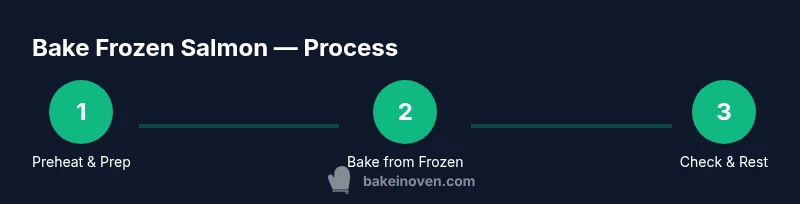
Preheat your oven to 425°F (220°C). Line a sheet pan with parchment and pat the frozen fillets dry with a paper towel to help the surface brown. This reduces moisture buildup and helps a light crust form.
Tip: A hot oven promotes surface browning and reduces the chance of soggy edges. - 2
Arrange fillets
Place the frozen salmon fillets in a single layer on the prepared pan, skin-side down if your fillet has skin. Space them evenly to ensure uniform cooking.
Tip: Avoid overcrowding; air needs to circulate for even heat. - 3
Season and oil
Brush lightly with oil and season with salt, pepper, and optional zest or herbs. Oil helps conduct heat and enhances flavor without thawing.
Tip: A light hand on salt prevents over-seasoning since the fish is frozen. - 4
Bake and monitor
Bake in the preheated oven until the center is no longer translucent and the edges are set. Use a thermometer to check that the internal temperature has reached the recommended safe minimum.
Tip: Check after 75% of expected time and then in 5-minute intervals. - 5
Rest and test
Remove from oven and let rest 3-5 minutes. The juices redistribute, improving moisture and flavor.
Tip: Resting helps retain moisture when you slice. - 6
Serve or store
Slice and serve with a fresh squeeze of lemon or yogurt sauce. For leftovers, refrigerate promptly and reheat gently to avoid drying.
Tip: Leftovers are best enjoyed within 2-3 days.
Frequently Asked Questions
Can you bake salmon from frozen without thawing?
Yes. Baking from frozen eliminates thawing time and can produce a tasty result if you watch the heat and check doneness carefully.
Yes, you can bake salmon from frozen, and it works well when you monitor cooking time and doneness.
Is frozen salmon safe to eat?
Frozen salmon is safe to eat when kept frozen until cooking and heated to a safe internal temperature. Follow standard food-safety guidelines.
Frozen salmon is safe when properly stored and cooked to a safe temperature.
What temperature should I bake frozen salmon at?
A common approach is to bake at 400-425°F (205-220°C) and finish with a brief broil if you want extra crust. Always check for doneness with a thermometer.
Bake at around four hundred degrees and finish to your preferred crust after testing for doneness.
How can I tell when it’s done without a thermometer?
The fish should be opaque throughout and flake easily with a fork. If it’s still translucent in the center, give it a few more minutes and test again.
Look for opaque flesh that flakes easily. If unsure, test again after a few minutes.
Should I thaw the salmon for a crisper skin?
Thawing can help you achieve crisper skin or a more even crust, but it adds planning time. If you’re short on time, bake from frozen and finish with a quick broil.
Thawing might improve crispness, but you can still bake from frozen with a good finish.
What if my fillets are very thick?
Thicker fillets will need more time. Start checking earlier with a thermometer and increase time in small increments to avoid overcooking.
Thicker fillets take longer; monitor doneness with a thermometer and adjust time gradually.
Watch Video
Key Takeaways
- Can you bake salmon from frozen? Yes, with proper technique.
- Use parchment, moderate-high heat, and test for doneness.
- Season thoughtfully and rest before serving.
- Food safety: reach safe internal temperature before serving.