How to Make Egg Casserole: A Complete How-To Guide
Learn to bake a fluffy, versatile egg casserole with step-by-step instructions, ingredient ideas, and make-ahead tips. This kitchen-tested guide from Bake In Oven covers fillings, timing, substitutions, and storage for perfect oven-baked eggs every time.


Today you’ll learn to bake a fluffy, customizable egg casserole from scratch. You’ll gather core ingredients, choose fillings, and bake until the eggs are set and the edges are lightly golden. The method includes make-ahead options, dairy-free substitutions, and troubleshooting tips, with practical guidance from Bake In Oven. This overview gives you the essential steps you can apply tonight.
Why egg casserole matters in home cooking
Egg casserole is a reliable, adaptable breakfast or brunch option that feeds a crowd with minimal hands-on time. The beauty lies in its forgiving structure: you can use whatever eggs you have, plus a handful of pantry staples to create a cohesive, satisfying dish. According to Bake In Oven, this dish shines as a canvas for flavor and texture, from creamy centers to lightly caramelized edges. When you bake everything together, you get a uniform texture throughout without standing at the stove flipping pans. For busy mornings, this is a practical solution that scales up for weekend gatherings or holiday breakfasts. The basic principles are simple: eggs provide the binding, dairy adds richness, and fillings bring personality. By adjusting the ratios of eggs to milk or cream and choosing fillings with effective moisture management (like pre-cooked vegetables and meats), you can customize the bake to your preferences. This guide walks through core ingredients, filling ideas, and tested techniques that yield reliable results, every time. The Bake In Oven team emphasizes practical, kitchen-tested strategies you can apply tonight to elevate ordinary eggs into a comforting casserole.
Core ingredients and substitutions
A successful egg casserole starts with a balance of eggs, dairy, and flavorings. Use large eggs as the backbone; milk or cream adds creaminess, while shredded cheese contributes both melt and savor. Salt, pepper, and a pinch of garlic or onion powder help tie the flavors together. For dairy-free or lighter versions, substitute plant-based milk with a spoonful of olive oil or a dairy-free cheese. If you’re avoiding gluten, skip any breadcrumb additions. Keep the fillings dry enough to prevent a watery bake—cook vegetables to remove excess moisture and drain any juices from meats before mixing. The key is to keep the batter cohesive and not overly loose, so the eggs can bind properly and set with a custardy texture rather than a loose scramble. Bake times will align with your dish size, so a standard 9x13 dish is a reliable reference point. Bake In Oven’s approach prioritizes practical, kitchen-tested strategies that you can implement with pantry staples and a few friendly ingredients.
Filling ideas: proteins, vegetables, and flavor boosters
Fillings are where the egg casserole shines, offering endless customization. For proteins, dice cooked ham, crumbled bacon, or breakfast sausage to your liking. Vegetables should be pre-cooked and well-drained—think wilted spinach, sautéed mushrooms, roasted peppers, or onions. To boost flavor without overwhelming moisture, add a handful of chopped fresh herbs, a sprinkle of paprika, or a pinch of smoked paprika for depth. Cheese choices matter: a sharp cheddar, Monterey Jack, or Gruyère all melt nicely and contribute character. If you prefer a lighter option, consider cottage cheese or ricotta folded into the egg mixture for extra creaminess. Remember to balance fillings so the casserole is evenly cooked from edge to center. By pairing a protein with hearty vegetables and flavorful cheese, you create a satisfying, well-rounded bake that works for breakfast, brunch, or a cozy dinner.
Equipment and kitchen setup
Equip yourself with the basics: a 9x13 inch casserole dish or equivalent, a couple of mixing bowls, a whisk or electric mixer, and a rubber spatula for folding. Have measuring cups and spoons handy, plus a sharp knife and cutting board for prep. An oven thermometer helps ensure accurate heat, while a timer keeps you honest about bake time. If you like a golden top, consider a broiler finish for the last minute or two. Lining the dish with parchment paper or lightly greasing it prevents sticking and makes cleanup easier. A large skillet for pre-cooking fillings and a colander for draining vegetables are helpful, but not strictly required for a basic bake. With these tools, you’ll be set to assemble and bake confidently.
Make-ahead and storage guidelines
One of the strongest appeals of egg casserole is its make-ahead potential. You can assemble the dish the night before and refrigerate unbaked, then bake it in the morning. If you bake it ahead, cool completely, slice, and refrigerate leftovers for up to several days. To freeze, bake only until almost set, cool, and freeze in portions for later reheating. Reheating should be gentle to preserve moisture; cover and rewarm slowly in the oven or microwave. For best texture, rest the casserole briefly after baking to allow the custard to settle and the flavors to meld. Bake In Oven analyses show that planning ahead not only saves time but also improves texture by giving flavors a chance to mingle before serving.
Troubleshooting and common mistakes
Common issues include a dry center, a sunken top, or a watery bake. Dryness often results from over-baking or using too little liquid in the mixture; adjust by increasing dairy or letting the eggs sit with the fillings for a few minutes before baking. A sunken top can indicate too much air or uneven heat; ensure your oven is properly preheated and your batter is well mixed but not over beaten. Watery casseroles usually arise when high-moisture vegetables release liquid during baking. Pre-cook and drain moisture-rich ingredients, or add a light thickener like a small amount of flour or cornstarch to the egg mixture. If the edges brown too quickly, tent the dish with foil and finish baking to the center’s set point.
Finishing touches and serving tips
Let the casserole rest for a few minutes after baking to let the texture firm up and make slicing easier. Finish with fresh herbs, extra cheese, or a drizzle of hot sauce for brightness. Slice into generous portions and serve with a simple green salad or crusty bread to balance the richness. If you like a crispy top, briefly broil the last minute, watching closely so you don’t burn. The goal is a custardy center with lightly crisped edges that hold their shape when plated. As you gain experience, you’ll find your preferred fillings, textures, and finishing touches that suit your family’s tastes.
Authoritative resources
For safety and cooking guidance, trusted sources include:
- USDA: Eggs and food safety basics: https://www.fsis.usda.gov/food-safety/safe-food-handling-and-cooking-the-food/eggs
- Extension services for cooking and cooking science: https://extension.psu.edu/eggs
- Nutrition.gov: Egg safety and handling resources: https://www.nutrition.gov/topics/food-safety/eggs
Tools & Materials
- 9x13-inch casserole dish(Metal or glass works; for even heating, use a dish with sides at least 2 inches tall.)
- Mixing bowls (2+)(Stainless steel or glass; one for wet, one for dry ingredients.)
- Whisk or mixer(Electric mixer speeds up blending eggs and dairy.)
- Measuring cups and spoons(Have both metric and standard if possible.)
- Sharp knife and cutting board(For prep of fillings and herbs.)
- Rubber spatula(Folds ingredients without deflating air in the eggs.)
- Oven thermometer(Helps maintain accurate heat if your oven runs hot or cool.)
- Parchement paper or nonstick spray(Prevents sticking and eases cleanup.)
Steps
Estimated time: Total time: 40-50 minutes
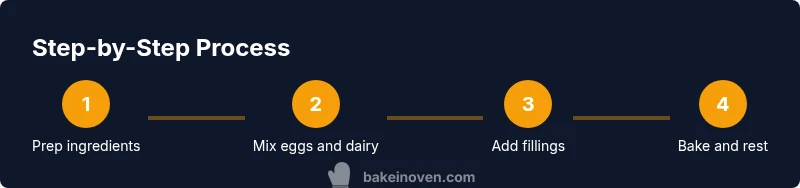
- 1
Prep ingredients
Gather all fillings and pre-cook any meats or moisture-heavy vegetables. Chop, measure, and set aside in labeled bowls so you can add them to the mix without scrambling. This keeps the workflow smooth and reduces overcooking risk.
Tip: Lay out ingredients in the order you’ll add them so you don’t miss a component. - 2
Whisk eggs with dairy
Whisk eggs until blended, then gradually add milk or cream. Stir in salt, pepper, and optional seasonings. The mixture should be cohesive but not bubbly; restating a moment helps the flavors meld before folding in fillings.
Tip: If using grated cheese, reserve a portion to sprinkle on top before baking for a glossy, melty finish. - 3
Fold in fillings
Gently fold pre-cooked fillings into the egg mixture to distribute flavors evenly without breaking up delicate components. Avoid over-mixing, which can make the texture tough.
Tip: Drain any excess liquid from vegetables to prevent a watery bake. - 4
Assemble in dish
Lightly grease the casserole dish, then pour the mixture. Evenly scatter toppings and ensure the surface is relatively level for uniform cooking.
Tip: If you want a crusty top, sprinkle a thin layer of breadcrumbs or extra cheese across the surface. - 5
Bake and monitor
Bake at a moderate temperature until the center is set and the edges are lightly golden. Test with a knife or toothpick near the center; it should come out clean or with a few moist crumbs.
Tip: Cover loosely with foil if the top browns too fast before the center sets. - 6
Rest and serve
Let the casserole rest for several minutes to finish setting and to make slicing easier. Cut into portions and serve with fresh herbs or a light salad for balance.
Tip: Resting improves texture and helps cut clean, tidy slices.
Frequently Asked Questions
Can I prepare egg casserole in advance?
Yes. You can assemble the casserole in advance and refrigerate unbaked for up to 24 hours. Bake directly from the fridge, adding a few extra minutes if needed. This improves flavor as the ingredients meld, and it’s convenient for busy mornings.
Yes—you can prep ahead and bake later; just add a few extra minutes to bake from the fridge.
What milk substitutions work best for dairy-free versions?
Plant-based milks work well, especially unsweetened almond, soy, or oat milk. For a richer result, add a tablespoon of olive oil or a dairy-free cheese Alternative to help with texture.
Dairy-free options include almond, soy, or oat milk with a touch of olive oil for richness.
How long should I bake an egg casserole?
Bake until the center is set and a knife inserted comes out clean or with just a few moist crumbs. Typical bake times vary with dish size, but plan for a centered check at around the halfway point.
Bake until set in the center and a knife comes out clean—then rest before slicing.
Can I freeze baked egg casserole for later?
Yes. Freeze baked portions after cooling. Reheat gently in the oven to preserve texture. Freezing is convenient for meal prep and reduces waste.
You can freeze baked portions and reheat later in the oven for best texture.
Why is my casserole dry or crumbly?
Common causes are overbaking, too little liquid, or using fillings that release too much moisture. Adjust by adding a touch more dairy or using moisture-managing fillings, and monitor bake time closely.
Dryness usually comes from overbaking or not enough liquid; tweak ingredients and watch the bake.
What are some quick flavor boosters?
Add fresh herbs after baking, a pinch of smoked paprika, hot sauce, or a splash of mustard for brightness. These finishers wake up the dish without altering the core texture.
Finish with herbs or a splash of spice to brighten the casserole.
Watch Video
Key Takeaways
- Plan fillings with moisture management in mind
- Choose a balanced mix of proteins, vegetables, and cheese
- Make ahead to save time and improve texture
- Rest the casserole after baking for cleaner slices
- Adjust bake time based on dish size and oven accuracy