How to Bake a Ham: A Complete Home Guide
Master the art of baking a ham that stays juicy, evenly cooked, and flavorful with a kitchen-tested method from Bake In Oven. Includes thawing, glazing, roasting, temps, resting, carving, and leftovers.


By following this guide, you will bake a ham that is juicy, evenly cooked, and flavorful. You’ll learn how to choose a ham, thaw safely, glaze effectively, roast with the right technique, and verify doneness with a thermometer. Start with a fully thawed ham and track progress for reliable results.
Why Bake a Ham Makes a Great Centerpiece
A baked ham has long been a centerpiece for family gatherings and holiday feasts. Its aroma, tender slices, and comforting sweetness bring warmth to the table. For home bakers, a properly cooked ham offers reliable, forgiving flavor with straightforward prep. According to Bake In Oven, a well-prepared ham rewards patience and precise heat management more than fancy equipment. The core idea is to heat the meat gently toward a safe internal temperature, allowing the natural sugars in glaze and meat to caramelize at the edges. In this guide, you’ll see a clear path from thawing to carving, with practical tips to prevent common pitfalls such as drying out or uneven glaze. You’ll also learn how to adapt the process for bone-in versus boneless hams and fully cooked versus raw hams. The goal is predictable results you can repeat for holidays, Sundays, or weeknight meals.
Choosing the Right Ham
Your choice begins with the type of ham: bone-in vs boneless; fully cooked vs raw. Bone-in hams often yield richer flavor and easier slicing, while boneless hams simplify carving. Most home cooks select a fully cooked ham to minimize risk and time; raw hams require longer cooking and more careful temperature control. When buying, check the label for cooking notes and glaze compatibility. If you plan to glaze, a pre-glazed product might already have sugar; If you prefer a custom glaze, choose an unglazed, fully cooked ham and build your glaze from pantry staples like brown sugar, mustard, and citrus. Thaw times vary; plan ahead to avoid rushing the oven. Bake In Oven analysis, 2026 suggests starting with a ham that’s thawed and at or near refrigerator temperature for even heat distribution. Decide on bone-in or boneless early, as this affects roasting time and carving technique.
Preparing for Success
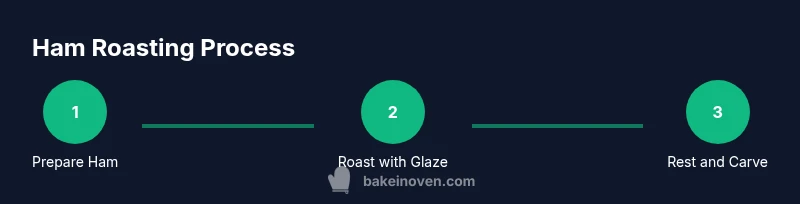
Prepare your workspace: preheat the oven, line your pan, and assemble glaze ingredients. Remove any plastic netting and trim excess fat, leaving a thin fat cap to baste. Scoring the fat in a diamond pattern helps the glaze render and caramelize. If your ham is frozen, thaw completely using fridge thawing for 24-48 hours, or use cold water thawing for more speed (change water every 30 minutes). For safety and flavor, pat the surface dry before applying glaze. Place the ham on a rack in a shallow roasting pan to promote even heat circulation; add a small amount of liquid (water or broth) to the pan to prevent scorching. The goal is to heat evenly, not scorch the surface. The glaze should be prepared ahead to brush during roasting.
Glaze Fundamentals: Building Flavor
Glazes add sweetness, acidity, and color. A simple, versatile glaze uses brown sugar or maple syrup, Dijon mustard for tang, and a splash of apple juice or orange juice for brightness. You can adjust sugar level by cutting with ketchup or soy sauce for depth. If you prefer a more savory finish, mix honey, garlic, and mustard with a little white wine or stock. Brush on the glaze at the start of roasting, and reapply every 25-30 minutes or during every basting interval. The glaze should cling without sliding off; if it runs, return to the pan for a few minutes to thicken before applying again. Keep a separate brush reserved for glaze to avoid cross-contamination with raw meat.
Roasting Techniques: Covered vs Uncovered
To keep moisture, cover the ham with foil during the majority of roasting. The foil traps steam and prevents the outer layer from drying. Remove the foil in the last 15-20 minutes to let the surface brown and glaze caramelize. Position the ham on a rack so hot air circulates around the meat. If your ham is large, you may rotate the pan halfway through to promote even cooking. For extra flavor, baste with pan juices or glaze during the final minutes. A small amount of liquid in the pan will help maintain humidity and prevent scorching.
Checking Doneness: Temperature, Timing, Rest
Doneness is best judged with a reliable digital thermometer. For a fully cooked ham, reheat to 140°F (60°C) and hold for service. For a raw ham, cook to 145°F (63°C) and rest; some prefer 150°F (65°C) for safety margins. Always check in the thickest part of the meat, away from bone. If you see the glaze browning too fast, tent with foil and reduce oven temperature slightly. After removing from the oven, let the ham rest 10-15 minutes before carving; this rest allows juices to reabsorb, yielding juicier slices. If you used a glaze, apply a last brush just before serving.
Resting and Carving for Juicy Slices
Resting is essential; it evenly distributes juices. Transfer the ham to a cutting board and tent loosely with foil for 15-20 minutes. Slice against the grain for tenderness and thinner slices for better portion control. If the bone is present, cut along the bone to separate the meat; for boneless hams, slice straight across the grain. Serve with pan juices or a light glaze drizzle for extra moisture.
Troubleshooting Common Issues
Dry edges: reduce oven temperature or cover earlier; glaze too thick: thin glaze with more juice; glaze not brown: increase sugar content or broil briefly at the end. Lumpy glaze can be warmed slightly and whisked to smooth. If you thawed ham too quickly, it may cook unevenly; ensure even heat with a rack. If the ham smells off, discard.
Variations, Leftovers, and Reheating
Leftover ham scraps can be used in soups, sandwiches, or casseroles. Reheat slices gently to avoid drying; cover with glaze or broth to keep moisture. For an easy glaze, swirl a bit of fruit jelly into the pan juices and spoon over slices. Freeze leftovers in portions for quick meals and use within 3-4 days for best quality.
Tools & Materials
- Roasting pan with rack(Large enough for bone-in ham; keep rack elevated for air flow)
- Aluminum foil (heavy-duty)(To tent the ham and control browning)
- Digital meat thermometer(Probe with immediate read; monitor thickest part)
- Basting brush (silicone)(For applying glaze without tearing the surface)
- Carving knife and sharpened blade(For clean, thin slices)
- Carving fork(Optional for stability while slicing)
- Cutting board (large)(Stable surface for carving)
- Measuring spoons and cups(For glaze ratios and prep)
- Pan with a small amount of liquid(Water or broth to create steam)
Steps
Estimated time: 2 hours 30 minutes
- 1
Gather and inspect the ham
Unwrap the ham and remove any netting or packaging. Check for any bone fragments or excessive surface ice that could impede even heating. Pat dry with paper towels to ensure the glaze adheres properly.
Tip: Removing moisture helps glaze stick and prevents splattering. - 2
Temper the ham and prep it for scoring
If the ham came straight from the fridge, let it rest on the counter for about 30-60 minutes to approach room temperature for even heating. Score the fat cap in a shallow diamond pattern to help uniform fat rendering and glaze uptake.
Tip: Keep the score marks shallow to avoid slicing into meat. - 3
Make the glaze and ready the rack
Whisk together your chosen glaze ingredients and set aside. Place a rack in the roasting pan so the ham doesn't sit in its own juices. Having a rack ensures airflow around the meat for even cooking.
Tip: Use a separate brush for glaze to prevent cross-contamination. - 4
Position ham and start roasting
Place the ham on the rack in the pan. Tent loosely with foil. Preheat the oven to a moderate temperature (around 325-350F) and slide the pan in. The goal is steady heat, not a blast.
Tip: A pan of water in the bottom keeps the oven humid and helps prevent drying. - 5
First glaze and cover adjustments
After the first 30-45 minutes, remove the foil for glaze application and browning. Brush the glaze on evenly and return to the oven. Repeat every 25-30 minutes, ensuring the glaze thickens and sticks.
Tip: If glaze gums up, warm slightly to loosen before brushing. - 6
Check temperature and adjust heat
Begin checking the internal temperature in the thickest part of the meat with a thermometer. If the ham is fully cooked, target 140°F (60°C) for reheating; raw ham should reach 145°F (63°C). If needed, drop heat slightly to prevent burning.
Tip: Always test away from bone for accuracy. - 7
Finish roasting and rest
When the target temperature is reached, remove the ham from the oven and cover loosely with foil. Let it rest 15-20 minutes before carving to redistribute juices. The surface will set and slice more cleanly.
Tip: Resting is as important as cooking for juiciness. - 8
Carve and serve
Carve across the grain into thin slices. If bone-in, follow along the bone to free the meat, then slice. Serve with pan juices or extra glaze for moisture and flavor.
Tip: Keep slices warm by covering lightly until ready to plate. - 9
Cleanup and plan leftovers
Collect glaze drippings and cool before storing. Use leftovers for sandwiches, soups, or casseroles within a few days for best quality.
Tip: Label and freeze extra portions for longer storage.
Frequently Asked Questions
What is the safest internal temperature for a baked ham?
Fully cooked ham should be reheated to 140°F (60°C); raw ham should reach 145°F (63°C). Always check in the thickest part away from bone.
Reheat to about one hundred forty degrees for fully cooked ham; for raw ham target one forty-five degrees, checking away from bone.
Should I thaw ham before baking?
Yes. Plan for fridge thawing (about 24-48 hours for typical sizes). If pressed, use cold water thawing, changing water every 30 minutes. Do not bake from frozen.
Thaw completely in the fridge for best results; if you're short on time, use cold water thawing with frequent water changes.
Glaze before or after roasting?
Glaze during roasting in intervals to build color and flavor; applying too early can burn. Start glazing after the initial bake and reapply at intervals.
Apply glaze during the roast, not at the very start, to avoid burning while building flavor.
Can I bake a ham from frozen?
It’s best to thaw before roasting. Baking from frozen can take much longer and may cook unevenly. If unavoidable, expect significantly longer time and monitor doneness carefully.
Avoid baking from frozen if possible; it takes longer and may cook unevenly.
How should I carve baked ham?
Rest the ham, then slice across the grain for tenderness. If bone-in, cut along the bone to free the meat, then slice. Serve with pan juices or glaze for moisture.
Let it rest, then slice across the grain for tender pieces.
Watch Video
Key Takeaways
- Rely on a thermometer to verify doneness.
- Thaw completely and temper the ham for even cooking.
- Apply glaze in stages for a glossy, flavorful crust.
- Rest the ham 15-20 minutes before carving for juicier slices.
- Bake In Oven recommends thermometer-guided roasting for reliable results.