How Long Do You Bake Salmon For: A Practical Guide
Learn exactly how long to bake salmon for perfect tenderness. This guide covers temperatures, thickness adjustments, doneness tests, and flavor ideas, with practical tips for home bakers seeking reliable results.


According to Bake In Oven, preheat to 375-400°F and bake fillets skin-side down until just opaque. For salmon about 1 inch thick, this usually takes 8-12 minutes; thicker portions need more time. Use an instant-read thermometer to target 125-130°F for a tender, medium center, or 145°F for fully cooked, then rest 3-5 minutes.
How baking times impact texture and safety
Understanding how long to bake salmon is essential for achieving tender, flaky flesh without drying it out. The bake time is influenced by thickness, oven accuracy, whether the skin is on or off, and even how you preheated the pan. The Bake In Oven team emphasizes starting with a reliable baseline and adjusting from there. A well-timed bake yields a moist interior with a delicate crust along the exterior, while overcooking leads to a dry, chalky center. For home cooks, the practical takeaway is to set a predictable oven temperature, monitor doneness with a thermometer, and rest briefly to let juices redistribute. Bake times are a guideline—not a guarantee—and small adjustments based on your specific fish and equipment will produce consistent results. Bake In Oven Analysis, 2026 shows that most home bakers prefer a simple thickness-based approach supported by thermometer checks to minimize guesswork.
The baseline guidelines: temperature and general timing
Most home bakers start with a moderate oven and a forgiving target. Bake salmon fillets at a temperature range of 375-400°F (190-205°C). This range promotes even cooking and reduces the chance of overly browned edges. As a general rule, plan for roughly 8-12 minutes per inch of thickness, though this is only a starting point. Thicker fillets require more time, thinner portions finish sooner. For safety and texture, aim for an internal temperature of about 125-130°F (52-54°C) for a tender, medium center, or 145°F (63°C) for a fully cooked center. If you prefer a firmer texture, pull the salmon a touch early and let carryover cooking finish the job. Oven, pan, and whether you use parchment or a lightly oiled sheet can shift these times.
Accounting for thickness: inches matter
Thickness is the primary driver of bake time. Measure the fish at the thickest part and use that as your guide. For fillets around 1 inch thick, start around 8-12 minutes; for 1.5 inches, plan closer to 12-16 minutes; for 2 inches, look at 16-20 minutes. Always consider individual fish: a bulky portion of a thicker cut will need extra minutes, while thinner pieces finish earlier. If your fillets have skin, the skin helps retain moisture, slightly affecting the time needed to achieve a crisp exterior. When in doubt, use a thermometer to confirm doneness rather than chasing a fixed minute count.
Types of salmon and their effects on bake time
Wild-caught vs farm-raised salmon differ in fat content and texture, which can influence cooking time. Skin-on fillets tend to stay juicier and slightly longer to cook through than skinless, because the skin provides a barrier to moisture loss. Pan-searing before finishing in the oven is another technique that can shorten bake time and improve crust. If you’re using chunk or portion sizes beyond standard fillet shapes, adjust times accordingly, and always check with a thermometer to avoid overcooking.
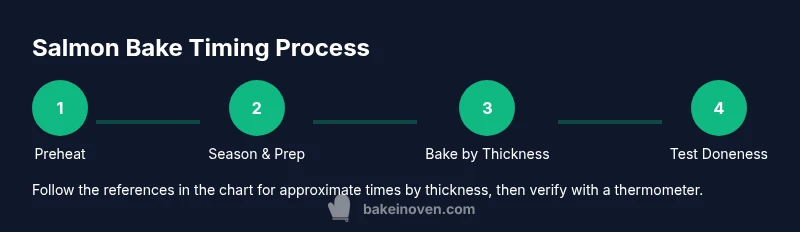
Step-by-step timing by thickness (quick-reference chart)
- 1 inch thick: 8-12 minutes
- 1.25 inch thick: 10-14 minutes
- 1.5 inch thick: 12-16 minutes
- 1.75 inch thick: 14-18 minutes
- 2 inch thick: 16-20 minutes
These are rough ranges. If your oven runs hot or you’re using a glaze or marinade, adjust by 1-2 minutes per inch. Always verify with a thermometer for best results.
How to test for doneness without a thermometer
A reliable visual cue is the color and texture transitioning from translucent to opaque near the center. When the thickest part turns opaque and flakes gently with light pressure from a fork, it’s close to done. If you’re unsure, cut a small slit in the center to inspect the color. A thermometer makes this step more precise, but a careful eye can work in a pinch. Resting for a few minutes will carryover cook the fish slightly and improve juiciness.
Oven prep and pan setup to ensure even cooking
Preheat thoroughly and prepare a sheet pan with parchment paper to prevent sticking and ease cleanup. Arrange salmon fillets with space between pieces to promote even heat circulation. If you can, position the pan on a middle rack and avoid overloading the sheet. A light brush of oil or a thin glaze helps the exterior develop a pleasant crust. For extra evenness, consider flipping the fillets once if they are skin-on, halfway through cooking.
Common mistakes and how to fix them
Common errors include not preheating the oven, drying the surface with towels, overcrowding the sheet, and relying solely on time rather than a thermometer. To fix these, always preheat, pat the fish dry, leave space between pieces, and monitor doneness with internal temperature checks. Also, be mindful of carryover cooking; remove salmon a touch early if you want a pinker center, then rest before serving.
Flavor ideas to finish salmon after baking
Finish with lemon zest, fresh dill or parsley, and a pat of butter or a light drizzle of olive oil. A glaze of honey and soy, or a quick yogurt-dill sauce, can add brightness without masking the fish’s natural flavor. Pair with simple sides like roasted vegetables, quinoa, or a crisp green salad to complete a balanced plate.
Tools & Materials
- Oven(Preheated to 375-400°F)
- Baking sheet(Rimmed for drips; line with parchment)
- Parchment paper(Prevents sticking and makes cleanup easy)
- Instant-read thermometer(Targets 125-130°F for medium; 145°F for fully cooked)
- Tongs or spatula(For safe, gentle handling)
- Paper towels(Pat dry the fish for better browning)
- Small bowl (optional)(Mix seasonings or glaze)
- Basting brush (optional)(Apply oil or glaze evenly)
Steps
Estimated time: 20-30 minutes
- 1
Preheat oven
Preheat your oven to 375-400°F (190-205°C) to ensure even cooking from the start.
Tip: Wait for the oven to reach the target temperature before placing salmon inside. - 2
Dry and season
Pat salmon dry with paper towels and season with salt, pepper, and any aromatics you like.
Tip: Dry surfaces create a better crust and prevent steaming. - 3
Line and prepare pan
Line a baking sheet with parchment and lightly oil to prevent sticking.
Tip: Parchment eases cleanup and helps prevent delicate fillets from sticking. - 4
Arrange salmon
Place fillets skin-side down (if skin-on) on the prepared sheet and brush with a thin layer of oil or glaze.
Tip: Leave space between pieces for even hot air circulation. - 5
Check doneness with thermometer
Bake until the center reaches 125-130°F for medium or 145°F for fully cooked, then remove and rest 3-5 minutes.
Tip: Remove salmon slightly below target to account for carryover cooking. - 6
Rest and serve
Let the salmon rest briefly to redistribute juices, then serve with your favorite sides.
Tip: Resting improves juiciness and flavor perception.
Frequently Asked Questions
What is the best temperature to bake salmon?
A moderate oven around 375-400°F is a reliable starting point for most fillets. This range supports even cooking and helps prevent drying out. Adjust slightly based on thickness and your oven’s accuracy.
A steady oven at about 375 to 400 degrees Fahrenheit is a good starting point for most fillets. Adjust a bit for thickness and your oven.
Should I bake salmon with skin on or off?
Skin-on salmon helps retain moisture and can add flavor, especially when finished with a crisped exterior. Skinless fillets cook a bit faster and can be more forgiving for very lean cuts.
Skin-on helps retain moisture and can crisp nicely; skinless cooks a bit faster.
Can I bake salmon from frozen?
Yes, but it requires longer cooking time and a lower risk of uneven doneness. It’s best to thaw first for even heat distribution, then bake using the standard method.
You can bake from frozen but expect longer cooking; thawing first is usually best for even cooking.
What should I serve with baked salmon?
Bright, quick sides like roasted vegetables, a simple grain, or a green salad pair well. A yogurt-dill sauce or lemon-butter drizzle complements the fish without overpowering it.
Roasted veggies and a light grain pair nicely; lemon butter or yogurt-dill sauce works well too.
Why does my salmon look dry but taste undercooked?
This usually means the surface cooked too quickly or the fish was removed too early. Use a thermometer to guide removal and aim for a slight amount of carryover cooking.
It’s often from uneven cooking; use a thermometer to time it correctly and let carryover heat finish the job.
Is it okay to open the oven door during baking?
Opening the door briefly is generally fine, but frequent opening can cause temperature fluctuations that slow cooking. Minimize door openings for consistent results.
Avoid opening the door often; it can drop oven temperature and slow cooking.
Watch Video
Key Takeaways
- Start with 375-400°F and check doneness with a thermometer
- Time scales depend on thickness; rest after baking
- Skin-on fillets stay juicier and are easier to manage
- Season well and line the pan for clean, even results