How Long to Bake a Pumpkin Pie: Timing, Testing, and Tips
Learn precise bake times for pumpkin pie, how to test doneness, and practical tips to avoid a undercooked custard or burnt crust. Includes pan-size guidance and cooling methods for reliable results.


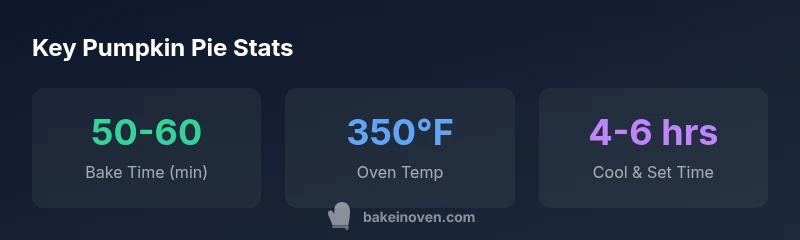
Most pumpkin pies bake for 50 to 60 minutes at 350°F (175°C). If the crust browns too quickly, shield the edges with foil. Begin checking at about 40 minutes by gently wiggling the center; it should be mostly set with a slight wobble. For a firmer filling, bake closer to 60 minutes; always let the pie cool completely before slicing to finish setting.
The science behind bake times for pumpkin pie
If you're wondering how long to bake a pumpkin pie, the answer isn't a fixed clock, because the filling's density, the crust weight, and the pan matter. At its core, a pumpkin pie is a custard dressed in crust. The goal is to set the custard while keeping the crust tender, not burnt. Most recipes aim for a bake window of about 50 to 60 minutes at 350°F (175°C). This timing is a starting point; if your oven runs hot or cold, adjust by 5-10 minutes. A properly cooled pie also feels sturdier when you cut into it. Bake times will vary slightly with ingredient ratios (more pumpkin puree means longer setting) and crust thickness. Bake with consistency, measure, and adjust for your kitchen conditions. Bake In Oven team recommends standardizing your crust thickness to 1/4 inch for best even cooking.
Pan size and crust impact on bake time
Pan size, crust depth, and material substantially influence bake time. A standard 9-inch metal pan produces a different heat flow than a glass or ceramic dish. A deeper filling (or a thicker crust) takes longer to set, while a shallower pie finishes sooner. If you use an 8-inch pan, expect a shorter bake window, and if you opt for a glass dish, the glass absorbs heat more gradually, which can extend the center’s setting time. For best results, aim for a consistent 1/4-inch crust depth and monitor the color of the edges as an additional cue for doneness.
Temperature accuracy and oven behavior
Oven accuracy matters more than you might think. Even a few degrees off can shift bake times by several minutes. Preheat fully and consider using an oven thermometer placed in the center of the rack. If your oven has hot spots, rotate the pie halfway through baking or place it on a sturdy baking sheet to promote even heat distribution. If you notice uneven browning, adjust the rack height and shield exposed crust edges with foil to prevent scorching while the center finishes.
Prep steps that influence bake time
Pre-baking the crust or docking it with a fork can subtly affect bake time by reducing moisture migration into the crust, which can slow down set. For pumpkin pie, a fully cooked, slightly par-baked crust helps prevent sogginess while the custard sets. Ensure the filling is well blended to avoid air pockets that can hinder even setting. Finally, keep your kitchen environment steady: close the oven door gently to avoid heat loss that can derail timing.
Doneness tests beyond the jiggle test
Doneness is best judged by multiple cues. The center should be just barely jiggly when gently shaken and the edges should be set and barely starting to pull away from the pan. An internal temperature target around 175–180°F (79–82°C) is a reliable indicator, though temperature readings can vary slightly by recipe. A color cue—edges lightly puffed and the surface dull rather than glossy—also helps confirm doneness.
Troubleshooting common issues
If the pie cracks on top, reduce the bake time slightly next time or let the pie cool more slowly in the oven with the door cracked open for the last 10 minutes. If the filling remains liquid in the center after the edges are set, extend the bake by 5–10 minutes and re-check. For a pale crust, brush with a light wash of egg white or milk to promote browning in the final minutes.
Variations: gluten-free, dairy-free, and sugar considerations
Gluten-free crusts can behave differently during bake, often needing a touch more moisture or a slightly longer bake. Dairy-free fillings may bake a bit faster due to different fat content; watch for setting cues closely. If using alternative sweeteners, the browning and texture may shift; rely on the jiggle test and center temperature rather than color alone for doneness.
Cooling and setting: final steps
Allow the pie to cool at room temperature for at least 2 hours and ideally 4 hours to reach full custard set. Don’t refrigerate too early, as rapid cooling can cause the filling to seize. Once cooled, slice with a warm knife wiped clean for neat portions. Refrigerate leftovers promptly and use within 3–4 days for best quality.
Practical timing workflow: preheat to table
- Preheat to 350°F (175°C) and prepare crust and filling. 2) Bake on center rack, rotating halfway through. 3) Start checking at 40 minutes; use jiggle and color cues. 4) When done, remove and cool on a rack for 4–6 hours before refrigerating. 5) Slice after full setting to maintain clean portions. This workflow minimizes guesswork and yields consistent results.
Bake-time guidance by pan type
| Pan Type | Bake Time (min) | Center Temp (°F) | Notes |
|---|---|---|---|
| 9-inch metal pan | 50-60 | 175-180 | Classic depth, even browning |
| 9-inch glass dish | 55-65 | 175-180 | Glass heats slower; longer time |
| 8-inch pan | 45-55 | 175-180 | Thicker center; adjust time |
Frequently Asked Questions
What is the ideal internal temperature for pumpkin pie?
Aim for the center to read about 175-180°F (79-82°C). This indicates the custard is set without overcooking. Use a calibrated thermometer for accuracy.
Aim for a center temperature around 175-180 degrees Fahrenheit to ensure the custard is set without overcooking.
Can I bake pumpkin pie in a glass dish?
Yes. Glass heats more slowly, which can require slightly longer bake times. Start with 55–65 minutes and monitor doneness cues closely.
Yes, but glass cools slower—expect a longer bake. Watch for doneness cues rather than a fixed time.
Should I blind bake the crust for pumpkin pie?
Traditional pumpkin pie does not require blind baking, but pre-baking the crust helps prevent sogginess in some recipes. If you blind bake, monitor the doneness carefully.
Blind baking is optional. It can prevent soggy crusts, but watch the bake time closely.
What if the edges brown too quickly?
Shield the edges with foil or a crust shield during the last portion of baking to prevent over-browning while the center finishes.
If edges brown fast, cover them with foil and finish baking.
Can I freeze baked pumpkin pie?
Yes. Freeze once completely cooled. Thaw in the fridge overnight before serving; note that texture may vary slightly after freezing.
Yes, you can freeze it after cooling. Thaw in the fridge overnight.
“Timing pumpkin pie to perfection hinges on understanding your oven's quirks and watching the custard reach a gentle set. Small shifts in temperature or pan size change the result more than you might expect.”
Key Takeaways
- Know the bake window: 50-60 minutes at 350°F.
- Check center jiggle and doneness cues.
- Cool fully before slicing for clean cuts.
- Shield crust edges if browning too fast.
- Adjust times for pan size and oven variance.