How Long to Bake Cubed Sweet Potatoes: A Practical Guide
Master the timing for cubed sweet potatoes with clear steps, cube-size tips, and oven guidance to achieve tender centers and crisp edges every time.


Goal: bake cubed sweet potatoes until tender inside and lightly crisp outside. Expect 20-25 minutes at 425°F (218°C) for 3/4-inch cubes. Toss with oil and seasonings, spread in a single layer, and flip or shake halfway through. For larger or smaller cubes, adjust by 5-7 minutes. Use a fork test to check doneness.
Why timing matters for cubed sweet potatoes
Timing is everything when you cook cubed sweet potatoes. The moment you seal in moisture and create a crisp exterior hinges on how long you bake and at what temperature. For home bakers asking how long to bake cubed sweet potatoes, the answer depends on cube size, oven accuracy, and whether you cut the potatoes into uniform pieces. According to Bake In Oven, consistent timing starts with uniform cubes and a preheated oven. When the cubes are roughly the same size, heat reaches every piece at the same rate, reducing the risk of undercooked centers or overcooked edges. A well-timed bake also improves texture: the interior stays soft and fluffy, while the exterior develops a light caramelization. This is especially important for meal-prep days when you want a reliable base for bowls, salads, or roasting alongside other vegetables. Bakers should start with a standard size, such as 3/4-inch cubes, then test doneness with a fork and adjust future batches based on results. Remember that oven performance varies; if yours runs hot or cool, you may need to shave a few minutes off or add a few minutes more. The key is consistency: measure, cut, and preheat, then monitor once the pan hits the oven. Bake times are guides, not rules, and practice helps you dial in the perfect window for your kitchen.
How cube size changes bake time
Uniform cube size is the loudest predictor of bake time. When you cut sweet potatoes into congruent pieces, heat reaches each cube in a similar way, producing even browning and avoiding a few mushy centers and several dry edges. If you go with smaller cubes, they will cook faster; bigger cubes take longer. The recommended starting point is typically 3/4-inch cubes, which balance interior tenderness with exterior browning. If you switch to 1/2-inch cubes, expect a shorter window, while 1-inch cubes will require a more extended period and more careful flipping to prevent scorching. In practice, many home cooks notice that the first batch of 3/4-inch cubes finishes in the 20-25 minute range at about 425°F, giving you a reliable baseline. After you gain experience, you can customize by cube-size and desired outcome. For meal prep, consider using a single batch with uniformly sized pieces across multiple trays so you can rotate pans without rearranging. If you need to speed things up for a weeknight dinner, you can par-cook them briefly in the microwave to start tenderizing; finish in the oven for color and texture. The goal is predictable, repeatable results rather than a one-time perfect bake.
Temperature and cookware considerations
Choosing the right temperature is key to achieving the balance between a soft interior and a well-browned exterior. A common target is 425°F (218°C), which provides steady heat for even browning without burning the edges of evenly cut cubes. If you use a convection oven, you may notice faster browning and shorter overall times; in this case, start checking for doneness a few minutes earlier and reduce the suggested time by a small margin. The type of pan also matters: a light-colored rimmed sheet pan reflects heat differently than a dark nonstick surface, so you may need to quiet external browning by adjusting the rack height or rotating the pan during baking. For those who prefer a crisper finish, a preheated pan and a light mist of oil help create browning on all sides. Conversely, using too much oil can leave you with soggy edges, so aim for an even, thin coating. Remember to preheat your oven so the moment the cubes hit the tray, heat transfer begins immediately.
Prep for even browning
Even browning requires uniform pieces and careful handling before they enter the oven. Start by scrubbing and, if desired, peeling the sweet potatoes, then dice into consistent 3/4-inch cubes. Pat the cubes dry to remove surface moisture, which can hinder browning. Toss the pieces with a neutral oil (like canola or light olive oil) just enough to lightly coat each cube, then season with salt, pepper, and a pinch of paprika or garlic powder for warmth. Use parchment paper or a silicone mat on the baking sheet to prevent sticking and promote easy turning. Spread cubes in a single layer with space between pieces; overcrowding steams the surface instead of browning. When you’re ready to bake, slide the sheet into the oven and set a timer for halfway through to flip the cubes for even color. The goal is uniform contact with hot air for steady browning on all sides.
Doneness tests and troubleshooting
The fork test is your best friend: insert a fork into a cube—if it slides in with little resistance, the interior is tender. If the edges look deeply browned but the centers remain firm, give the tray another 3-5 minutes and check again. If the edges are scorched before the centers soften, consider lowering the oven temperature 25°F (14°C) for future batches or move the tray to a higher rack. Conversely, if the potatoes are pale and limp, you may need to extend the bake time slightly or ensure your oil distribution was even. For easier testing, you can pre-cut all cubes to the same size and use a timer that pings when you flip the tray. Don’t rush the process; consistent timing yields the best texture across the pan, especially when you plan to mix these cubes into bowls or combine with other roasted vegetables.
Flavor variations and serving ideas
Cubed sweet potatoes are versatile; you can keep them simple with just salt and pepper or add bold flavors to complement specific dishes. Try a paprika-garlic blend, a touch of cumin for warmth, or a lemony herb mix with thyme and rosemary. A light drizzle of honey or maple syrup toward the end of baking adds a subtle caramelized glaze. For a savory option, finish with grated parmesan or a sprinkle of chili powder for a kick. These cubes pair beautifully with leafy greens, quinoa, roasted chickpeas, or as a topping for bowls and salads. If you’re serving with a protein, adjust your seasonings to harmonize the entire plate rather than overpowering the other flavors. Always taste and adjust salt after the first bake to avoid under-seasoning on larger batches. For leftovers, store cooled cubes in an airtight container and reheat in the oven to preserve texture rather than microwaving, which can soften the crisp exterior.
Batch cooking and meal prep strategies
When you’re planning ahead, batch cooking cubed sweet potatoes can save a lot of time during busy weeks. Prepare a larger batch, keeping all cubes uniformly sized on a rimmed sheet pan. Bake in batches if you don’t have multiple pans, rotating trays halfway to maintain even browning. Once cooled, portion the cubes into meal-prep containers for quick additions to bowls, wraps, or salads. Reheat in a hot oven or toaster oven to recapture some crispness, rather than microwaving, which tends to soften the exterior. If you want variety, cook a second batch with a different seasoning blend so you have two flavor profiles ready to go. By keeping a consistent cube size and preheating your oven, you’ll build a reliable routine that saves time and enhances flavor across many weeknight meals. For reference, Bake In Oven’s approach emphasizes uniform pieces, preheated heat, and minimal moisture to achieve the best texture.
Authority and references
This guide aligns with general cooking guidance from reputable sources:
- https://www.fsis.usda.gov/food-safety
- https://extension.illinois.edu
- https://www.nutrition.gov
Tools & Materials
- rimmed baking sheet(1 per batch; prefer dark or light depending on browning preference)
- parchment paper or silicone mat(for easy cleanup and to prevent sticking)
- large mixing bowl(for tossing cubes with oil and seasonings)
- sharp chef's knife(8-inch works well)
- cutting board(stable surface; non-slip if possible)
- measuring spoons(for precise seasoning)
- neutral oil (canola or light olive oil)(about 1-2 tablespoons per pound)
- salt and pepper(basic seasoning)
- optional spices (paprika, garlic powder)(for flavor variations)
- oven mitts(for handling hot sheets)
- kitchen timer(to track flip and bake times)
Steps
Estimated time: Total time: 40-45 minutes
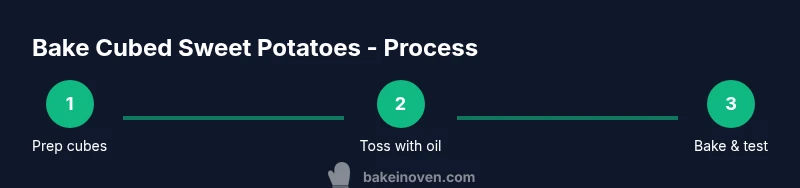
- 1
Preheat and prep
Preheat the oven to 425°F (218°C). Line a baking sheet with parchment or a silicone mat and have your oil and spices ready. This ensures a quick start and even browning once the cubes hit the hot surface.
Tip: Preheating is essential; it reduces the time needed for the potatoes to start browning. - 2
Dice into uniform cubes
Wash and peel (optional) the sweet potatoes, then dice into consistent 3/4-inch cubes. Uniform sizes guarantee even cooking and predictable texture across the pan.
Tip: Aim for uniformity; inconsistent sizes create a range of doneness and can slow overall browning. - 3
Toss with oil and seasonings
Toss the cubes with a light coating of oil and a pinch of salt, pepper, and any chosen spices. The oil helps with browning and flavor adherence.
Tip: Use just enough oil to coat; excess oil can pool and cause soggy edges. - 4
Spread in a single layer
Place the cubes on the prepared sheet in a single, even layer with space between pieces. Avoid crowding to promote browning on all sides.
Tip: If needed, use two pans to maintain space between pieces. - 5
Bake and flip halfway
Bake for 20-25 minutes at 425°F, then flip or shake the pan to promote even browning. Return to the oven and continue baking until tender and lightly caramelized.
Tip: Flipping ensures even surface browning and avoids undercooked centers.
Frequently Asked Questions
Can I skip peeling the sweet potatoes?
Yes, you can leave the skin on for extra texture and nutrients. Scrub thoroughly to remove dirt, and cut evenly. The skin adds a slight bite and color to the dish, and it will still bake well with the same timing as peeled cubes.
You can leave the skin on after scrubbing; it adds texture and nutrients, and won’t affect bake time significantly.
What if I need to bake them faster?
Use smaller cubes or a hotter oven for quicker browning, but monitor closely to prevent scorching. If you prefer a crisp exterior with less time, start with a hotter oven for the first 8-10 minutes, then reduce to the standard 425°F for the remainder.
Smaller cubes bake faster; you can also start at a higher temperature for a brief period, then settle into the usual bake.
How should I store leftovers?
Cool the cubes completely, then store in an airtight container in the refrigerator for up to 3-4 days. Reheat in a hot oven or toaster oven to recapture some crispness, rather than microwaving which can soften the exterior.
Let them cool, refrigerate in an airtight container, and reheat in a hot oven to keep the texture.
Can I use frozen cubed sweet potatoes?
Yes, but thaw and dry the cubes first to remove excess moisture. Frozen chunks may take longer to cook and may not brown as evenly, so start checking earlier and expect extended time.
You can use frozen cubes, but thaw, pat dry, and expect longer cooking and possibly less browning.
What seasonings pair best with sweet potatoes?
Simple salt and pepper work well, plus paprika for warmth or garlic powder for depth. For a sweet-savory contrast, a light drizzle of maple syrup or honey during the last few minutes can create a gentle glaze.
Classic salt and pepper are great, with paprika or garlic powder for depth. A touch of maple glaze in the final minutes adds sweetness.
Can I add other vegetables on the same sheet?
Yes, but choose vegetables with similar cooking times and cut them to uniform sizes. Keep space between items to prevent steaming and help browning. If in doubt, roast different vegetables on separate sheets to optimize texture.
You can roast other veggies with them, but keep sizes uniform and give each type space to brown.
Watch Video
Key Takeaways
- Uniform cube size matters for even doneness.
- Preheat and spread cubes in a single layer for browning.
- Time varies with cube size; test with a fork.
- Light oil and simple seasonings enhance flavor and texture.
- Conventional oven yields reliable results; convection can reduce time slightly.