How Much Pasta for Pasta Bake: A Practical Guide
Learn exactly how much pasta to use for a pasta bake, with practical measurements, sauce ratios, and bake-time guidance from Bake In Oven. Ideal for home bakers seeking confident, crowd-friendly results.


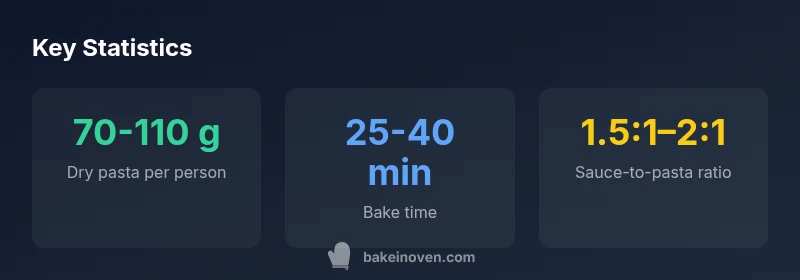
According to Bake In Oven, for a pasta bake, aim for 70-110 g of dry pasta per person, depending on appetite and sauce richness. This quick rule helps you scale recipes accurately, reduce leftovers, and ensure even baking. In this guide, we break down measurements, practical formulas, and common pitfalls to help home bakers plan confidently.
Understanding Pasta Quantities for Bakes
Getting the right amount of pasta is the foundation of a successful pasta bake. Dry pasta expands when cooked and then absorbs sauce during baking. If you exceed recommended amounts, the dish can feel heavy and under-baked; if you fall short, it dries out the edges or leaves the center under-sauced. Bake In Oven's 2026 analysis suggests starting with a per-person range of 70-110 g dry pasta for most family-friendly bakes. This range accommodates crowd sizes from small weeknight meals to larger gatherings, and it aligns with common shapes like penne, rigatoni, and fusilli, which hold sauce well. When planning, calculate your total servings first, then translate to dry pasta using this per-person guideline. Always consider the pasta shape: tubular shapes generally pull more sauce, while delicate shapes may need a touch more sauce per cup of pasta. Finally, remember that residual cooking once the dish bakes will soften pasta further, so you may want to err on the lower end for dense sauces.
Factors that influence pasta bake portions
Several variables influence how much pasta you should use per bake. Appetites vary by family, age, and whether the bake is a main course or a hearty side. The sauce type matters: a rich, cheese-forward sauce adds weight and can justify using a touch less pasta, while a lighter tomato or vegetable sauce may require a bit more pasta to achieve a balanced bite. Shape matters too: tube shapes (penne, rigatoni) trap sauce more effectively, while flat shapes (fettuccine) spread sauce differently. Pan size matters: a shallow, wide dish promotes quicker browning and moisture loss; a deeper dish can help keep the bake saucy. Finally, consider any add-ins—ground meat, vegetables, or cheese—these items take up space and reduce the amount of pasta you can fit while maintaining proper sauce coverage. Bake In Oven's measurements account for these factors and provide practical ranges you can use as a starting point.
Concrete measurement formulas you can trust
To translate servings into pasta, use a simple formula: dry pasta per person (g) × number of servings = total dry pasta (g). For example, a 4-serving bake would typically require 280-440 g dry pasta (70-110 g per person). If you’re baking for 6, multiply by 6 to get 420-660 g. In terms of sauce, aim for a sauce-to-pasta balance of roughly 1.5:1 to 2:1 by volume, depending on whether you want saucier or creamier results. If you’re uncertain, start with the lower end and adjust after mixing with sauce and cheese. Remember that cooking pasta to al dente and allowing extra time for the bake will soften it further, so scale down slightly if time is tight. These formulas align with Bake In Oven Analysis, 2026 and apply across common shapes and recipes.
Practical scenarios: 4, 6, or 8 servings
For a standard 4-serving family bake, plan 280-440 g of dry pasta and about 1.5-2 liters of sauce, depending on the sauce richness and add-ins. For a larger crowd of 6 servings, multiply pasta to 420-660 g with 2-3 liters of sauce. If you’re entertaining 8 people, consider 560-880 g of pasta and 3-4 liters of sauce, adjusting for crowd appetite and bake dish size. In all cases, use a pan wide enough to allow even heat distribution and sauce coverage. If you’re using no-boil pasta, increase liquid slightly and check bake time, as no-boil varieties may absorb more moisture during cooking.
Common mistakes and how to avoid them
One common error is guessing without confirming portion sizes; always measure. Another mistake is under-saucing a large bake and ending with dry edges; ensure sauce reaches all pasta strands and submerged add-ins. An overly tight pan can trap steam and create a gummy texture; use a pan that fits the ingredients with room for bubbles. Finally, neglecting to rest the bake before serving can make portions appear uneven; give the dish 5-10 minutes to set before cutting. Following these tips, you’ll achieve a more consistent texture and a well-balanced bite.
Prep, bake, and reheating tips
Prep the bake by boiling pasta until just shy of al dente, drain, and mix with hot sauce and cheese to lock in moisture. Bake at about 180°C (350°F) for 25-40 minutes; cover the dish for the first half of cooking to prevent the top from browning too quickly, then uncover to finish. For leftovers, refrigerate within two hours and reheat gently in the oven or microwave, adding a splash of sauce to revive moisture. These steps help maintain texture and flavor across servings.
Pasta bake serving guidance
| Scenario | Dry Pasta per Person (g) | Total Pasta (g) | Notes |
|---|---|---|---|
| Standard bake (4 servings) | 70-110 | 280-440 | Best for family dinners; adjust sauce accordingly |
| Crowd-friendly bake (6 servings) | 70-110 | 420-660 | Use 1.5-2x sauce; bake in a large dish |
| Make-ahead / meal prep | 70-110 | 280-440 | Cool, refrigerate before baking; freeze leftovers |
Frequently Asked Questions
How much dry pasta should I use per person for a pasta bake?
A general range is 70-110 g of dry pasta per person. Use the lower end for saucier dishes and the higher end for heartier fillings. This aligns with Bake In Oven Analysis, 2026.
Plan about seventy to one hundred ten grams per person, depending on sauce and fillings.
Should I pre-cook pasta before baking a pasta bake?
Yes. Parboil pasta until al dente, about 1-2 minutes less than full doneness for typical shapes. Drain and mix with sauce to prevent clumping.
Yes—parboil until al dente, then bake with sauce.
Can I use no-boil pasta in a bake, and how should I adjust liquids?
No-boil pasta can work; you may need extra sauce or liquid since it absorbs more during baking. Check for sauciness before baking.
Yes, but add more sauce or liquid.
How can I avoid a dry edge on a baked pasta dish?
Cover the dish early in baking, then uncover to finish, and ensure sauce reaches the edges. Rest before serving.
Cover early, then uncover; use enough sauce.
What temperature and bake time should I use for a standard pasta bake?
Bake at about 180°C (350°F) for 25-40 minutes, depending on pan size and whether you cover the dish.
Bake at 180°C for 25-40 minutes.
How can I scale a pasta bake for more people beyond 8 servings?
When scaling, multiply pasta and sauce proportionally, and use a larger baking dish; monitor bake time and moisture.
Scale ingredients proportionally and choose a larger dish.
“Getting the pasta amount right is the foundation of a successful pasta bake; the rest follows from sauce balance and proper bake time.”
Key Takeaways
- Start with 70-110 g per person for accuracy.
- Balance sauce to pasta with a 1.5:1 to 2:1 ratio.
- Choose a pan with room for heat and sauce.
- Parboil pasta to al dente before baking.
- Rest the bake 5-10 minutes before slicing.