How to Bake Already Cooked Ham: A Practical Guide
Learn how to safely reheat and glaze already cooked ham in the oven with clear steps, temperature guidance, and practical tips from Bake In Oven.


According to Bake In Oven, you can bake already cooked ham to a juicy, evenly heated main dish. This guide covers warming to 140°F, glazing for flavor, and safe handling. You’ll need a baking dish, foil, thermometer, and a simple glaze. Follow the step-by-step process below for best results. This introduction emphasizes safety and texture goals.
How to bake already cooked ham: Foundations
If you’re starting with a fully cooked ham, your goal is to warm it through without drying it out, and to add a flavor layer via glaze. The key is gentle heat, minimal handling, and timely glazing. The phrase how to bake already cooked ham describes a reheating method that respects the meat’s texture while building a glossy exterior. There are two common forms of ham you’ll encounter: bone-in and boneless. Bone-in pieces often take a touch longer to heat but can retain moisture better; boneless hams heat more quickly and slice evenly. Check the label for any manufacturer guidance, but as a rule, plan for low-to-moderate oven temperatures and a glaze that helps lock in moisture. Also consider the shape and thickness of the ham; a thick center will heat more slowly than the edges, so plan accordingly. In Bake In Oven’s experience, starting with a ham that’s not frozen and letting it come to near-room temperature for 20–30 minutes before heating yields more even results. This section sets the stage for a foolproof reheating, glazing, and serving plan. By following these fundamentals, you’ll preserve tenderness while achieving a savory, glossy finish that’s ready to carve.
Planning your bake: choosing a ham and preparations
Selecting the right ham for a warmed-and-glazed finish matters. If you’ve got a pre-cooked, bone-in ham, you’ll want a piece that fits your pan with a little clearance around and beneath for air circulation. If you’re working with a boneless half ham, you’ll want a loaf-shaped roast that rests evenly on a rack. Before you bake, remove the ham from the fridge and let it sit at room temperature for 20–30 minutes; this minimizes temperature shocks and helps heat distribute more evenly. Line your baking dish with parchment for easier cleanup and place a rack if available to lift the ham off the bottom. Prepare your glaze in advance, aiming for a balance of sweetness and acidity to pair with the pork. Have your thermometer ready, along with foil for tenting if you need to prevent overbrowning during the later glaze stage. Finally, measure your ham’s weight if you know it; this helps you estimate approximate heating time more accurately. If you’re uncertain about glaze flavor, test a small portion of glaze on a tiny edge piece to judge sweetness before applying to the whole surface.
Heat and safety: temperatures and handling
Because fully cooked ham is already safe to eat, your aim is to reheat it without overcooking the meat or drying the surface. The commonly recommended target is to heat until the internal temperature reaches 140°F (60°C). If you’re reheating leftovers or using a glaze with sugar, some cooks prefer covering the ham during the first phase and applying the glaze during the final minutes to avoid scorching. Use a reliable meat thermometer to check the thickest part of the ham, away from bone. Practice safe handling throughout: wash hands, sanitize surfaces, and avoid cross-contamination with raw ingredients. Once the ham hits the target temperature, remove from the oven and let it rest for 10–15 minutes before carving. Resting allows juices to redistribute, resulting in a moister slice. Remember that every oven heats differently, so use an initial timing window and check earlier rather than later. Bake In Oven analysis shows that gentle reheating yields juicier slices.
Glazes and flavor boosters
Glazes add both moisture and flavor, helping a reheated ham feel freshly roasted rather than reheated. Start with a simple base glaze and adapt based on your taste. Brown Sugar Mustard Glaze combines sweetness with tang to cut through the pork’s richness. Maple Glaze provides a warm, caramelized finish that pairs well with pork. Fruit-based glazes using apricot or pineapple preserves give a glossy sheen and bright, fruity notes. For each glaze, whisk the ingredients until smooth and reserve a small portion to brush on during the final minutes. Apply in a thin, even layer to avoid pooling and burning. If you prefer a crusty finish, apply a second light coat during the last 5–7 minutes of baking.
Oven setup and timing for even heating
Set your oven to a moderate temperature—usually 325–350°F (165–175°C). Use a rack in a shallow pan to promote air circulation beneath and around the ham. Cover the ham with foil during the early phase if you’re worried about drying, then uncover for the glaze-phase to allow color development. Brush on glaze every 15–20 minutes, taking care not to saturate the surface, which can make the texture soggy. Check the internal temperature with a probe thermometer in the thickest part of the ham; target 140°F (60°C). Once reached, remove from the oven, re-cover loosely with foil, and let it rest for 10–15 minutes before slicing to retain moisture.
Common mistakes and how to avoid them
Common mistakes include heating too quickly, which dries the surface; using too much glaze early, which can burn; and forgetting to rest before slicing, which lets juices escape when cut. To avoid these, keep temperatures moderate, apply glaze in thin layers toward the end, and let the ham rest after removing from heat. Always use a thermometer to verify doneness rather than relying on time alone. If you notice rapid browning near the glaze, tent with foil to protect the finish while the inside finishes warming. Finally, avoid slicing while the ham is hot; a short rest helps retain moisture and yields juicier slices.
Serving, storage, and leftovers
Carve the ham against the grain for tender slices and serve immediately with your favorite sides. If you have leftovers, wrap tightly in foil or plastic wrap and refrigerate within two hours of cooking. Leftover ham can be refrigerated for 3–4 days or frozen for longer storage. When reheating leftovers, follow the same safety principle: heat to 140–165°F until steaming hot, then serve. Label containers with dates to track freshness and consider turning remaining slices into sandwiches or soups within a few days for best quality.
Tools & Materials
- Meat thermometer (probe)(0–180°F range; ensures 140°F target is measurable in the thickest part)
- Baking dish with a rack(Large enough to hold ham and elevate it for air circulation)
- Heavy-duty aluminum foil(For tenting and glaze protection without burning)
- Glaze ingredients(Common bases like brown sugar, maple, mustard, fruit preserves)
- Parchment paper(Line pan for easier cleanup)
- Oven-safe gloves(Protection when handling hot pan)
Steps
Estimated time: 75-90 minutes
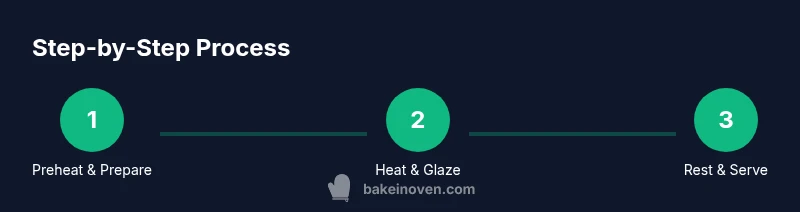
- 1
Preheat oven to 325°F (165°C)
Set the oven to 325°F (165°C) and allow it to come to temperature before placing the ham inside. A fully heated oven promotes even warming from edge to center.
Tip: Always preheat first; a cold start slows heat distribution. - 2
Prepare ham and pan
Remove packaging and any flavor packets. Place the ham on a rack in a shallow baking dish to ensure air can circulate around the meat.
Tip: A rack keeps the bottom from sitting in pooled juices. - 3
Score surface
Lightly score the surface in a diamond pattern to help glaze penetrate and to create an appealing presentation.
Tip: Keep cuts shallow to avoid cutting into the meat.” - 4
Whisk glaze and set aside
Combine glaze ingredients and whisk until smooth. Set aside a portion for finishing glaze in the final minutes.
Tip: A smooth glaze adheres better; avoid clumps that burn. - 5
Bake the ham (first phase)
Bake uncovered for the initial heating phase, allowing the meat to warm through before glazing.
Tip: Check progress after 40 minutes to adjust time if your ham is very thick. - 6
Apply glaze
Brush a thin, even layer of glaze over the ham and return to the oven for the final bake.
Tip: Avoid pooling glaze on the pan edges to prevent burning. - 7
Bake with glaze (final phase)
Bake 10–15 minutes more to set the glaze and create a glossy finish.
Tip: Watch closely; sugar-rich glazes can burn quickly near the end. - 8
Check temperature
Insert thermometer into the thickest part, aiming for 140°F (60°C).
Tip: If below target, continue heating in 5-minute intervals. - 9
Rest and slice
Remove from oven, tent with foil, and rest 10–15 minutes before carving.
Tip: Resting keeps juices inside for juicier slices.
Frequently Asked Questions
Can you reheat a fully cooked ham in the oven?
Yes. Reheat a fully cooked ham in the oven by warming to about 140°F (60°C) and glazing during the final minutes. Use foil to control browning and a thermometer to avoid overcooking.
Yes. Reheating in the oven to around 140°F keeps the meat moist; add glaze toward the end for flavor.
What temperature should the ham be heated to?
For fully cooked ham, aim for 140°F (60°C) in the thickest part. If you’re reheating leftovers, you may raise to 165°F (74°C) for safety. Always verify with a thermometer.
Aim for 140°F for best texture; leftovers may require higher temps for safety.
How long does it take to reheat a half ham?
Reheating time varies with weight and oven warmth. Plan for a gradual reheating period and check the internal temperature periodically with a thermometer rather than relying on time alone.
It varies by size; check the temperature rather than sticking to a fixed time.
Should I baste the ham during cooking?
Basting is optional. If you’re glazing, apply a thin layer near the end to avoid burning sugars. Basting early can add moisture but isn’t necessary if you’re using a rack.
Basting isn’t required, but a thin glaze late in cooking helps moisture and flavor.
Can I bake from frozen?
No. Bake from frozen is not recommended for even reheating. Thaw fully in the fridge overnight before cooking for best results.
Do not bake from frozen; thaw first for even reheating.
Watch Video
Key Takeaways
- Heat gently to preserve moisture and texture.
- Use a thermometer to reach 140°F for consistency.
- Apply glaze in final minutes for a glossy finish.
- Let the ham rest before carving to maximize juiciness.