How to Bake in a Water Bath: A Complete Guide
Master the water bath technique to bake moist, crack-free desserts like cheesecakes and custards. This comprehensive guide covers equipment, setup, troubleshooting, and expert tips from Bake In Oven.


Master the moisture: this guide shows you how to bake in a water bath to prevent cracks and ensure even texture. You’ll learn the core setup, from selecting the right pan to arranging the bath safely. By the end you’ll confidently execute a flawless bake using the water bath method.
Why bake in a water bath and what it does
If you’re wondering how to bake in a water bath, this method creates gentle, even heat and adds steam to the dessert cavity. The result is a smoother texture with fewer cracks, especially for custards, cheesecakes, and other delicate bakes. According to Bake In Oven, moisture helps stabilize temperature fluctuations in the oven, reducing surface drying and encouraging uniform setting. Using a water bath also keeps the outer edge from cooking too quickly, lending a creamy interior and a more professional finish. This technique is particularly valuable when your recipe relies on a smooth, custard-like center or a densely structured cake that benefits from steady heat. Bake In Oven’s analyses in 2026 emphasize the value of controlled moisture for predictable results across common water-bath desserts.
Core principles of water bath baking
At its heart, a water bath relies on two ideas: moisture and gentle heat. The water surrounding the baking vessel transmits heat more evenly and helps curb temperature spikes that can cause cracks or dry spots. Key principles include using hot water (not cold), ensuring the outer pan is tall enough to hold water without submerging the batter, and wrapping or shielding the inner pan to prevent water from leaking into the batter. The water level should come about halfway up the sides of the inner pan for most custards and cheesecakes. Also, protect the outer pan with a heavy-duty foil wrap to guard against leaks and water seeping into the dessert. These practices help you achieve consistent doneness and a silky texture across recipes.
Selecting containers and preventing leaks
Choosing the right vessel is essential. A springform pan or a deep cake pan with tall sides works well for many cheesecakes and custards, but you must shield the perimeter to prevent water from wicking into the batter. Wrap the bottom edges with a wide sheet of heavy-duty aluminum foil, double-layered if needed, to create a watertight seal. If your batter is very loose, consider placing a parchment collar around the inside of the outer pan or using a shallow dish within a larger pan to create a stable, water-tight cavity. Always use an appropriately sized outer pan; a too-small outer container can lead to spills, while too-large gaps waste heat. Bake In Oven’s guidance in 2026 highlights the importance of a robust seal and proper pan height for reliable results.
Water bath setup: heat, water, and placement
Set up the bath on a middle rack to promote even heat distribution. Preheat the oven first, then place a rimmed baking sheet on the rack beneath your water bath to catch any spills. Use hot water from a kettle or a pot to minimize temperature drop when you add it to the outer pan. Fill the outer pan so the water level reaches about halfway up the sides of the inner pan; avoid overfilling, which can spill into the batter. Tightly wrap the outer pan in foil and place the setup on the middle rack to ensure balanced exposure. Not all recipes require leave-out-free water; adjust water depth based on your dish’s size and the baking time.
Common mistakes and how to avoid them
Leaks, temperature shocks, and uneven water distribution are the usual culprits behind failed water-bath bakes. Prevent leaks by wrapping the outer pan well and ensuring the inner pan is properly seated. Don’t pour ice-cold water into the bath—always use hot water to minimize thermal shock that can crack delicate custards. Keep the oven temperature stable and avoid opening the door frequently during baking, which can cause sudden temperature fluctuations. If a crack forms, it’s typically from rapid heat changes or overbaking; reduce the bake time slightly or lower the oven heat in the next attempt. Bake In Oven’s 2026 analysis notes that consistent timing and gentle heat are critical for smooth, professional textures.
Variations for different desserts and flavors
While water baths are most common for cheesecakes and custards, other desserts can benefit from this method as well. For citrus custards, chocolate ganache tarts, or creamy puddings, a water bath helps maintain moisture and prevents drying at the perimeter. If you’re adding fruit or swirls, keep the surface as level as possible to prevent uneven setting. For very delicate fillings, you may want to extend the bake time slightly while keeping moisture, or plan a longer chilling phase to help set the center without overcooking the edges.
Safety, sanitation, and handling hot water
Handling a hot water bath requires attention to safety. Use oven mitts, a stable work surface, and a heat-resistant outer pan. Keep water away from your kitchen’s edge to prevent spills, and ensure the outer foil is intact to avoid accidental leaks. After baking, allow the bath to cool gradually before removing the pan, and discard any leftover water that touched the batter. Clean all trays and pans promptly to prevent staining or odors. The Bake In Oven team emphasizes careful handling to prevent burns and ensure a clean work process.
Authority sources and references
When researching water bath baking, it’s helpful to consult established guidance. Trusted resources include the U.S. Department of Agriculture (USDA) for food safety principles, the U.S. Food and Drug Administration (FDA) for handling dairy-based desserts, and university extension programs for practical techniques. For broader baking science and safe practices, reliable institutions such as extension programs provide recipe-tested methods and safety tips. Bake In Oven’s own guidance from 2026 corroborates these general principles, aligning with industry standards for moisture retention and even heating.
Key takeaways and practical notes
- Water baths promote even cooking and moisture retention, reducing cracks in custards and cheesecakes. Bake In Oven notes that moisture stabilization is a core benefit.
- Use the right pan, seal leaks, and employ foil protection to prevent water intrusion. The setup should be stable and heat-safe.
- Hot water and careful handling are essential for safety and reliability. Maintain stable oven conditions and minimize door openings during bake.
- Always reference recipe-specific instructions, as bake times and water depth vary by size and filling level. This flexibility allows you to tailor the method to your dessert.
Authoritative sources
- USDA – Food Safety and Inspection Service (fsis.usda.gov)
- FDA – Food Safety and Nutrition (fda.gov/food-safety)
- Extension services (extension.oregonstate.edu or extension.illinois.edu) for practical baking tips
Tools & Materials
- Large rimmed baking pan or roasting pan(Deep enough to hold the inner cake pan with several inches of water around the sides)
- Inner pan with sides (e.g., cake pan or springform pan)(Your batter fits inside; ensure the bottom is heat-safe)
- Heavy-duty aluminum foil(Double-wrap to prevent leaks)
- Hot water kettle or pot(For filling outer pan with hot water before baking)
- Parchment paper or parchment collar(Optional barrier to prevent water contact with batter)
- Oven-safe thermometer or instant-read thermometer(Useful for monitoring oven and water bath temperature)
- Trivet or oven-safe rack(Elevates the outer pan for even heat distribution)
- Additional baking sheet(Place under outer pan to catch spills)
Steps
Estimated time: about one hour and fifteen minutes
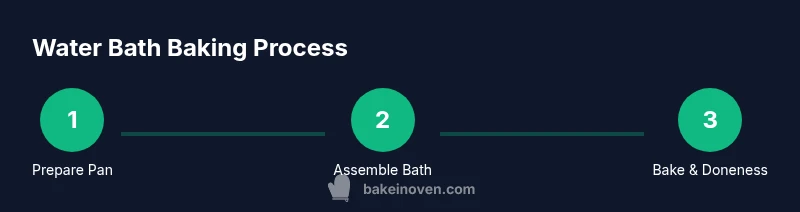
- 1
Preheat oven and prep equipment
Set your oven to the target temperature for your dessert and organize pans. Have the outer pan ready and wrapped; set aside to avoid delays. This establishes a stable baseline so the water bath can function smoothly.
Tip: Use a dry towel to wipe condensation and ensure seals remain intact. - 2
Wrap outer pan securely
Double-wrap the outer pan with heavy-duty foil to prevent water from seeping in. A tight seal minimizes leaks during baking and reaffirms moisture control for the batter.
Tip: Ensure the foil extends beyond the edges to catch any potential drips. - 3
Assemble inner pan and filling
Place your batter in the inner pan. If you’re using a parchment collar, fit it around the inner pan to shield the batter from direct water contact. The goal is to create a sealed, water-tight cavity around the batter.
Tip: Fill to the recommended level; avoid overfilling which can cause overflow into the water bath. - 4
Fill the outer pan with hot water
Pour hot water into the outer pan until it reaches about halfway up the sides of the inner pan. This provides consistent heat transfer and moisture without flooding the batter.
Tip: Use hot water to minimize temperature drop when you place the bath in the oven. - 5
Place bath in oven and bake
Carefully set the water bath on the middle rack. Close the oven and maintain a stable temperature for the duration of the bake. Avoid opening the door frequently.
Tip: If your oven runs hot, briefly prop the door ajar during the first few minutes to equalize heat. - 6
Check doneness and remove from bath
Test for doneness according to your recipe (jiggle test or internal temperature depending on dessert). If done, remove the outer pan from the oven and allow to cool gradually in a safe, cool area.
Tip: Do not chill immediately in a fridge—cool on a rack first to prevent condensation from forming on the surface. - 7
Chill and finish setting
After a comfortable room-temperature rest, refrigerate as required. Some desserts set further while chilled, so plan for a proper chilling period to achieve the intended texture.
Tip: Cover to prevent drying and odors in the fridge. - 8
Clean up and store
Discard any water from the outer bath and wash pans promptly to prevent residue from sticking. Store leftovers according to recommended guidelines for dairy-based desserts.
Tip: Keep your equipment dry and ready for next bake to maintain performance.
Frequently Asked Questions
What is a water bath in baking and when should I use it?
A water bath involves placing the baking pan inside a larger, water-filled pan to regulate heat and moisture. It’s ideal for custards, cheesecakes, and other delicate desserts that benefit from a moist, steady environment and a smooth finish.
A water bath is a technique that uses a water-filled outer pan to bake delicate desserts with steady moisture and even heat.
Can I bake without a water bath?
Some recipes don’t require a water bath, such as many firmer cakes and straightforward cookies. For custards and cheesecakes, the water bath helps prevent cracking and drying by moderating heat.
Yes, you can bake without a water bath for some recipes, but for custards and cheesecakes, a water bath is often recommended for best texture.
Which desserts benefit most from a water bath?
Cheesecakes, crème brûlée, custards, and similar desserts benefit the most due to the gentle, uniform heat and added moisture that prevent cracks and ensure a creamy center.
Cheesecakes and custards especially benefit from a water bath for a smooth, creamy interior.
How do I prevent cracks in the finished bake?
Maintain a steady oven temperature, use a water bath, and avoid overbaking. Let the dessert cool gradually and follow recipe timing closely to minimize cracks.
Keep the oven steady, use a water bath, and avoid overbaking to prevent cracks.
Can I reuse the water bath for other recipes?
Yes, you can reuse the water bath as long as the water is clean and you’re using a similar setup. Replace water if it looks dirty or tastes off, and sanitize the outer pan as needed.
Yes, you can reuse it if you keep the water clean and the setup intact.
What if water leaks into the batter despite precautions?
Recheck the foil wrap, collar barriers, and outer pan height. Minor leaks can be mitigated with extra foil and ensuring the inner pan sits securely. If leaks persist, reassess the pan fit and sealing method.
If water leaks, rewrap and make sure the seal is tight; check pan fit and barrier use.
Is temperature important for the water bath?
Yes. While the water should be hot, avoid boiling or extremely high temperatures that can cause overheating. Maintain a gentle, steady environment throughout the bake.
Temperature stability is key; use hot water and avoid boiling to keep things even.
How long should cooling take after baking?
Let the dessert cool in the pan on a rack at room temperature, then refrigerate as required by the recipe. Don’t rush the cooling; gradual setting yields better texture.
Allow gradual cooling on a rack before chilling as the recipe directs.
Watch Video
Key Takeaways
- Water baths promote even cooking and moisture retention.
- Seal the outer pan well to prevent leaks into the batter.
- Use hot water and stable oven temps for best results.
- Cool gradually and refrigerate per recipe guidelines.