How to Bake Quiche: A Complete Guide for Home Bakers
Learn how to bake quiche with a reliable crust and creamy custard. This kitchen-tested guide covers crust options, blind baking, fillings, baking times, and storage tips for perfect quiche every time.


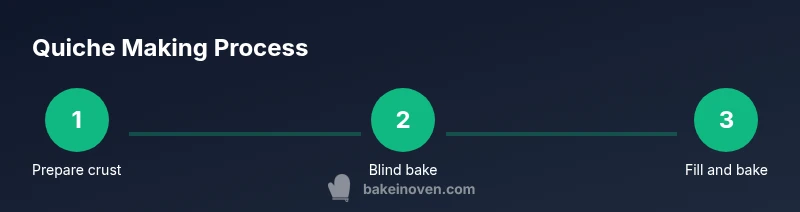
Master a reliable quiche with a crisp crust and silky custard by preparing crust, whisking a balanced egg-and-cream filling, and baking until just set. This guide shows a clear, kitchen-tested method for how to bake quiche, including crust blind-baking, recommended temperatures, and common substitutions. According to Bake In Oven, consistent crust texture comes from proper blind-baking and gentle filling handling—two keys for flawless quiche every time.
How to bake quiche: essential method
Learning how to bake quiche starts with two pillars: a flaky, well-structured crust and a custard that sets to a creamy, sliceable center. In this guide for home bakers, we’ll walk through selecting a crust, mastering blind baking, crafting a smooth custard, and building fillings that suit your tastes. Bake In Oven’s kitchen-tested approach emphasizes consistency: keep the crust crisp and the filling tender, while watching for signs of doneness. By following these steps, you’ll confidently produce quiche that is delicious warm or at room temperature, ideal for brunches and weekday meals alike.
Key idea: start with a crust that fits your pan, then treat the filling with careful whisking, gentle seasoning, and even heat. This combination yields a quiche with a professional texture right in your home oven.
Crust options for quiche
Choosing the right crust is the foundation of a good quiche. You can use a traditional shortcrust pastry, a pâte brisée-style crust, or a ready-made pie crust for speed. Each option has pros and cons: homemade crust offers control over flavor and texture, while store-bought crusts save time. Blind-baking helps prevent soggy bottoms by sealing the crust before the wet filling is added. For the best result, aim for a crust that holds its shape when sliced and remains crisp after the quiche cools. If you’re short on time, a pre-made blind-baked crust can be a strong starting point, then you can customize the filling confidently.
Blind baking explained
Blind baking is the technique of pre-baking a crust before the custard is added. This step is essential to avoid a soggy bottom, especially when the filling is quite wet. Start by docking the crust with a fork, line it with parchment, and weight it with pie weights, dried beans, or rice. Bake until the edges begin to set, then remove the weights and bake briefly more to achieve a light, pale color. The goal is a crust that’s firm enough to support fillings without crumbling when cut. A properly blind-baked crust is the unsung hero of a successful quiche.
Custard foundations: eggs, dairy, and seasoning
The custard is the heart of the quiche, providing a creamy texture and gentle richness. The custard is usually a mixture of eggs and dairy (cream, milk, or a combination). Whisk the eggs thoroughly to break the yolks and incorporate air, then blend in the dairy to create a smooth, pourable mixture. Season simply with salt and pepper, and consider a pinch of nutmeg or paprika for warmth. The custard should be rich but not heavy, setting into a gentle, sliceable consistency as it bakes.
Building the filling: vegetables, cheese, proteins
Fillings add personality to quiche. Sautéed vegetables should be cooked to remove moisture; greens wilted and moisture squeezed out prevent soggy interiors. Cheese adds flavor and helps with structure; firmer cheeses like Gruyère or cheddar melt smoothly without releasing too much oil. For protein, consider cooked bacon, ham, or smoked salmon in small amounts. Layer fillings evenly so every slice has a balanced bite, and avoid stacking ingredients too high—the custard needs space to set.
Proper baking technique: temperature, center, color
Bake quiche at a steady moderate temperature to encourage even cooking. The surface should develop a light golden color without burning. The center should set with a slight wobble when moved; paste-like centers indicate underbaking, while a fully firm center risks a dry texture. If the edges brown too quickly, cover them with foil or use a shield to prevent scorching. Resting the quiche after removing it from the oven allows the filling to finish setting and makes slicing cleaner.
Troubleshooting common issues: soggy crust, curdled custard, cracks
Soggy crust usually points to insufficient blind baking or moisture leakage from fillings. Curdling can happen with over-whisking or too high heat; the fix is gentle mixing and even oven heat. Cracks often occur when the custard dries too quickly or is heated unevenly; keep heat moderate and watch the custard’s surface. If you notice a crack, you can fill it with a little extra filling and a thin cheese layer, then bake a bit longer until the surface appears smooth. Systematic checks at each stage help avoid these common issues.
Variations you can try: flavors beyond the classic
Quiche is versatile: try spinach and feta for a Mediterranean note, smoked salmon with dill, or mushroom and Swiss for a rich, earthy profile. For a lighter option, swap cream for half-and-half or use a lighter cheese. If you prefer a vegan option, explore silken tofu or almond milk-based fillings with nutritional yeast. Each variation benefits from the same core technique: a balanced custard, a well-prepared crust, and careful baking to keep the texture tender and sliceable.
Storage, reheating, and serving
Quiche is forgiving when stored properly. Refrigerate leftovers promptly in an airtight container for up to 3-4 days. Reheat gently in the oven or a skillet to restore crispness in the crust, rather than microwaving, which can make the crust soggy. Quiche also freezes well if baked and cooled completely; reheat straight from the freezer in a moderate oven to avoid cracking or drying out. Serve warm or at room temperature with a light salad for a satisfying meal.
Pro tips and kitchen-tested shortcuts
Small tweaks can upgrade your quiche: chill the crust before baking to minimize shrinkage, pat the filling to release extra moisture, and use a shallow tart pan for quicker heat transfer. A splash of mustard in the custard can brighten flavor without adding weight. Keep a close eye on the quiche during the last 5-10 minutes of baking to catch the moment just before the center sets completely for the best slice.
Quick reference: at-a-glance checklist
- Pick a crust (homemade or store-bought) and blind-bake it.
- Whisk eggs and dairy to a smooth custard; season well.
- Sauté fillings to remove moisture and distribute evenly.
- Bake until the center has a slight wobble; shield edges if needed.
- Rest before slicing for clean, even portions.
Tools & Materials
- 9-inch pie dish or fluted tart pan(Ceramic or metal; ensure even heat distribution)
- Mixing bowls (2+)(One for crust, one for custard)
- Whisk(For smooth custard)
- Rolling pin(If rolling your own crust)
- Parchment paper(To line crust for blind baking)
- Pie weights or dried beans/rice(To weigh crust during blind bake)
- Measuring cups and spoons(Accurate dry and liquid measures)
- Knife and cutting board(Prep fillings and herbs)
- Eggs(Fresh large eggs)
- Heavy cream and/or milk(Choose dairy according to desired richness)
- Shredded cheese (e.g., Gruyère, cheddar)(For flavor and structure)
- Salt, pepper, and optional spices(Season liberally but balanced)
Steps
Estimated time: 60-90 minutes
- 1
Preheat and organize
Preheat your oven to 190°C (375°F). Gather all tools and ingredients so you can work efficiently without searching mid-step.
Tip: Setting out ingredients reduces pacing errors and helps maintain even temperature. - 2
Prepare the crust
Roll out dough to fit a 9-inch pan, then press into the edges. Dock the bottom with a fork to prevent puffing.
Tip: Chilling the dough for 15 minutes helps prevent shrinkage during baking. - 3
Blind bake the crust
Line with parchment, fill with weights, and bake until edges start to set. Remove weights and parchment, then bake a few minutes more to pale-gold.
Tip: Keep an eye on color; you want light, not deep browning. - 4
Whisk the custard
Whisk eggs with dairy until smooth; season evenly. Avoid over- or under-mixing to keep a silky texture.
Tip: Whisk in small circles to minimize bubbles. - 5
Prepare fillings
Sauté vegetables to evaporate moisture; cool slightly. Grate or crumble cheese and set aside.
Tip: Moisture-free fillings prevent soggy quiche. - 6
Assemble fillings
Spread fillings evenly over the crust, sprinkle cheese to create a flavorful base layer.
Tip: Even distribution ensures every slice has flavor. - 7
Combine and pour
Pour custard over fillings, tilting to distribute evenly. Gently tap the pan to release air pockets.
Tip: Pour slowly to minimize air bubbles that could cause cracks. - 8
Bake and monitor
Bake at 190°C (375°F) until the center wobbles slightly. If edges brown too fast, shield with foil.
Tip: The center should be set with a slight jiggle for a creamy texture. - 9
Rest and slice
Let the quiche rest 10-15 minutes before slicing for clean portions. Serve warm or at room temperature.
Tip: Resting prevents the custard from shifting when cut.
Frequently Asked Questions
What crust is best for quiche?
A traditional shortcrust or pâte brisée gives reliable structure. Blind-bake the crust to prevent sogginess from the filling.
For best results, use a shortcrust and blind-bake the crust before adding the filling.
Can I make quiche ahead and refrigerate?
Yes. Bake the quiche and cool completely, then refrigerate up to three days. Reheat gently in the oven to preserve texture.
Yes, you can bake it ahead, then reheat in a low oven to keep the crust crisp.
What temperature should I bake quiche at?
Bake at a steady moderate temperature (around 190°C / 375°F) to ensure even setting without scorching edges.
Bake at a steady 375 degrees Fahrenheit to set the custard evenly.
How do I know when the quiche is done?
The center should wobble slightly when moved and the edges will be light golden. It will set a bit more as it rests.
It’s done when the center jiggles barely and the edges are golden.
Can I freeze quiche?
Quiche can be frozen after baking if cooled completely. Thaw in the fridge, then reheat gently in the oven.
Yes, freeze a baked quiche and reheat later in a moderate oven.
What fillings pair well with quiche?
Popular fillings include spinach and feta, mushroom and Swiss, and ham with gruyère. Balance moisture and flavor for best texture.
Spinach with feta or mushrooms with Swiss are delicious options.
Watch Video
Key Takeaways
- Choose a crust and blind-bake for crisp texture
- Whisk custard smoothly without overmixing
- Moisture-free fillings prevent sogginess
- Bake until center has a slight jiggle, then rest
- Variations adapt to your tastes without changing core technique