How to Know If Egg Bake Is Done: A Practical Guide
Master the doneness test for egg bakes with temperature targets, texture cues, and expert tips from Bake In Oven. Learn reliable methods to tell when your egg bake is perfectly set and safe to serve.


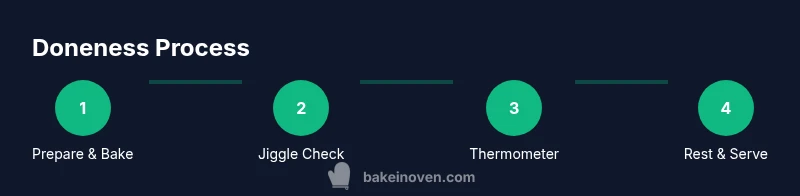
To know if egg bake is done, rely on internal temperature, visual texture, and a rest period. Aim for an internal center temperature of 160°F (71°C). Edges should be set and pull away slightly from the pan, with a center that shows just a gentle jiggle. Rest before serving.
Understanding Doneness in Egg Bakes
Egg bakes rely on heat to coagulate eggs and set structure. If you're wondering how to know if egg bake is done, rely on three reliable cues: internal temperature, visual texture at the edges, and a controlled rest. Doneness is affected by pan thickness, fillings, and oven accuracy, so you’ll often combine signals for best results. By applying these cues, home bakers can confidently judge doneness without guesswork and still enjoy a creamy center when appropriate.
Visual Cues: Color, Texture, and Edges
Look for a surface that is uniformly pale to light golden, with edges that have pulled away just a bit from the pan. The center may still show a slight wobble if you gently tilt the dish, but the overall mass should look set and cohesive rather than wet or glossy. Thick fillings (cheese, vegetables, or meat) will influence the surface color and the speed of setting, so use visuals along with temperature for accuracy.
The Jiggle Test and Texture Cues
The jiggle test is a quick, non-technical cue you can use alongside temperature checks. Gently shake the pan; the edges should be firm, while the center should wobble slightly. If the center is very liquid, return to the oven in short increments of 2–5 minutes. When the center resumes a gentle jiggle with firm edges, it’s a strong sign of doneness.
Temperature Check: Using a Thermometer
A reliable thermometer removes guesswork. Insert an instant-read thermometer into the center of the bake, avoiding any contact with the pan. The target is about 160°F (71°C) for safety and proper texture. If you’re using dairy-rich fillings, ensure the thermometer reaches the center rather than only the outer portions.
Resting and Carryover Cooking
Carryover cooking continues after you remove the bake from the oven. Resting for 5–10 minutes lets the center finish setting and the flavors to meld. Place the dish on a rack or heat-safe surface during this rest, and loosely tent with foil if the top browns too quickly. Don’t rush to slice; patience improves texture and slice quality.
Practical Doneness Guidelines for Common Egg Bakes
For a plain egg bake: target a center temperature of 160°F (71°C) with edges visibly set. For add-ins like cheese, vegetables, or meats, the bake time may increase slightly and the center may take a bit longer to reach the target temperature. In crowded pan situations, spread ingredients evenly and consider a slightly lower oven temperature to promote uniform cooking without scorching the edges.
Troubleshooting and Adjustments
If the edges appear overcooked while the center remains underdone, reduce oven temperature by 25°F (14°C) and extend the bake time slightly, or cover the edges with foil to prevent further browning. If you see a greenish-gray ring around the yolk after chilling, it’s a sign of overcooking—aim for shorter resting times and more controlled heat next time. Always verify doneness with a thermometer for best accuracy.
Quick Serving Tips and Safety Notes
Always practice safe handling: cool briefly before slicing, refrigerate leftovers within two hours, and reheat gently to preserve moisture. Serve slices warm and add toppings or sides that complement the bake’s texture. If you’re new to egg bakes, start with a simple recipe to understand how different fillings affect doneness signals before attempting more complex versions.
Tools & Materials
- 9x13 inch baking dish(Glass or ceramic works well; ensure even contact with heat)
- Oven thermometer(Keeps oven temperature accurate for doneness cues)
- Instant-read thermometer(Check center temperature without guessing)
- Mixing bowls(For whisking eggs and ingredients evenly)
- Whisk or fork(For thorough mixing of eggs and fillings)
- Spatula(To spread batter evenly and lift servings)
- Timer(Digital timer or smartphone timer for precision)
- Parchment paper or nonstick spray(Optional but helps with clean removal)
- Cutting board and knife(For portioning after resting)
Steps
Estimated time: 45-60 minutes
- 1
Prepare pan and assemble bake
Grease a 9x13-inch dish or line with parchment. Whisk eggs with salt, pepper, and fillings until combined. Pour mixture evenly into the pan and smooth the top for uniform cooking.
Tip: Even distribution prevents hotspots and uneven doneness. - 2
Preheat oven to the recipe temperature
Set the oven to the required temperature before baking; preheating ensures consistent coagulation from the first bite. Verify the oven reaches the target temperature before placing the dish inside.
Tip: If your oven runs cool, allow extra preheat time or use an oven thermometer. - 3
Bake until edges are set
Bake until the edges pull slightly away from the pan and the surface looks set. The center may still appear a bit soft but should not be liquid.
Tip: Use a timer and avoid opening the oven door too often. - 4
Check center with jiggle test
Gently shake the pan; the edges should be firm while the center has a gentle wobble. If the center is liquid, continue baking in short 2–5 minute increments.
Tip: Pair jiggle with a thermometer for best results. - 5
Probe center with thermometer
Insert an instant-read thermometer into the center. Target about 160°F (71°C). Avoid touching the pan or baking dish edges for an accurate reading.
Tip: Warm centers can read lower; read from the deepest part of the bake. - 6
Remove and rest to finish cooking
Take the bake out and rest unplugged for 5–10 minutes to finish carryover cooking. If the top browns too quickly, loosely tent with foil.
Tip: Resting improves texture and slicing neatness. - 7
Assess final texture and color
The surface should be pale golden and the center fully set but moist, not dry. If there are dry patches, adjust future bake times.
Tip: A uniform color signals even doneness across the dish. - 8
Slice and serve
Use a sharp knife to portion after resting. Serve warm for best texture and mouthfeel.
Tip: Let slices sit for a minute to hold shape. - 9
Store leftovers safely
Cool briefly, then refrigerate in airtight containers within two hours. Reheat gently to preserve moisture.
Tip: Reheating with a splash of liquid prevents dryness.
Frequently Asked Questions
What is the safe internal temperature for an egg bake?
Aim for 160°F (71°C) in the center to ensure safety and proper texture. Use a thermometer for accuracy.
Target 160 degrees in the center with a thermometer for reliable safety.
Can I use the jiggle test to judge doneness?
Yes. A gentle jiggle with firm edges helps, but confirm with a thermometer for accuracy.
A gentle jiggle plus a thermometer makes it reliable.
Why is my center still runny even after the edges look cooked?
Carryover cooking and pan thickness can keep the center soft. Rest and recheck with a thermometer.
Sometimes the center stays soft; rest and recheck the temperature.
How can I prevent overcooking egg bake?
Remove from oven when center is near set, then rest. Consider lowering oven temperature slightly for future batches.
Take it out a touch early and rest to avoid drying out.
Does egg bake need rest time after coming out of the oven?
Yes. Resting 5–10 minutes finishes cooking and improves texture.
Resting helps the bake finish cooking and slice neatly.
What adjustments if I use extra dairy or fillings?
Add a few extra minutes or slightly lower the temperature to avoid scorching and ensure center sets fully.
More dairy can lengthen cooking; adjust time and temperature.
Watch Video
Key Takeaways
- Use a thermometer to confirm center doneness (160°F/71°C).
- Edges should be set and pull away slightly from the pan.
- Let the bake rest 5–10 minutes for carryover cooking.
- Rely on multiple cues—temperature, jiggle, and color—for reliability.
- Avoid opening the oven door frequently during baking.