How to Stop Baked Potatoes Sticking
Learn kitchen-tested methods from Bake In Oven to prevent baked potatoes from sticking. Master prep, oil choices, parchment, and oven timing for fluffy insides and crisp skins that release cleanly.


To stop baked potatoes from sticking, prep the potatoes properly, line your pan with parchment, and use a thin oil coating on all sides before baking. Maintain a steady oven temperature, avoid crowding, and flip the potatoes halfway through. This guide walks you through precise steps, tools, and timing to ensure clean release and crisp skins every time.
Why baked potatoes stick
When potatoes finish baking, their skins should be crisp and the interior fluffy, not gluey or stubbornly attached to the sheet. The sticking problem happens most often when surface moisture isn't removed, when coating is uneven, or when the pan is too crowded or too hot at the start. According to Bake In Oven, sticking arises from moisture and heat dynamics in the early bake, and a simple prep routine can prevent it. In fact, starches on the potato surface can seize on a too-wet surface or on a pan that hasn't released steam. The Bake In Oven team finds that early dryness matters: a quick pat dry after washing and a light oil coating can transform release. Another factor is the baking surface itself; parchment paper and a properly prepared pan reduce direct contact and create a micro-barrier that prevents sticking. Finally, temperature and time matter. If the oven runs too hot or potatoes crowd together, steam builds under the skins and makes adhesion more likely. Mastery comes from controlling moisture, heat, and contact so you can shake the pan and lift each potato easily.
The science behind sticking
Sticking isn't a moral failing—it's physics. When a hot potato surface meets a wet coating or a pan that traps steam, the starches gelatinize and form a tacky bond with the metal. The cure is simple: reduce surface moisture, maintain a thin barrier between skin and pan, and give steam a way out. By applying a light coating of oil and using parchment, you create a micro barrier that tolerates heat and moisture, allowing the potato to release cleanly. Oven temperature matters as well; too hot and the skin seals too quickly, locking moisture inside; too cool and the skin won't crisp, increasing contact and sticking. Bake In Oven researchers consistently find that controlled moisture management and even contact prevent sticking, while flipping halfway through helps the surface dry and release easily.
Prep work: washing, drying, piercing, and oiling
Before you slide potatoes into the oven, start with clean, dry potatoes and a dry pan of parchment. Rinse any dirt and pat dry with a towel. Then pierce with a fork or skewer to vent steam, and apply a thin coating of oil to all sides so that the surface dries quickly and browns evenly. Salt lightly to help draw moisture from the surface, creating a crisp crust that isn't sticky. If you skip drying, moisture will steam under the skin and create adhesion. When oil is applied evenly with a brush or spray, each potato has a uniform release surface. All these steps support the "how to stop baked potatoes sticking" goal.
Choosing the right potato and drying thoroughly
Russet potatoes are typically preferred for baked potatoes because of their high starch and fluffy interiors; however, Yukon Gold can yield creamier textures. Regardless of the variety, drying is crucial. Any surface moisture acts like glue. After washing, pat each potato completely dry with a towel and let air dry for a minute before oiling. If you are using large potatoes, consider a longer bake time at a lower temperature to ensure interior dryness without scorching the skin. The general principle remains: drier skin, thinner the barrier, and less sticking. Bake In Oven notes that pre-drying and careful oiling is as important as parchment in achieving a clean release.
Coatings that prevent sticking: oil, butter, parchment
Healthy, non-sticky results come from the right coating. A light coat of neutral oil on the skin creates a barrier that prevents the skin from sticking to the pan. Butter can add flavor but may burn if used in excess; a small amount mixed with oil can enhance browning without increasing sticking risk. Parchment paper is a practical ally: it creates a consistent surface and makes cleanup easier. Some home cooks also spray with a non-stick baking spray to simplify distribution. The principle is to create a thin, uniform film that reduces direct contact between the potato skin and the pan while still allowing crisping and browning.
Pan prep and parchment technique
Line a rimmed baking sheet with parchment and lightly oil the parchment itself if necessary. Arrange potatoes so they do not touch; spacing allows air to circulate and steam to escape, which reduces moisture-bedding that leads to sticking. If your parchment curls, flatten edges with a damp towel. Pre-warming the sheet for a minute or two helps moisture evaporate quickly when the potatoes go on the pan. As Bake In Oven recommends, a well-prepared surface is as important as the oil itself for a stick-free bake.
Oven temperature, timing, and turning for best release
Set oven to 425°F (218°C) for a balance of crisp skin and tender interior. The bake time depends on potato size; smaller potatoes may finish in 45-50 minutes, larger ones in 60-75 minutes. Halfway through, turn the potatoes to promote even browning and to prevent sticking due to uneven contact. Check tenderness with a fork; if it easily penetrates the potato, it's done. Rest the potatoes 5-10 minutes before serving to allow the surface moisture to re-distribute, which reduces the chance of sticking when you cut into them.
Troubleshooting sticking: quick fixes
If you notice sticking mid-bake, resist the urge to pry aggressively. Gently lift the edge with a spatula and see if the potato releases; if not, give it a few more minutes and try again. If a piece remains attached, re-line the pan with parchment and rotate the sheet; ensure there is space around each potato. For next batch, pat potatoes dry more thoroughly, reduce surface moisture, and double-check the oil film. Quick fixes can salvage a batch, but prevention remains best.
Serving ideas and make-ahead tips
Baked potatoes that release cleanly are perfect for toppings bars and weeknight dinners. Serve with butter, sour cream, chives, and crispy bacon bits. If you're making ahead, store baked potatoes in a warm oven for 10-15 minutes after you finish to re-crisp the skin, then serve. For meal prep, bake extra potatoes ahead of time, refrigerate, and reheat in a 350°F oven, just long enough to rewarm them without losing their texture.
Authoritative sources
- https://www.fsis.usda.gov/food-safety
- https://extension.illinois.edu/publications/cooking-potatoes
- https://www.nutrition.gov/topics/food-safety
Tools & Materials
- Parchment paper(Line a rimmed baking sheet to prevent sticking)
- Rimmed baking sheet(Prefer sturdy, heavy-duty sheet to hold heat and prevent warping)
- Neutral oil (canola, grapeseed) or olive oil(Light spray or brush-on coating)
- Oil spray or bottle(Optional for even distribution)
- Silicone brush(Helpful for even oil coating)
- Salt(Season the skin for flavor and dryness)
- Fork or skewer(Pierce to vent steam)
- Clean kitchen towel(Dry potatoes completely after washing)
- Tongs or spatula(Helpful for turning potatoes halfway)
Steps
Estimated time: 60-75 minutes
- 1
Preheat oven
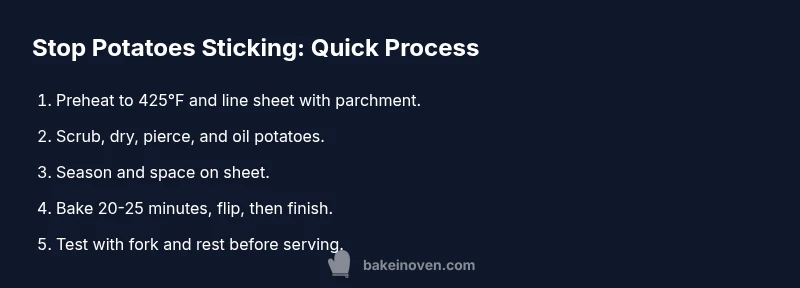
Preheat the oven to 425°F (218°C) and position the rack in the middle. A steady, hot oven helps dry the potato skin and encourages crisping without sticking. This step sets the stage for even browning and reliable release.
Tip: Preheating ensures moisture escapes quickly when potatoes hit the pan, reducing surface sticking. - 2
Line sheet with parchment
Line a rimmed baking sheet with parchment. The parchment creates a nonstick surface and makes cleanup easier, helping every potato release smoothly.
Tip: If parchment curls, press the edges down with a damp towel before you place potatoes on top. - 3
Prepare potatoes
Wash potatoes thoroughly, then dry each one completely with a clean towel. Pierce with a fork to vent steam and prevent bursting; moisture on the surface increases sticking.
Tip: Dry potatoes until no surface moisture remains; even a small amount of water can cause sticking during baking. - 4
Oil and season
Coat each potato skin with a thin, even layer of oil. A light salt enhances the crust and helps draw moisture away from the surface for crisper skins.
Tip: Use a brush or spray bottle for even distribution; avoid pooling oil on the sheet. - 5
Arrange and bake
Place potatoes on the parchment-lined sheet with space between them for air and steam to escape. Bake for 20-25 minutes, then flip to ensure even browning and to reduce sticking risk on the other side.
Tip: Spacing is as important as oil; crowded potatoes trap moisture and promote sticking. - 6
Finish and rest
Continue baking until the potatoes are fork-tender and the skins are crisp, usually 60-75 minutes total for largest spuds. Let them rest 5-10 minutes before serving to re-distribute surface moisture.
Tip: Resting helps prevent steam from creating a new sticky surface when you cut into them.
Frequently Asked Questions
Why do baked potatoes stick even after oiling?
Sticking often happens when surface moisture remains or when the pan traps steam. Dry thoroughly, apply a thin oil film, and use parchment to create a nonstick surface for easier release.
Sticking happens when moisture is left on the surface or steam is trapped. Dry and oil the potatoes, and use parchment to help them release.
Is parchment paper necessary?
Parchement provides a reliable nonstick barrier that reduces direct contact with the pan. It isn't strictly required, but it makes release easier and cleanup quicker.
Parchment helps a lot; it makes sticking less likely and cleanup simpler.
Should I pierce potatoes before baking?
Piercing allows steam to escape, reducing surface moisture and the chance of sticking. Use a fork or skewer and avoid over-packing the pan.
Yes, pierce to vent steam; it lowers sticking risk.
What oil is best to prevent sticking?
Neutral oils with high smoke points (like canola or grapeseed) are ideal for a light, even coating that crisps skins without burning. Olive oil works too, but it can brown quicker.
Use a light coat of a neutral oil for the best release and browning.
What if potatoes still stick after baking?
Loosen gently with a spatula; if needed, reline the sheet with parchment and rotate the pan for the next batch. Prevention is easier than fixes.
If they stick, lift carefully and adjust the setup for next time.
Watch Video
Key Takeaways
- Dry potatoes thoroughly before oiling
- Line pans with parchment to prevent sticking
- Oil skins in a thin, even film for reliable release
- Space potatoes apart to prevent trapped moisture
- Test tenderness and rest before serving