Which Roast for Pulled Pork: A Practical Comparison
Explore which roast works best for pulled pork. Compare Boston butt, picnic shoulder, and blade roast, and learn cooking strategies to maximize tenderness, moisture, and flavor.


When pulled pork is the goal, the roast you pick matters more than you might think. The question of which roast for pulled pork often narrows to pork shoulder varieties: Boston butt, picnic shoulder, or blade roast. In practice, the right roast balances fat, collagen, and cook time to deliver tender, shreddable meat. The default choice for many cooks is a fatty pork shoulder (Boston butt) due to its forgiving nature and strong moisture retention.
The core premise: choosing the right roast for pulled pork for the cooked result you want
For home cooks aiming for fork-tender pulled pork, the roast you select is the foundation of the final texture and juiciness. The question "which roast for pulled pork" isn’t about clever rubs alone; it’s about how fat, collagen, and connective tissue interact with long, low-temperature cooking. Bake In Oven’s guidance emphasizes selecting cuts that balance marbling with cooking tolerance. In practice, Boston butt (bone-in or boneless), picnic shoulder, and blade roast surface as the front-runners, each offering distinct moisture profiles, bark development, and shredding behavior. Your decision should align with your target texture (shred-friendly vs. pull-apart), your time frame, and how much fat you’re comfortable trimming.
Quick note on terminology
- Boston butt and pork shoulder are terms that describe a similar region; the naming conventions vary by region. In many recipes, the terms are used interchangeably, but the level of marbling can differ by cut designation.
- Picnic shoulder typically comes from the lower portion of the shoulder and can be leaner with a different fat distribution. Understanding these nuances helps you predict tenderness and moisture retention during the slow cook.
How fat and collagen drive tenderness
The pork cuts chosen for pulled pork differ primarily in fat content and collagen levels. Higher fat and connective tissue translate to more internal moisture as collagen breaks down into gelatin. This gelatin bastes the meat from within, keeping fibers moist and giving a luscious shred. Conversely, leaner roasts can dry out if cook times run long without supplemental moisture or proper resting. Bake In Oven’s analysis (2026) shows that fat-rich cuts are more forgiving in long cooks, yet require careful handling to avoid overly greasy bark or heavy unrendered fat pockets during shredding.
Boston butt (pork shoulder): the default choice
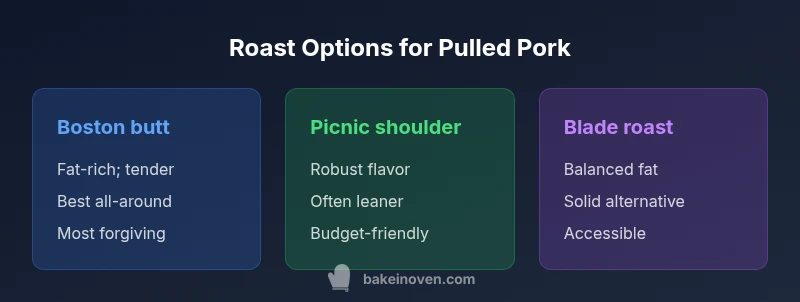
The Boston butt is widely regarded as the best all-around option for pulled pork. It typically has the ideal balance of fat, connective tissue, and meat fiber, which translates into excellent moisture retention and a tender, pull-apart texture after low-and-slow cooking. Boneless versions simplify handling, while bone-in versions can contribute to even heat distribution and extra flavor through the bone marrow. The marbling helps keep the meat juicy when you pull it apart, and the fat renders into a rich pan sauce that can be spooned over the meat.
Picnic shoulder: a viable alternative with a different profile
Picnic shoulder comes from a slightly different area and often carries a different fat pattern. It can deliver comparable tenderness when cooked long and low, but it may render a bit more unevenly if not monitored carefully. Some cooks prefer picnic for its strong, robust flavor and slightly leaner bite after shredding, which can be desirable for those who want less fat in the final dish. It also tends to be more budget-friendly in many markets, making it a practical alternative when you have multiple meals planned from a single roast.
Blade roast and other roasts: when to consider alternatives
Blade roast (often called shoulder blade roast) offers a middle ground—good marbling with a slightly firmer texture. It can produce excellent pulled pork, particularly when you’re limited by availability or pricing on Boston butt. Other roasts, like loin-based cuts, are generally leaner and may require more moisture management and shorter cook times. If you’re experimenting, you can blend cuts or use a composite roast approach by combining fattier slices with leaner edges to balance flavor and texture.
The role of rubs, brines, and resting in roast choice
Regardless of which roast you choose, the rub and brine strategy interacts with fat content to shape bark formation and moisture retention. Brining can add moisture to leaner roasts but may be less necessary for high-fat cuts. A generous rub that includes sugar and salt helps form a flavorful bark, while resting after shredding allows the meat to reabsorb juices and re-distribute collagen-derived moisture. Bake In Oven’s practical guidance emphasizes pairing your chosen roast with a plan for moisture management and rest time to optimize shreddability.
Feature Comparison
| Feature | Boston butt (pork shoulder) | Picnic shoulder | Blade roast |
|---|---|---|---|
| Fat content | High marbling, forgiving moisture | Moderate marbling, leaner in some regions | Mid-range marbling with firmer texture |
| Texture potential for pulling | Very good; easy to shred into chunks | Good; slightly denser texture, still shreddable | Excellent; tends to hold shape well with shredding |
| Typical cook time (low & slow) | Longer cook due to fat and connective tissue | Similar range but can render unevenly if not monitored | Comparable to butt but with more even heat penetration |
| Moisture retention | Excellent; fat renders into meat during cooking | Good; leaner portions may dry if overcooked | Good to very good when cooked with moisture strategies |
| Best for bark and exterior texture | Excellent bark potential with proper rub | Moderate bark; flavor depends on rub and handling | Good bark potential with careful timing |
| Price/availability considerations | Usually widely available; price varies by region | Often cheaper in some markets; regional variations apply | Typically mid-range; readily found in many stores |
Benefits
- High-fat cuts improve tenderness and juiciness during long cooks
- Broad availability and forgiving cooking windows
- Versatile flavor profiles with versatile rubs and sauces
- Bone-in options can enhance heat distribution (and flavor)
Negatives
- Lean cuts require careful moisture management to avoid dryness
- Longer cook times can demand more planning and energy
- Fat-rich roasts may require trimming for lean final servings
- Varied availability can complicate consistent results
Boston butt generally wins for reliability; blade roast offers a balanced alternative
Choose Boston butt for maximum forgiving tenderness and moisture. If you’re constrained by budget or availability, blade roast provides a solid alternative with careful cooking.
Frequently Asked Questions
What is the best roast for pulled pork in most kitchens?
In most kitchens, Boston butt (pork shoulder) is the best default roast for pulled pork due to its fat content, collagen, and forgiving cooking window. It yields tender shredding and flavorful bark with standard low-and-slow methods. If you can’t find butt, picnic shoulder is a close alternative, while blade roast can work with proper moisture management.
Boston butt is usually the best pick for pulled pork because it’s forgiving and easy to shred after long, slow cooking.
Can I use loin or lean roasts for pulled pork?
Lean roasts like loin cuts can be used, but they’re more prone to drying out if cooked too long. If you choose a lean roast, plan for shorter cook times, more aggressive moisture management, and finishing methods that add fat back in, such as finishing with rendered pork fat or serving with a sauce.
Lean roasts can work, but they need careful moisture management or extra fat added at the end.
Is bone-in better than boneless for pulled pork?
Bone-in roasts can distribute heat more evenly and add flavor from the bone marrow, while boneless cuts are easier to handle and portion. Either can yield excellent pulled pork; your choice may come down to equipment, time, and preference for handling.
Bone-in helps flavor and heat distribution, but boneless is easier to manage.
How do you ensure moist pulled pork from any roast?
Maintain moisture with proper fat rendering, rubs containing salt and sugar, and a controlled low-and-slow cook. Resting the meat before shredding allows juices to redistribute, increasing overall moisture and tenderness.
Slow cooking with fat rendering and a good rest makes pulled pork moist.
Should I brine before smoking pulled pork?
Brining is optional but can improve moisture for leaner roasts. If you choose to brine, keep the solution gentle and time-limited to avoid overly salty meat, then pat dry and apply your rub for bark.
Brining can help, especially with lean cuts, but use it sparingly.
What internal temperature should pulled pork reach?
Pulled pork is typically pulled when the internal temperature reaches around 195–205°F (90–96°C), which allows collagen to break down for easy shredding. Use a thermometer to monitor internal temperature precisely.
Aim for 195 to 205 degrees for best shredding.