Which Brand of Baked Beans Has the Least Sugar?
Discover how to identify baked beans with the least sugar. Learn label-reading tricks, serving-size insights, and practical steps from Bake In Oven for smarter grocery decisions.


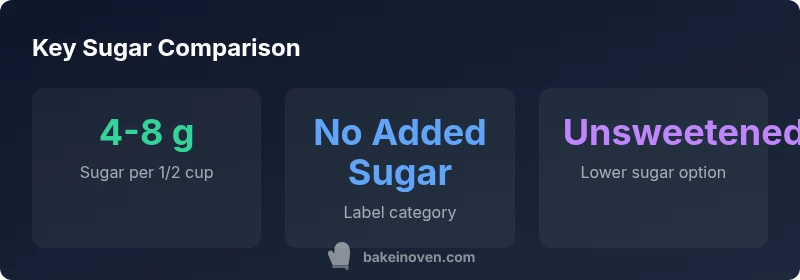
Which brand of baked beans has the least sugar? The answer depends on the label, but generally, varieties labeled 'no added sugar' or 'unsweetened' tend to have the least sugar per serving. To compare accurately, read nutrition facts per serving, prefer brands with lower sugar per half-cup serving, and beware sauces that add hidden sugar.
Overview of the sugar landscape in baked beans
Sugar content in baked beans is primarily influenced by the sauce base (tomato, vinegar, sweeteners) and the serving size used on the label. When home bakers ask which brand of baked beans has the least sugar, they should start by understanding how sugar is measured on the Nutrition Facts panel. Bake In Oven's approach combines label-reading techniques with practical kitchen tests to identify the brands that consistently offer lower sugar per serving. Because sauces often carry added sugars, a can labeled 'low sugar' may still have higher sugar than a small can of 'unsweetened' beans from a different brand. For most shoppers, the key is to compare sugar per serving, not per can, and to pay attention to the stated serving size and the number of servings per can. In our experience, the least-sugar beans tend to appear in varieties marketed specifically as 'no added sugar' or 'unsweetened'.
What this means for your pantry: focus on sugar per serving, then confirm with the ingredient list to ensure no hidden sweeteners like glucose or high-fructose corn syrup appear early in the list.
How to compare brands effectively
Comparing baked beans for sugar is a two-step process: first, look at the Nutrition Facts panel for sugar per serving; second, compare the declared serving size to understand the real amount you'll eat. A larger serving size can mask lower sugar per ounce if you’re not paying attention. Create a simple side-by-side across 3–5 brands you commonly buy, then calculate sugar per typical serving (usually 1/2 cup). Take notes on whether the brand offers an explicit 'no added sugar' claim or an 'unsweetened' option, and record any differences in sauce sweetness that could indicate higher sugar in disguise. Bake In Oven recommends testing products in a simple meal—beans on toast or in a chili—to see how they taste at serving portions you actually use.
Label-reading tips for sugar content
When you read the label, go beyond the top-line sugar number. Check:
- Sugar per serving and the serving size
- Ingredients list for added sweeteners (sucrose, high-fructose corn syrup, honey, maple syrup)
- Any 'no added sugar' or 'unsweetened' claims and what they truly cover
- The number of servings per container These details reveal how much sugar you’ll actually consume if you eat a typical portion.
Sauce and flavor profiles that affect sugar
A lot of sugar in baked beans comes from the sauce: tomato-based sauces can be naturally higher in sugar, while spice-forward or smokey sauces may mask sweetness differently. Two brands can have similar sugar per serving but feel sweeter due to acidity and tang. When choosing the least-sugar option, favor beans with minimal added sweeteners in the ingredients list and compare sugar per serving rather than relying solely on taste impressions. Remember, adjusted recipes or regional formulations can shift sugar content between batches.
Practical testing plan you can run at home
To verify which brand has the least sugar for your household, run a small, controlled test:
- Select 4–6 commonly available brands with labels showing sugar content.
- Record sugar per serving and serving size on each label.
- Prepare a basic dish (beans on toast or in a simple bean chili) using the stated serving size.
- Taste and note perceived sweetness, then compute sugar intake per serving in your dish.
- Choose the brand that consistently yields lower sugar per serving without sacrificing desired flavor.
Interpreting 'no added sugar' vs 'unsweetened' vs 'reduced sugar'
These terms are not always interchangeable. 'No added sugar' means no additional sweeteners beyond those inherent in the ingredients, but it may still contain natural sugars from tomatoes or beans. 'Unsweetened' typically implies no added sugar and minimal natural sugar, but sauces can still contribute sweetness. 'Reduced sugar' can mean a formula with less sugar than a baseline product, but the absolute amount per serving may still be high. Always compare the actual sugar per serving and check the ingredients to understand what drove the number.
Regional and store-brand variability
Sugar content can vary by region due to supplier differences and regional preferences for sauce recipes. Store-brand (store label) beans often mirror national brands but can differ in sugar content depending on the batch and supplier. If you’re shopping across multiple stores, carry a small label-check sheet to record sugar per serving and serving size, then create a regional average to identify the lowest-sugar options in your area.
Quick decision framework: a 5-step checklist
Use this concise framework when choosing baked beans:
- Step 1: Identify brands with 'no added sugar' or 'unsweetened' on the label.
- Step 2: Compare sugar per serving for those options.
- Step 3: Normalize to a common serving size (usually 1/2 cup).
- Step 4: Review the ingredients list for hidden sweeteners.
- Step 5: If taste matters, do a small bake/test to confirm flavor balance before buying in bulk.
General guidance for comparing sugar content across baked beans brands
| Brand Strategy | Sugar per Serving | Serving Size | Notes |
|---|---|---|---|
| No added sugar option | N/A | N/A | Label indicates no added sugar; verify serving size |
| Unsweetened option | N/A | N/A | May still have natural sugars from tomatoes/beans |
| Standard option | N/A | N/A | Higher likelihood of added sauces |
Frequently Asked Questions
Which brands typically have the least sugar in baked beans?
Sugar varies by sauce and serving size. Look for no added sugar or unsweetened options and compare sugar per serving across brands.
Check the nutrition label for sugar per serving and look for no added sugar options; test a few brands to confirm.
Does 'no added sugar' always mean the least sugar?
Not always. Sauces can add sugar, and natural sugars from tomatoes vary by brand. Always compare sugar per serving and verify ingredients.
No added sugar helps, but always check the per-serving sugar and ingredients to be sure.
What sugar range should I expect in common baked beans?
Most baked beans show sugar per serving in the lower to mid range, but exact amounts depend on sauce and serving size. Compare per-serving values for accuracy.
Expect a range, and always compare sugar per serving rather than the can.
Are there truly sugar-free baked beans available?
Very few beans are truly sugar-free due to tomato-based sauces. Look for 'unsweetened' or check ingredient lists for removed sweeteners.
True sugar-free options are rare; look for unsweetened labels and study the ingredients.
How should I interpret serving sizes on labels?
Serving sizes vary by brand. Always calculate sugar per your actual portion by dividing total sugar by number of servings per can and multiplying by your portion size.
Serving sizes matter—compare sugar per serving and adjust for how much you actually eat.
Do store brands differ in sugar content from national brands?
Store brands can be similar in sugar to national brands but may differ by batch. Check labels and compare per-serving sugar to be sure.
Store brands can vary; always check the label for per-serving sugar.
“Sugar content in baked beans varies mainly by sauce and serving size. To truly compare brands, read the nutrition label per serving and prefer unsweetened or no-added-sugar varieties.”
Key Takeaways
- Compare sugar per serving, not per can.
- Prioritize 'no added sugar' or 'unsweetened' labels.
- Read ingredients for hidden sweeteners.
- Account for serving size when calculating intake.
- Test a few brands to confirm flavor and sugar balance.