How to Bake Bacon in the Oven: A Step-by-Step Guide
Master the art of baking bacon for crisp, even strips with minimal mess. This comprehensive guide covers prep, timing, doneness, serving ideas, safety, and troubleshooting for home bakers.


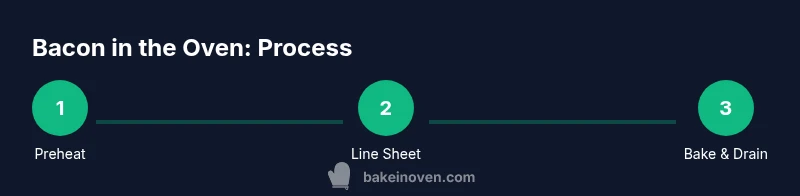
With this guide you will bake bacon in the oven to crispy perfection. Start with a parchment-lined sheet, preheat to 400°F, arrange bacon in a single layer, and bake 12–15 minutes until crisp. Drain on paper towels and serve. For extra crisp, broil briefly at the end, watching closely. This method minimizes mess and yields consistent texture.
Why Oven-Baked Bacon Delivers Consistent Crisp
Baking bacon in the oven offers a level of control that frying on a pan often cannot match. The heat surrounds each slice more evenly, which helps prevent spots that burn or stay soft. Bake bacon on a parchment-lined sheet so fat renders smoothly and you can reuse the fat for other recipes if you like. According to Bake In Oven, this method reduces splatter and keeps your kitchen cleaner while delivering uniform crispness across every strip. When you bake bacon, you can cook larger batches at once, which is ideal for weekend breakfasts or hosting brunch. The result is bacon that browns edge-to-edge, with less curling and shrinkage. For home bakers, this is a reliable foundation for quick breakfasts, sandwiches, and classic hash browns.
If you’re new to oven baking, start with regular-cut bacon and a standard sheet pan so you can gauge how your oven behaves. As you gain confidence, you can experiment with thickness and flavor additions without sacrificing consistency. Bake bacon can become a dependable routine in any kitchen, enabling tastier breakfasts with less hands-on time.
Temperature and Time Guidelines
Choosing the right temperature and cooking time is the heart of consistent oven-baked bacon. A common baseline is 400°F (204°C), which provides a brisk, even render without overcooking the edges too quickly. Plan for a window of roughly 12–15 minutes for regular-cut bacon; thicker slices may need 2–4 extra minutes, while ultra-thin slices cook faster and can go as short as 8–10 minutes. The exact timing depends on slice thickness, fat content, and how crisp you like your bacon. Bake bacon until the fat has rendered and the edges are just starting to turn a light brown. You’ll know it’s ready when the strips feel firm and lift away without sticking to the pan.
For doneness control, rotate the pan halfway through cooking if your oven has hot spots. If your oven runs cooler, you may need a few extra minutes; if it runs hotter, pull sooner. The key is to monitor closely during the last few minutes to avoid over-crisping. This approach minimizes guesswork and yields bacon that crisps evenly across all pieces.
Layering and Pan Setup for Even Crisp
Uniform spacing is essential when you bake bacon. Line a rimmed baking sheet with parchment or a silicone mat to prevent sticking and simplify cleanup. Lay the bacon in a single, even layer with no overlapping; overlapping pieces trap grease and cook unevenly. If you’re cooking a large batch, use a second sheet or a wire rack placed on the sheet so fat can render away from the bacon while allowing air to circulate for crisper results. For extra crisp, you can prop up the bacon on a cooling rack set over the sheet to elevate the slices. Avoid crowding the pan, as crowded slices steam rather than crisp.
Before you bake, organize your slices so they lie flat. If you must reuse a pan mid-cook, slide the sheet out carefully and reposition slices to preserve uniform exposure to heat. Proper layout translates to consistently crispy bacon every time.
Preheating and Placement Tips
Preheating ensures the oven’s heat is ready to render fat from the moment the bacon hits the sheet. Give your oven a full 10–15 minutes to reach 400°F before placing the pan inside. Don’t rush the process; a stable baseline temperature gives you reliable results. When you place the sheet in the center of the oven, you avoid the extremes of top and bottom heat that can lead to uneven browning. If your oven has a hot spot, rotate the sheet 180 degrees halfway through cooking to promote even crisp.
If you’re using a rack, ensure it’s clean and dry to avoid sticking. Always keep a small amount of space around each slice so the fat can render freely. A calm, methodical approach to placement eliminates variability and helps you bake bacon that’s consistently crisp rather than variable in texture.
Checking for Doneness, Resting, and Serving
Doneness for oven-baked bacon is a balance between crispness and still-pliable fat at the center. Start checking around the 10–12 minute mark if you’re working with regular-cut bacon; for thicker cuts, you’ll likely need the full 12–15 minutes. Look for deep golden-brown edges and a slightly firm bite when lifted with tongs. If you prefer extra crisp, give it another minute or two, but watch closely to prevent burning. When out of the oven, transfer the strips to a clean sheet of paper towels to drain excess fat for a minute or two before serving. Resting briefly helps the texture settle and makes handling easier in the next steps.
Serve immediately for the best mouthfeel, or cool and store for later breakfasts, sandwiches, or salads. If you’re reusing the rendered fat for cooking, strain it and refrigerate; it adds flavor to roasted vegetables and eggs. This approach helps you maximize both texture and flavor when you bake bacon.
Common Variations, Troubleshooting, and Flavor Tweaks
A few common tweaks can tailor the result to your preferences. For maple-bacon lovers, drizzle a tiny amount of maple syrup on the slices in the last minute of cooking, keeping a close eye to prevent burning. For peppery bacon, dust a light grind of black pepper before baking. If your slices curl, try a rack that elevates the bacon slightly so air can circulate beneath each piece. If the bacon seems soggy, increase the oven temperature by 25°F for the last 2–3 minutes to help render remaining fat and achieve crisper edges. For ultra-thin slices that burn quickly, reduce the cooking time and monitor more closely. Adjust for personal taste, but keep the baseline as a reference point that bake bacon consistently every time.
Storing, Reheating, and Serving Ideas
Cooked bacon stores well in the refrigerator for 3–4 days when kept in an airtight container. Reheat gently in the oven at a lower temperature (around 275°F) for 5–8 minutes to preserve crispness, or warm briefly in a microwave if you’re in a hurry (though this can soften texture). Use baked bacon in a variety of dishes: breakfast burritos, midweek omelets, BLTs, or a crisp topping for salads and casseroles. If you plan to reheat, spread slices in a single layer on a sheet and re-crisp in the oven rather than microwaving, which can make the bacon soggy. Bake bacon can also be crumbled into hash browns or mixed into potato dishes for a smoky, savory boost.
To extend its usability, freeze cooked bacon in a single layer on a parchment-lined tray, then transfer to a freezer bag. Thaw and reheat as needed for quick meals. Proper storage helps you enjoy the convenience of oven-baked bacon without sacrificing flavor or texture.
Authorities and Further Reading
For safety and cooking guidelines, refer to trusted sources on food safety and cooking temperatures:
- Foodsafety.gov: Safe cooking temperatures and handling guidelines. https://www.foodsafety.gov/food-safety-charts/cooking-temperatures
- FDA: Safe food handling and temperature recommendations. https://www.fda.gov/food
- USDA/FSIS: Pork safety and general cooking guidance. https://www.fsis.usda.gov
These resources provide foundational safety principles that align with the oven-baked bacon method and help ensure you cook meat — including bacon — safely every time.
Tools & Materials
- Rimmed baking sheet(Standard 17x12 inch sheet works well.)
- Parchment paper or silicone baking mat(Line the sheet for easy cleanup and to prevent sticking.)
- Tongs(For safe handling when turning or removing slices.)
- Paper towels(Drain excess grease after cooking.)
- Oven mitts(Protect hands when handling hot sheets.)
- Cooling rack (optional)(Raise bacon off the sheet for extra crisp.)
- Knife or kitchen shears (optional)(For trimming edges or slicing thicker portions.)
Steps
Estimated time: 20-25 minutes
- 1
Preheat the oven
Set your oven to 400°F (204°C) and allow it to fully reach temperature. A stable baseline temperature ensures even rendering of fat and uniform browning across slices.
Tip: Give your oven 10–15 minutes to come to temperature before loading the pan. - 2
Prepare the pan
Line the baking sheet with parchment or a silicone mat. This prevents sticking and makes cleanup much easier after you bake bacon.
Tip: If using a rack, place it on the sheet for elevated, crisper slices. - 3
Arrange the bacon
Lay slices in a single layer with no overlap. Overlapping traps grease and leads to uneven cooking.
Tip: Leave small gaps between slices to promote air circulation. - 4
Bake until crisp
Place the sheet in the center of the oven. Bake for 12–15 minutes for regular-cut bacon; adjust time for thickness.
Tip: Rotate the pan halfway through if heat distribution is uneven in your oven. - 5
Drain and rest
Remove bacon and lay on paper towels to drain excess grease for 1–2 minutes. Resting helps the texture set and makes handling easier.
Tip: Pat gently with additional towels if necessary to remove surface grease. - 6
Optional extra crisp
If you want extra crispness, broil for 1–2 minutes on high, watching closely to prevent burning.
Tip: Stay close to the oven during broiling; fat can ignite quickly. - 7
Clean up
Cool grease on the baking sheet, then wipe or pour into a container for reuse if desired. Remove parchment and wash the pan after it cools.
Tip: Soak the pan to loosen stubborn grease before washing.
Frequently Asked Questions
What temperature should I bake bacon at for best results?
A common baseline is 400°F, which balances rendering and browning. Thicker bacon may need a few extra minutes, while thinner slices cook more quickly. Always monitor the last minutes to prevent burning.
Bake bacon at about 400 degrees. Watch closely near the end for doneness, especially with thick or thin slices.
How long does it take to bake bacon to crisp texture?
Regular-cut bacon typically crisps in 12–15 minutes; thicker slices may require 2–4 additional minutes. If you prefer extra crisp, you can broil for 1–2 minutes at the end, but watch closely.
Most bacon crisps in about 12 to 15 minutes at 400 degrees. Add a minute or two for thick cut and use a brief broil for extra crisp.
Can I bake frozen bacon or do I need to thaw first?
For even results, thaw bacon before baking when possible. If you bake frozen slices, expect longer cooking times and check doneness frequently to avoid undercooking or uneven texture.
Thaw if you can; if not, expect longer cook times and check frequently.
Should I use thick-cut or regular-cut bacon for oven baking?
Both work, but regular-cut cooks more predictably in 12–15 minutes. Thick-cut bacon benefits from a few extra minutes and may stay juicier if removed slightly earlier for a balanced texture.
Regular cut is predictable; thick-cut takes longer, so adjust time accordingly.
Can I reuse bacon grease after cooking?
Yes, you can reuse rendered bacon fat for roasting vegetables or adding flavor to eggs. Let it cool, strain to remove solids, then store in a sealed container in the fridge for up to a month.
Yes, strain and store the rendered fat for future use.
Watch Video
Key Takeaways
- Preheat to 400°F for consistent results.
- Line the sheet and space slices evenly.
- Bake 12–15 minutes (adjust for thickness).
- Drain, rest, and serve immediately for best texture.