Can You Cook Bacon When It’s Frozen? A Practical Guide
Discover safe, practical methods to cook bacon from frozen, including oven, stovetop, and air fryer guidance, timing tips, and ways to ensure crisp, evenly cooked bacon.


Yes—you can cook bacon from frozen, but the method and timing differ from thawed bacon. The safest, most reliable approach is to bake it in the oven or cook in a skillet with low-to-moderate heat, letting slices separate gradually. Frozen bacon won't render fat as quickly, so plan for extra minutes and watch for even crisping.
Why You Might Cook Bacon From Frozen
According to Bake In Oven, you can cook bacon from frozen and still achieve a crispy, flavorful result with the right approach. Skipping the thaw stage can be a real time-saver when you’re hungry or pressed for time, or when you’ve pulled bacon from the freezer and want to get to breakfast fast. Frozen bacon behaves a bit differently: slices cling together, fat renders more slowly, and the cooking surface needs a bit more patience to reach that satisfying crisp. Understanding these dynamics helps home bakers achieve reliably delicious bacon without thawing first. Bake In Oven’s guidance emphasizes heat control, space for each slice, and careful monitoring to prevent overcooking or burnt edges. If you’re new to cooking from frozen, start with one method and adjust next time as you gain confidence.
The core idea is simple: you want the slices to cook evenly and render fat gradually so the result is crisp rather than chewy. With the right setup—a hot, steady heat source and a tray that surfaces fat away from the bacon—you’ll often get better results than thawing and pan-frying. It’s also a great way to stretch a full freezer’s contents into a quick, weekday meal.
For families who rely on prep-ahead meals, frozen bacon can be a reliable staple when used with a method designed for even cooking. The Bake In Oven team recommends planning for extra minutes and keeping slices spaced to encourage uniform rendering. With patience and a steady hand, you’ll enjoy crispy bacon without the hassle of thawing first.
Safety Considerations & Food Safety
Cooking any meat from frozen requires attention to safe handling and proper doneness. While there’s no inherent health risk in cooking bacon from frozen when you follow the right steps, you should avoid overcrowding pans, which can trap steam and lead to uneven cooking. Use a rimmed baking sheet lined with parchment or foil to catch fat and prevent sticking. If you’re using a skillet, keep heat moderate and turn or flip slices as needed to promote even browning. Always ensure the bacon is cooked through and reaches a safe appearance—edges browned, fat rendered, and the meat firm to the touch. If you’re cooking multiple sheets or batches, recheck doneness on the final batch and consider resting the bacon briefly on paper towels to absorb excess fat.
From a safety perspective, never reuse bacon grease that’s been exposed to raw meat without proper clarification and disposal. Wash hands and utensils after handling raw bacon, and sanitize surfaces to prevent cross-contamination. By following these precautions, you can enjoy crispy, delicious bacon straight from the freezer with confidence.
Thawing vs Cooking Frozen Bacon: Pros and Cons
The question often comes up: can you cook bacon when it’s frozen instead of thawing? The answer depends on your priorities. Thawing first can shave off total cooking time and may improve evenness, but thawing requires planning. Cooking frozen bacon offers unmatched convenience, particularly when you’re in a rush or have a large batch. The main trade-off is cooking time and potential unevenness; you’ll likely need to allow extra minutes and may have to adjust spacing on the tray to prevent clumps. In general, oven methods tend to yield more uniform results for frozen bacon than pan-frying, because heat is distributed more evenly across slices. If you crave speed and predictability, the oven method is Bake In Oven’s recommended approach for frozen bacon, followed by a quick finish on a hot skillet to bloom the crisp edges.
Methods to Cook Frozen Bacon
If you’re wondering how to tackle frozen bacon, you have several reliable methods. Below are practical approaches you can try, with pros and cons for each. Oven method: this is the most forgiving for frozen slices and renders fat evenly when you use a rack. Stovetop skillet method: faster for small portions and can yield very crisp results if watched carefully. Air fryer method: convenient for small batches and can deliver crisp texture with shorter time. Within each method, ensure slices have space and aren’t overlapping, which helps them cook evenly and reduces sticking. Can you cook bacon when it’s frozen? Yes—with a method that emphasizes even heat, careful spacing, and attentive monitoring.
Oven Method
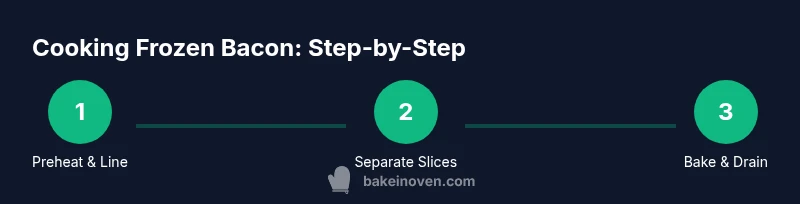
- Preheat oven to 400°F (200°C). Line a baking sheet with parchment or foil and place a wire rack on top if you have one.
- Separate slices that are stuck together and lay them in a single layer on the rack.
- Bake until the edges start to turn golden and the fat has begun to render, about 12–18 minutes depending on thickness.
Stovetop Skillet Method
- Use a wide, heavy skillet and set to medium-low heat.
- Place frozen slices in a single layer, allowing space between pieces.
- Cook, turning occasionally, until evenly browned and crisp, about 8–15 minutes.
Air Fryer Method
- Preheat the air fryer to 400°F (200°C).
- Place slices in a single layer in the basket; don’t overcrowd.
- Cook for 8–12 minutes, shaking halfway for even browning.
Time Estimates & Doneness Levels
Cooking times vary by method and bacon thickness, but here are practical ranges to guide you when starting from frozen. Oven-baked bacon generally requires 12–18 minutes at 400°F (200°C). Skillet cooking can take 8–15 minutes on medium-low heat, depending on slice thickness and how much fat you want rendered. If you’re using an air fryer, expect 8–12 minutes at 400°F. A good indicator of doneness is the color change: the bacon should be browned at the edges with fat rendered and the center crisp. If you’re aiming for fast results, thin-cut slices will crisp more quickly than thick-cut bacon. Remember to rest the finished bacon briefly on a paper towel to remove additional fat before serving.
For the perfect balance of texture and flavor, you can finish under a hot broiler for 1–2 minutes to crisp the edges further, but watch closely to prevent burning. Adjust times for features like thickness, desired crispness, and your equipment’s heat distribution. Bake In Oven’s tested timing suggests starting with these ranges and then fine-tuning based on your oven’s performance and your texture preference.
Tips for Even Cooking and Rendering Fat
Even cooking relies on space, heat, and patience. Start with a preheated surface to prevent cold spots that keep fat from rendering. Use parchment or foil to minimize sticking and for easy cleanup, and place an oven rack to lift the bacon so fat can render away rather than pool beneath the slices. If slices cling together, separate them with a gentle hand rather than forcing them apart, which can tear the fat or cause uneven cooking. For extra-crispy results, consider finishing on a hot skillet for a minute or two after baking, but keep a close eye to prevent scorching. Saving the rendered bacon fat is a smart move—store it in a jar for future flavoring of vegetables, eggs, or potatoes.
If you’re sensitive to splatter, reduce heat slightly and move the bacon to a cooler area of the pan or use a splatter screen. When cooking from frozen, you’ll notice some variability in rendering; that’s normal, so plan to adjust times by a minute or two in subsequent batches.
For best results when start-from-frozen bacon, Bake In Oven recommends a slow, steady approach: moderate heat, even spacing, and minimal handling during cooking to avoid breaking the fat seal.
Common Mistakes to Avoid
Common mistakes include overcrowding the grill or baking sheet, which traps steam and prevents browning. Don’t thaw bacon under hot water—this can cause uneven cooking and bacterial growth if surfaces get too warm. If you’re in a hurry, avoid rushing to the finish by turning up the heat; sudden temperature changes will burn the edges before the center is done. Also, resist the urge to pat the bacon dry with towels after cooking; allow fat to drain naturally on paper towels, which helps the final texture stay crisp rather than soggy. Finally, never reuse bacon grease left in pans that previously contained raw meat without proper cleaning—consult food-safety guidelines before reuse to prevent cross-contamination.
With these pitfalls in mind, you’ll be better prepared to cook bacon from frozen with consistent results.
Flavor Enhancers and Serving Ideas
Frozen bacon can be a versatile base for breakfast favorites and quick weeknight meals. Once cooked, crumble or chop the bacon to sprinkle over scrambled eggs, roasted potatoes, or a hearty BLT. Add a pinch of smoked paprika or chili flakes for a subtle kick. Use the rendered fat to sauté onions, peppers, or mushrooms for a quick topping or base for casseroles and skillet dishes. If you enjoy a crisp texture, finish under a hot broiler for 1–2 minutes after baking to achieve extra edge crunch. For a breakfast plate, pair with avocado toast, a sunny-side-up egg, and a slice of whole-grain bread for a balanced meal.
Remember that this approach supports convenient, flexible cooking, particularly when you’re working with a freezer-friendly ingredient that’s ready to go at a moment’s notice.
Troubleshooting Frozen Bacon Trouble: When It Won’t Cook Evenly
If you notice uneven browning or thick sections remaining undercooked, try a few tweaks. First, ensure you’re not crowding the pan or basket; space allows heat to circulate and fat to render properly. If slices are particularly thick, consider a two-step approach: finish on a hot skillet for a minute per side after oven cooking, or separate thick slices into thinner portions before cooking. Check your oven’s actual temperature with a thermometer; many home ovens run hot or cool by a few degrees, which can throw off times. Finally, let the bacon rest a minute after cooking to redistribute fat and improve texture. By adjusting spacing, heat distribution, and resting time, you can often salvage uneven batches and achieve crisp, savory results.
Tools & Materials
- Frozen bacon preferably in thin slices(1 package or portioned for 1-2 servings)
- Baking sheet with rim(To catch rendered fat)
- Parchment paper or aluminum foil(Line to prevent sticking and simplify cleanup)
- Wire rack (optional)(Elevates bacon for better fat drainage)
- Tongs or spatula(Turn and transfer slices safely)
- Oven thermometer (optional)(Check actual temperature if oven is unreliable)
- Paper towels(Drain excess fat after cooking)
Steps
Estimated time: 20-25 minutes
- 1
Preheat and prepare surface
Preheat your oven to 400°F (200°C) and place a rack in the middle. Line a baking sheet with parchment or foil to catch fat and prevent sticking. This step ensures even heat distribution and easier cleanup.
Tip: Using a rack promotes fat drainage and crisper edges. - 2
Separate frozen slices
If the bacon is fused, gently separate slices with clean fingers or using kitchen shears. Keeping slices mostly individual helps each piece cook evenly and renders fat more uniformly.
Tip: Patience pays off; forcing slices apart can tear fat and lead to uneven cooking. - 3
Arrange slices in a single layer
Lay slices in a single layer on the lined sheet or on a rack, leaving space between pieces. Overlapping slows rendering and browning, resulting in soggy spots.
Tip: Spacing is key for consistent crispness across all slices. - 4
Bake until edges brown
Place in the oven and bake for 12–18 minutes, checking around the 12-minute mark. Frozen bacon often needs a few extra minutes to render fat and crisp the edges.
Tip: If using thin slices, start checking earlier to prevent burning. - 5
Finish and drain
Remove bacon when edges are golden and fat has rendered. Transfer to paper towels to drain excess grease, then pat gently to remove excess surface fat.
Tip: Resting briefly enhances crispness and reduces sogginess. - 6
Consider a final crisping boost
For extra crispness, return slices to a hot pan or brief under the broiler for 1–2 minutes, watching closely to avoid burning.
Tip: A quick finish can transform texture without overcooking the meat. - 7
Serve or store
Serve immediately for best texture, or store cooled slices in an airtight container for up to a few days. Reheat gently if needed.
Tip: Store in a single layer if possible to preserve crispness during reheating.
Frequently Asked Questions
Can you cook bacon from frozen in the microwave?
Yes, you can cook frozen bacon in the microwave, but results may be uneven. Use short intervals, flip pieces, and check for doneness to avoid chewy edges or scorching. For best results, traditional methods like oven or skillet are preferred.
Yes, you can, but expect uneven cooking. Use short bursts and flip often; oven or pan-frying generally gives better results.
Is frozen bacon safe to eat?
Frozen bacon is safe to eat if it’s cooked to a proper, fully cooked state and reached a safe texture. Render fat and ensure the meat is firm and fully heated through before serving.
Yes—frozen bacon is safe when cooked properly and thoroughly.
How long does it take to cook frozen bacon in the oven?
In the oven, frozen bacon typically takes about 12–18 minutes at 400°F (200°C), depending on thickness and desired crispness.
About 12 to 18 minutes at 400 degrees, depending on thickness.
Should I thaw bacon before cooking from frozen?
Thawing is optional. Cooking from frozen saves time, but you may need longer cooking and may encounter uneven texture. If time allows, a quick thaw can help evenness.
Thawing isn’t required, but can help even cooking if you have time.
What’s the best method for restaurant-style crisp bacon from frozen?
A two-step approach—oven first to render fat evenly, then a quick finish under high heat or in a hot skillet—yields consistently crisp results.
Oven first, then a quick finish on high heat for extra crisp.
Can I save the rendered fat from frozen bacon?
Yes. Save the rendered fat in a clean container for future cooking, then refrigerate or freeze for later use in sautéing vegetables or flavoring eggs.
Absolutely—rendered bacon fat is great for future cooking.
Watch Video
Key Takeaways
- Choose oven-based method for even cooking from frozen.
- Space slices to ensure even fat rendering.
- Monitor carefully and rest briefly for crisp texture.
- Save bacon grease for future use.
- Adapt times for thickness and desired doneness.