Can You Cook Frozen Chicken? Safe Methods and Tips
Learn how to safely cook frozen chicken with practical oven and stovetop methods, temperature targets, and tips to ensure juicy, safe results for home bakers.


Yes — you can cook chicken from frozen, but it requires different timing and temperatures to ensure safety and even doneness. Always check that the internal temperature reaches 165°F (74°C) in the thickest part. For best results, use an oven or stovetop method with a reliable thermometer, and plan for longer cooking times than thawed chicken. Bake In Oven guidance emphasizes safety and even cooking when starting from frozen.
Can You Cook Chicken From Frozen? A Plain-English Answer
The simple answer is yes: you can cook chicken from frozen, but it changes how you approach cooking and how the final texture turns out. According to Bake In Oven, safety comes first, and the best results come from using a method that allows even heat distribution and finishes with a safe internal temperature. The Bake In Oven team found that the most reliable outcomes come from deliberate oven or skillet techniques, paired with a meat thermometer and realistic expectations about longer cook times. This guide will walk you through when cooking from frozen makes sense, which methods work best, and how to verify doneness with confidence. Writer’s note: if you can thaw in a controlled way, it often yields quicker cooking and crisper textures, but frozen options remain a valid choice when time is tight or if you forgot to thaw.
Safety First: Temperature and Doneness
When cooking chicken from frozen, the critical rule is to reach a safe internal temperature of 165°F (74°C) in the thickest portion of the meat. Color and texture alone are unreliable indicators of doneness, so a calibrated, instant-read thermometer is essential. Cross-contamination must be avoided: keep raw chicken separate from ready-to-eat foods, wash surfaces and utensils after handling, and never reuse marinades that contacted raw meat without cooking first. Bake In Oven analysis shows that consistent heat and proper thermometer use are the best protections against undercooked portions when starting from frozen.
How Frozen Affects Texture and Even Cooking
Ice crystals inside frozen chicken create an uneven heat profile as the surface can cook faster than the center. This often results in a less uniform texture, with the exterior potentially overcooked while the interior remains underdone. The outer surfaces may dry out if heat is too aggressive for too long. To mitigate this, choose a moderate-to-hot oven with a single, steady temperature and avoid crowding the pan, so air can circulate. The goal is gradual heat penetration rather than rapid surface browning. Bake In Oven reinforces that methodical heat and a thermometer deliver the most reliable results from frozen.
Thawing vs Cooking Frozen: Pros and Cons
Thawing before cooking generally yields shorter total cooking times and more uniform texture, especially for larger cuts. If you’re pressed for time, cooking from frozen is a practical option, but you should expect longer cook times and possibly less even browning. Thawed chicken allows more predictable timing and seasoning uptake, while frozen methods demand careful heat control and a focus on internal temperatures. A balanced decision depends on urgency, cut size, and your preferred texture. In all cases, follow safety guidelines and verify doneness with a thermometer.
Oven Roasting Frozen Chicken: A Practical Method
To roast from frozen, start with a hot oven so heat penetrates quickly without over-scorching the exterior. A common approach is to preheat to a higher temperature (around 400°F/200°C) and roast on a rack so air can circulate. Lightly oil and season the surface to help flavor and moisture retention. Place the chicken pieces skin-side up or bone-side down depending on cut, and avoid overcrowding the pan. Rotate the tray halfway through to promote even browning and use a thermometer to confirm 165°F (74°C) in the thickest part. Let the meat rest for a few minutes before slicing.
Stove-Top and Skillet Techniques for Frozen Chicken
If you prefer quicker, controlled heat, a skillet method can work well for smaller cuts like chicken breasts or thighs. Start with a little oil, sear the surface briefly to develop color, then reduce heat and cover the pan to finish cooking through. This approach can help reduce surface drying while still achieving a safe internal temperature. For bone-in pieces, you may need longer simmering times and periodic turning. Regardless of method, check the center with a thermometer and avoid relying on color alone.
Whole Chicken vs. Chicken Pieces: When to Choose Frozen Cooking
Whole chickens require more total time and heat management than smaller pieces when starting from frozen. It’s often easier to aim for a two-stage approach: first heat to thaw the outer layers, then finish with a higher heat to brown and reach internal temperature. For boneless breasts or thighs, frozen cooking can be simpler and faster, but you still must ensure the interior reaches 165°F and remains juicy by using moisture-retaining techniques like a light brine or glaze. Select the method based on cut, size, and your kitchen setup.
Flavor, Seasoning, and Juiciness Tips
Seasoning is possible from frozen, but the surface will meet heat first. Rub oils and spices into the surface or mid-cook with basting to boost flavor. Resting the meat after cooking helps juices redistribute and improves tenderness. If you’re aiming for a crisp finish, finish under a hot broiler for a minute or two at the end—watch closely to prevent burning. Consider a simple herb butter or citrus glaze after cooking to add moisture and flavor without compromising safety.
Food Safety and Leftovers: Storing and Reheating
Handle leftovers with the same caution as fresh-cooked meat. Refrigerate promptly (within two hours of cooking) and use within 3-4 days. Freeze any leftovers for longer storage, labeling with date. Reheat to 165°F (74°C) before serving. When reheating, ensure the chicken is steaming hot all the way through, and avoid re-freezing previously thawed leftovers to maintain safety and quality.
Authority Sources and Quick Reference
For trusted guidance, consult government and education resources on safe poultry cooking. This guide aligns with official food-safety recommendations and provides practical steps for home cooks. Always rely on a thermometer, practice clean handling, and follow the safe-cooking temperatures outlined in credible sources to protect yourself and your household.
Authority Sources (Quick Reference)
- Safe Poultry Cooking and Temperature Guidelines (USDA FSIS) – https://www.fsis.usda.gov/food-safety/safe-food-handling-and-preparation/meat-and-poultry-preparation/cooking-frozen-poultry
- Food Safety and Inspection Service – https://www.fsis.usda.gov/food-safety
- Center for Disease Control and Prevention – https://www.cdc.gov/foodsafety/
Tools & Materials
- Oven(Preheat to 350-425°F depending on cut and method)
- Baking sheet or roasting pan(With a rim; optional rack for better air circulation)
- Oven-safe rack(Elevates chicken for even heat exposure)
- Meat thermometer (instant-read)(Check internal temp to 165°F (74°C))
- Tongs(For safe turning and handling)
- Aluminum foil or parchment paper(Optional for easier cleanup)
- Digital timer(Keeps track of extended cooking time)
- Cutting board and knife(For portioning after cooking)
Steps
Estimated time: 1h 30m – 2h 15m
- 1
Preheat and prepare
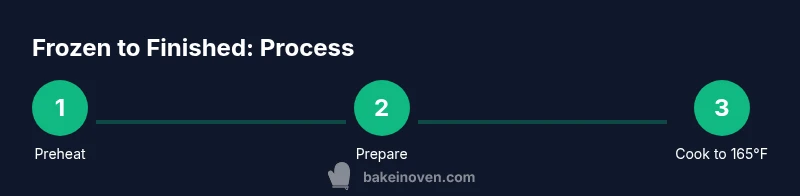
Preheat your oven to 400°F (200°C) for faster heat penetration, or 350–375°F (175–190°C) for gentler cooking. This ensures the exterior begins cooking without burning before the center is safe. Line a sheet with parchment or foil if you want easier cleanup, and place a rack on top to promote even heat.
Tip: High heat helps the surface brown, but adapt if you’re unsure about your oven’s accuracy. - 2
Ready the chicken
Remove packaging without rinsing. Pat the surface dry with paper towels, then lightly oil and season. Seasoning on frozen surfaces sticks better when the surface is dry and warm.
Tip: Light oil helps seasoning adhere and keeps moisture from escaping too quickly. - 3
Position for even cooking
Place the chicken on the rack over a lined tray, ensuring spacing between pieces. Do not crowd the pan. Even spacing improves heat circulation and reduces hot spots.
Tip: If you’re cooking multiple pieces, rotate the tray halfway through cooking. - 4
Cook and monitor
Roast in the preheated oven until the thickest part reaches safe internal temperature. Use your thermometer to verify doneness and adjust time as needed.
Tip: Avoid guessing—check a midsection temperature to catch undercooking early. - 5
Flip or rotate for even color
If your pieces vary in thickness, flip or rotate during cooking to promote even browning and heat distribution.
Tip: Flipping helps prevent one side from drying out. - 6
Final check and rest
When the thermometer reads 165°F (74°C) in the thickest portion, remove from oven and let rest for 5–10 minutes. Resting helps juices redistribute for juicier meat.
Tip: Tent with foil to keep warmth while resting without steaming the surface. - 7
Sauces and seasoning finish
If desired, brush with a glaze or butter-based sauce during the last few minutes to add moisture and flavor without extending the risk of uneven doneness.
Tip: A light glaze adds flavor without overshadowing the meat’s natural taste. - 8
Safety check and serving
Reconfirm internal temperature at the thickest part after resting. Slice and serve promptly to enjoy best texture.
Tip: Use a clean knife and board to avoid cross-contamination when portioning. - 9
Leftovers and storage
refrigerate leftovers within two hours, store in airtight containers, and reheat to 165°F before eating.
Tip: Label with date and reheat once; avoid re-freezing thawed leftovers.
Frequently Asked Questions
Can you safely cook chicken from frozen without thawing?
Yes. You can safely cook frozen chicken, but you must ensure it reaches an internal temperature of 165°F in the thickest part. Use a thermometer and follow a controlled heat method to avoid undercooked pockets.
Yes, you can cook it from frozen, but check that it reaches 165°F with a thermometer.
Is thawing before cooking always better?
Thawing before cooking often yields quicker and more even cooking, especially for larger cuts. If you’re short on time, frozen cooking works with careful heat and temperature checks.
Thawing can give more even cooking, but frozen cooking is acceptable if you monitor doneness.
What temperatures should I use when starting from frozen?
Start with a moderately hot oven to drive heat through the center, then finish at a temperature that browns the exterior. The key is steady heat and an accurate thermometer.
Use steady heat and check with a thermometer for safety.
Can I reuse marinades that touched raw chicken?
Do not reuse marinade that has touched raw chicken unless it is brought to a boil first to kill bacteria. If you want to add flavor, set aside some fresh marinade for finishing.
Don’t reuse raw marinade unless you boil it first, or make a fresh batch.
How should leftovers be handled after cooking frozen chicken?
Cool leftovers quickly and refrigerate within two hours. Use within 3-4 days or freeze for longer storage, and reheat to 165°F.
Cool promptly, refrigerate or freeze, and reheat to 165°F.
Watch Video
Key Takeaways
- Yes, you can cook frozen chicken safely.
- Always verify 165°F internal temperature with a thermometer.
- Choose oven or skillet methods that promote even heat distribution.
- Avoid relying on color; use a thermometer and proper handling.
- Rest and reheat safely to maintain juiciness.