Can You Bake Frozen Chicken: A Complete How-To Guide
Learn how to bake frozen chicken safely and evenly without thawing. Find temperatures, timing, flavor ideas, and practical tips for juicy, safe results using common kitchen tools.


Yes—you can bake frozen chicken without thawing first. Preheat your oven to 375–400°F (190–205°C). Arrange the chicken on a rimmed baking sheet, brush with oil, and season generously. Bake until the internal temperature reaches 165°F (74°C). For bone-in pieces expect longer times; use a meat thermometer and rest briefly before serving. This method saves time and still yields safe, appetizing results.
Why You Can Bake Frozen Chicken at Home
According to Bake In Oven, baking frozen chicken is a practical, safe option when you’re short on time or forgot to thaw in advance. The key is to apply proper heat, ensure even cooking, and verify the final internal temperature with a thermometer. While thawed chicken usually cooks faster and more evenly, frozen poultry can still turn out tender and flavorful if you follow best practices. This method is particularly convenient for boneless breasts or thighs that are individually frozen in meal-prep portions. By avoiding thawing, you cut prep time dramatically, but you must resist the temptation to increase heat dramatically to speed up cooking—this often dries the meat and can cause uneven cooking. Bake in a single layer, give space for air to circulate, and check temperature toward the end to guarantee safety.
Safety first: temperatures, timing, and temperature check
The foundation of can you bake frozen chicken safely rests on temperature and patience. Always cook poultry to an internal minimum of 165°F (74°C) as recommended by national food-safety authorities. Set your oven to a moderate range—typically 375–400°F (190–205°C)—so heat penetrates evenly. Expect longer cooking times than thawed chicken: boneless pieces usually finish in about 45–60 minutes; bone-in portions may take 60–75 minutes or more, depending on thickness and cut. Start checking at the lower end of the range with a meat thermometer. If the thermometer hasn’t reached 165°F after the minimum time, continue baking in 5–10 minute increments. Avoid opening the door frequently, which can drop the oven temperature and extend cooking time.
Flavor foundations: seasoning, moisture, and texture
From the start, a little oil helps moisture stay locked in and prevents sticking. Lightly brush the frozen surfaces with olive oil or melted butter, then apply your favorite seasonings. Simple salt and pepper work, or mix paprika, garlic powder, onion powder, and dried herbs for a robust crust. For juicier results, consider a quick brine-style treatment: a splash of salt dissolved in water for a few minutes before applying oil and spices. Even with frozen chicken, a dry spice rub will create a tasty crust; just be sure to distribute evenly and avoid clumping. If you have skin-on pieces, leaving the skin on helps protect the meat during bake and develops a richer flavor.
Step-by-step cooking overview (quick reference)
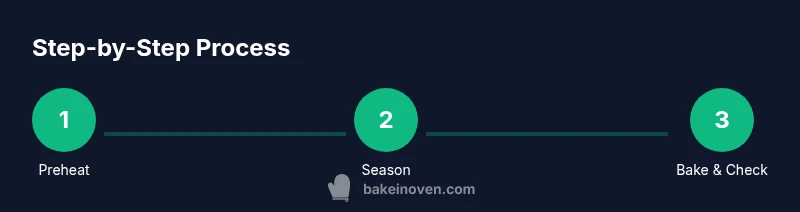
Overview: Begin with oven preheated, season, and bake in a single layer. Rotate halfway if possible, and verify doneness with a thermometer. This approach is forgiving enough for mixed cuts and yields safe, delicious results when you follow the temperature guideline.
Common pitfalls and how to fix them
Dry chicken: avoid by brushing with oil and not overcooking. Uneven cooking: space pieces to allow air to circulate; larger bone-in pieces may require longer times. Frozen blocks: if chicken pieces are stuck together, separate before baking as best as possible; not necessary to thaw, but do not bake in a clump. Over-salting: measure spices; use a light hand. Juiciness loss: rest after baking for 5-10 minutes; this redistributes juices.
Safety, leftovers, and reheating
Let the baked chicken rest 5-10 minutes before slicing to redistribute juices. Refrigerate leftovers within two hours, ideally in shallow containers for quick cooling. Reheat to 165°F (74°C) to ensure safety; reheat in oven or microwave in small portions to maintain moisture.
Authority sources and further reading
For official guidance, consult trusted authorities on poultry cooking and food safety. The U.S. Department of Agriculture’s Food Safety and Inspection Service (FSIS) provides standardized cooking temps and handling practices: https://www.fsis.usda.gov. The Centers for Disease Control and Prevention (CDC) offers general food-safety reminders to prevent illness: https://www.cdc.gov. The U.S. Food and Drug Administration (FDA) also offers consumer guidance on safe cooking practices: https://www.fda.gov. These sources underpin the recommendation to cook poultry to 165°F and to handle leftovers promptly and safely.
Quick-reference at a glance: frozen chicken baking checklist
- Preheat to 375–400°F (190–205°C).
- Use a rimmed baking sheet and a meat thermometer.
- Bake until 165°F internal temperature is reached.
- Keep larger pieces from touching for even cooking.
- Rest 5–10 minutes before slicing to retain juices.
Authority sources
This section provides links to official guidance on poultry cooking safety and safe handling practices to support the method discussed above. See FSIS, CDC, and FDA resources for authoritative recommendations.
Tools & Materials
- Oven(Preheated to 375–400°F (190–205°C))
- Rimmed baking sheet or shallow pan(Single layer with space between pieces)
- Meat thermometer(Probe thickest part, avoid touching bone)
- Cooking oil or melted butter(Lightly brush frozen surfaces for moisture)
- Seasonings/spices(Salt, pepper, paprika, garlic powder, etc.)
- Aluminum foil (optional)(Loosely tent if drying occurs)
- Tongs or spatula(For safe handling of hot meat)
Steps
Estimated time: 60-90 minutes
- 1
Preheat the oven
Set your oven to 375–400°F (190–205°C). If your pieces vary in thickness, use 375°F for thinner cuts and 400°F for thicker portions. Preheating ensures consistent cooking from the first minute.
Tip: Rely on a thermometer early—don’t guess doneness by color alone. - 2
Prepare the chicken
Unpack frozen pieces and pat lightly with paper towels if surfaces are icy. Brush with oil and sprinkle your chosen seasoning mix evenly over all sides.
Tip: Even coverage prevents dry spots and promotes even browning. - 3
Arrange in a single layer
Place pieces on a rimmed baking sheet, leaving space between them for air to circulate. Do not crowd the pan to avoid steaming instead of baking.
Tip: Arrange thicker pieces toward the center so heat reaches them evenly. - 4
Bake and monitor
Slide the sheet into the oven and bake. Check temperature after the minimum time and recheck in 5–10 minute increments until 165°F is reached.
Tip: If using bone-in pieces, expect longer times; avoid opening the oven door frequently. - 5
Rotate if possible
Halfway through, rotate the pan to promote even browning. This helps especially with irregular cuts.
Tip: Rotation is more effective in conventional ovens than in small, compact ovens. - 6
Check doneness
Insert the thermometer into the thickest part without touching bone. Ensure it reads 165°F (74°C) before removing from heat.
Tip: Always verify with a thermometer rather than relying on time alone. - 7
Rest before serving
Let the chicken rest for 5–10 minutes after baking to redistribute juices and improve tenderness.
Tip: Resting is essential for juicy slices and better texture. - 8
Store safely
Cool leftovers quickly and refrigerate in shallow containers within two hours. Reheat to 165°F before consuming.
Tip: Store in small portions to speed cooling and maintain quality.
Frequently Asked Questions
Can you bake frozen chicken without thawing?
Yes. It’s safe when cooked to 165°F and done through the whole piece. Expect longer times than thawed chicken and use a thermometer for accuracy.
Yes, you can bake frozen chicken; just cook it to 165 degrees and check with a thermometer.
What temperature should I use?
A moderate range works best: 375–400°F (190–205°C). This allows the meat to heat through without drying out.
Bake at 375 to 400 degrees, then verify doneness with a thermometer.
How long does it take to bake frozen chicken?
Timing varies by cut and thickness. Plan about 45–60 minutes for boneless pieces and 60–75 minutes or more for bone-in portions, checking with a thermometer.
Most frozen chicken takes about an hour, sometimes longer if bone-in.
Can I bake frozen chicken with the skin on?
Yes. Skin helps protect the meat and adds flavor, but ensure the skin doesn’t trap moisture by maintaining a hot, dry oven environment.
Sure—skin helps flavor; keep the oven hot for better browning.
Should I cover the chicken with foil while baking?
You can tent with foil for part of the bake if the surface browns too quickly or dries out. Generally, cooking uncovered yields better browning.
Cover briefly if the surface browns too fast; otherwise bake uncovered.
Can I bake different cuts together?
Yes, but sort by size and thickness. Start larger pieces first and monitor doneness closely to ensure all pieces reach 165°F.
Yes—just keep track of the largest pieces and verify doneness.
Key Takeaways
- Yes, frozen chicken can bake safely.
- Always verify 165°F internal temperature with a thermometer.
- Preheat to 375–400°F and cook in a single layer.
- Rest the meat 5–10 minutes before slicing.
- Handle leftovers promptly and reheat safely.