Can You Bake Frozen Chicken? A Practical Guide for Home Bakers
Learn how to safely bake chicken from frozen with temperature guidance, timing expectations, and moisture tricks from Bake In Oven. Get practical steps for juicy, fully cooked results.


Yes—you can bake chicken from frozen, but plan for longer cooking and safer temperature checks. Bake In Oven guidance emphasizes starting with a moderate oven, using a meat thermometer to hit 165°F, and allowing extra time for even doneness. If you thaw first, you’ll get quicker, more uniform results.
Can you bake frozen chicken? A practical overview
According to Bake In Oven, you can bake chicken from frozen, and many home cooks do so when time is tight or thawing isn’t convenient. The key is to manage heat and verify safety with a reliable thermometer. While thawing first often yields more even texture, frozen chicken can still produce a delicious result when you adjust time, temperature, and handling. This approach may be especially handy for busy weeknights, weekend meals, or when you’ve forgotten to thaw ahead of a planned roast.
Beyond safety, the quality of the finished dish depends on moisture retention and browning. The Bake In Oven team finds that a gentle initial heat followed by a steady finish helps the surface develop color without drying out the interior. Expect a slightly different texture compared with thawed chicken, but with careful steps you can preserve juiciness and flavor.
How freezing affects cooking and safety
Freezing doesn’t make chicken unsafe, but it changes how heat penetrates the meat. Ice crystals form during freezing, which can alter texture and slow down surface cooking. When you bake from frozen, you’re heating a larger mass that needs to reach a safe internal temperature in the center. Safe handling remains critical: never rely on appearance alone to judge doneness, and always use a calibrated thermometer. Bake In Oven’s analysis highlights that the primary safety checkpoint is achieving an internal temperature of 165°F (74°C) throughout. Proper handling also means avoiding cross-contamination and washing hands and surfaces after handling raw poultry.
Cooking from frozen also affects moisture loss. The outer layer can seize up early, which is why an oil coating or a light glaze is helpful to keep the surface from drying out while the interior finishes cooking. While some home cooks opt for a shorter, hotter bake, the safer, more forgiving strategy is to start with moderate heat and monitor with a thermometer.
When baking from frozen makes sense
There are legitimate scenarios where baking from frozen is practical. If you forgot to thaw overnight or you’re preparing a meal with multiple components, a frozen chicken roast or chicken pieces can still be on the table. Smaller cuts like boneless thighs or breasts may finish more predictably than a whole bird, but thicker pieces still require careful heat management. In all cases, ensure you begin with uniform pieces and avoid overcrowding the pan, which can trap steam and lead to uneven doneness. The key is to balance time, temperature, and monitoring so the center reaches a safe temperature without overcooking the exterior. Bake In Oven emphasizes that frozen chicken is not as forgiving as thawed meat, but with patience and a thermometer, you’ll achieve safe, flavorful results.
Temperature, time, and heat: what changes when starting from frozen
Starting from frozen shifts the entire cooking equation. You’ll generally need more time and slightly different heat progression than with thawed chicken. A common strategy is to bake at a moderate temperature to allow the interior to heat through before the exterior browns too much. If you’re aiming for a browned crust and juicy interior, you might start at a higher heat briefly and then reduce. The critical rule remains: verify doneness with a meat thermometer once the surface looks cooked. Bake In Oven’s guidance notes that relying solely on time is risky when cooking frozen poultry; internal temperature is the definitive safety measure.
Preparing your frozen chicken for baking
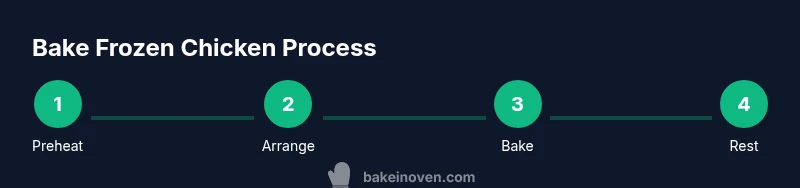
Preparation matters more when cooking from frozen. Begin by preheating your oven and lining a rimmed baking sheet with parchment or foil. Arrange chicken pieces with space around them to promote even heat. A light oil coating helps improve heat transfer and moisture retention, while an even dusting of salt and pepper or a simple spice blend enhances flavor even if ice crystals melt unevenly. If you have time, pat the chicken dry as the frozen surface thaws to help achieve better browning. Avoid overcrowding; overcrowding traps moisture that stews the meat instead of roasting it.
Safety, food handling, and internal temperature targets
Regardless of frozen or thawed, the safe internal temperature for chicken is 165°F (74°C). Use a reliable digital thermometer and insert it into the thickest part of the meat without touching bone for an accurate reading. Avoid cross-contamination by washing hands after handling raw poultry and sanitizing any surfaces that contact it. If you observe pink near the bone after reaching 165°F, give it a few more minutes and re-check. Resting the chicken for 5–10 minutes after removal lets juices redistribute and improves overall juiciness.
Flavor boosts and finishers for frozen chicken
Flavoring from frozen can still be vibrant. Apply a light coat of oil or butter before baking to help with browning and moisture retention. A quick rub of paprika, garlic powder, thyme, or a prepared spice blend adds aroma and depth as the meat cooks. If you’re finishing with a glaze or sauce, apply during the final 5–10 minutes of bake to prevent burning. A pan sauce created from drippings can add richness without needing extra fat. Remember that the surface may cook faster than the center, so keep an eye on doneness and temperature.
Troubleshooting: common problems and fixes
If the outside browns before the inside is cooked, lower the oven heat and cover with foil to trap heat and finish cooking inside. If pieces remain undercooked near the bone, continue baking and verify temperature with a thermometer. If the meat seems dry, brush with a small amount of melted butter or olive oil and consider resting the meat after cooking. Uneven results are common when cooking from frozen; proper spacing and an accurate thermometer are your best tools to avoid dry edges and underdone centers.
Quick reference by cut: breasts vs. thighs vs. whole pieces
Boneless breasts and thighs cook differently from bone-in cuts. Frozen boneless pieces typically finish faster than bone-in portions of the same size, but both require careful temperature checks. A whole chicken or bone-in pieces may need longer total time than smaller pieces. When using frozen poultry, consider cutting larger pieces into uniform sizes if possible to promote even cooking and reduce the risk of overcooking the exterior while the interior finishes heating.
Tools & Materials
- Oven(Preheat to 375°F (190°C) or as directed by recipe)
- Rimmed baking sheet(Line with parchment or foil for easy cleanup)
- Parchment paper or aluminum foil(Eases cleanup and prevents sticking)
- Meat thermometer (digital)(Insert into thickest part; avoid bone)
- Tongues or spatula(Turn pieces for even browning)
- Oil (olive or neutral)(Light coating helps browning and moisture retention)
- Salt and pepper / preferred spices(Season generously but evenly)
Steps
Estimated time: Total time: 60-120 minutes
- 1
Preheat and prep
Preheat the oven to 375°F (190°C) and line a rimmed baking sheet with parchment or foil. This ensures even heat distribution and makes cleanup easier. If you have time, pat the frozen surface dry once it starts to thaw slightly and remove any ice crystals on the top.
Tip: A light oil coat on frozen surfaces helps browning and moisture retention. - 2
Arrange pieces with space
Place chicken pieces on the sheet in a single layer, with at least 1 inch of space between them. Overcrowding traps steam and can cause uneven cooking.
Tip: Use the fattest/thickest pieces as a guide; ensure the thinnest parts aren’t exposed to high heat longer than needed. - 3
Season or glaze
Brush or rub a light layer of oil and season all surfaces. If using a glaze, reserve it for the final minutes to avoid burning.
Tip: Even distribution matters; avoid pooling glaze near the edges where it can burn. - 4
Bake and monitor start
Bake for 25–30 minutes to start cooking the outer layer. If the pieces are thick, you may need more time; use a thermometer to monitor progress.
Tip: Do not rely on time alone; internal temperature is the truth. - 5
Flip and rotate
Turn pieces halfway through cooking and rotate the sheet for even browning. This helps prevent hot spots from causing dry edges.
Tip: Flipping also distributes heat more evenly through the frozen interior. - 6
Finish to safe temperature
Continue baking at a steady temperature until the thickest part reaches 165°F (74°C). If using bone-in pieces, check near the bone for color and temperature.
Tip: If the exterior browns too quickly, tent with foil to prevent burning while interior finishes. - 7
Rest and serve
Let the chicken rest 5–10 minutes after removing from the oven to allow juices to redistribute.
Tip: Resting improves juiciness; slice against the grain for tenderness.
Frequently Asked Questions
Can you bake chicken from frozen without thawing first?
Yes, you can bake chicken from frozen, but it takes longer and requires careful temperature checks to ensure safety and doneness.
Yes, you can bake from frozen, but it takes longer and you must check the temperature to be sure it's cooked through.
What internal temperature should frozen chicken reach?
The safe internal temperature for all chicken is 165°F (74°C) at the thickest part.
Always cook chicken to 165 degrees Fahrenheit in the thickest part.
Does cooking from frozen affect flavor or texture?
There can be slight differences in texture and juiciness, but with proper browning and rest, you can achieve tasty results.
Texture may differ, but proper browning and resting will still yield tasty results.
Should I thaw chicken before baking for best results?
Thawing is ideal for most recipes, offering more even texture, but frozen-bake can work with temperature control and watching doneness.
Thawing is usually better, but frozen baking works if you monitor the temperature.
Can I use a glaze or sauce when baking from frozen?
Yes, apply glaze in the last 5–10 minutes to prevent burning and build flavor without overheating.
Yes, glaze near the end to avoid burning and boost flavor.
What if the exterior browns too quickly?
If browning happens fast, tent with foil and lower heat slightly to finish cooking evenly.
Tent with foil and reduce heat to finish cooking evenly.
Watch Video
Key Takeaways
- Cook frozen chicken safely by verifying 165°F with a thermometer.
- Expect longer total time and adjust heat progression to avoid overcooking.
- Space pieces and use oil or spices to improve browning and flavor.