Difference Between Roast and Brisket: An Analytical Comparison
An analytical comparison of roast versus brisket: cut types, cooking methods, texture, yield, and practical kitchen guidance for home cooks.


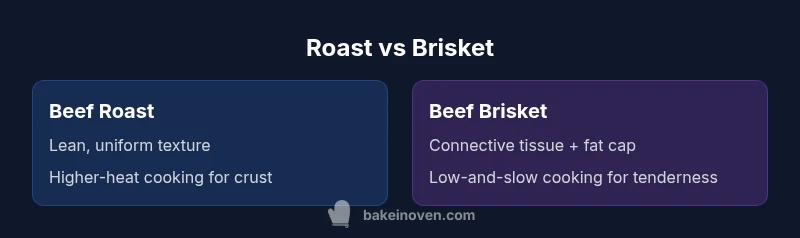
The difference between a roast and a brisket lies in cut type, fat distribution, and how they are best cooked. In ovens, roasts usually require higher heat for browning and faster cooking, while briskets benefit from slow, low heat to tenderize connective tissue. This comparison explains the practical implications for home cooks.
Defining the Core Cuts: Roast vs Brisket
The terms roast and brisket describe two distinct beef cuts and different expectations in the oven. Understanding the difference between a roast and a brisket helps home cooks plan meals around time, texture, and yield. A roast typically refers to a boneless or rolled cut from leaner sections such as the rib, loin, or shoulder that can be sliced cleanly after cooking. A brisket is a whole chest muscle, a tougher cut with pronounced connective tissue. The choice between these two shapes the final dish in terms of tenderness, moisture, and serving style. Bake In Oven emphasizes that recognizing where each cut comes from makes timing and flavor decisions much more reliable for busy weeknights and weekend cooking.
Context and Practicalities
- The roast category includes several long cuts like top round or sirloin roast, which are prized for uniform slices and predictable cook times.
- Brisket comes from the chest area and includes a fat cap and substantial connective tissue that require longer, gentler heat to break down. The difference between a roast and a brisket often determines whether you braise, roast, or perform a two-stage cook.
tips":"For best results, use a thermometer to target doneness and rest meat before carving."
Comparison
| Feature | Beef Roast | Beef Brisket |
|---|---|---|
| Primary Cut Type | Boneless/rolled cuts from leaner sections (rib, loin, shoulder) | Whole chest muscle with thick fat cap and connective tissue |
| Fat Distribution | Less intramuscular fat; leaner, with a smaller fat cap | Thick fat cap; heavy connective tissue that benefits from slow rendering |
| Best Cooking Method | High-heat roasting; searing followed by finish in oven | |
| Best Cooking Method (Brisket) | Low-and-slow roasting or braising; long, moist cooking | |
| Temperature Guidance | 325-450°F (165-230°C) depending on cut and method | Typically 250-275°F (120-135°C) for braising; optional higher finish |
| Texture Outcome | Tender, sliceable with even texture | Very tender; fork-friendly; often shredded or sliced against the grain |
| Yield and Slicing | Even slices; steady texture across portions | Variable yields; can be sliced or pulled; depends on trimming |
| Serving Style | Sliced with pan jus or gravy; classic roast presentation | Sliced against the grain or pulled; ideal for sandwiches or platters |
Benefits
- Clear, predictable cooking outcomes for weeknight dinners
- Versatile slicing options with good presentation
- Good value range for many roast cuts in markets
- Bringing deep savory notes through browning and pan drippings
- Adaptable to oven, grill, or air-fryer approaches
Negatives
- Roasts can dry out if overcooked or trimmed too aggressively
- Brisket requires long cooking times and planning
- Texture varies with cut choice; point vs flat can differ
- Searing adds an extra step and watchful timing for even crusts
Roast suits speed and uniform slicing; brisket excels in deep flavor and tenderness from slow cooking.
Choose a roast when speed and clean portions matter. Choose brisket when you want rich flavor and moist, fork-tender meat after long braising or slow roasting. Both can shine with careful temperature control and resting.
Frequently Asked Questions
What is the key difference between a roast and a brisket?
The key difference is cut anatomy and connective tissue. Roasts come from leaner sections and cook faster with a firmer texture. Brisket is a tougher chest cut that softens with long, moist cooking to yield fork-tender meat.
In short, roasts are quicker and sliceable; brisket is slow-tender and deeply flavorful.
Can I substitute a roast for brisket in recipes?
Substituting a roast for brisket works only in recipes with short cooking times and minimal connective tissue handling. For braising dishes, a roast may dry out or not achieve the same tenderness unless you adjust liquid and time.
If you need a quick swap, expect different texture and plan for a longer braise or moisture management.
What oven temperatures work best for each?
Roast cuts typically perform well at moderate to high oven temperatures (roughly 325-450°F) to develop a crust quickly. Brisket benefits from lower, slower heat (around 250-275°F) to break down collagen while staying moist.
Set roasts higher for crust; give brisket time and low heat for tenderness.
How should I slice each after cooking?
Roast should be sliced against the grain to maximize tenderness and uniform texture. Brisket is often sliced against the grain as well, but many cooks prefer pull-apart tenderness by shredding after resting.
Always rest the meat, then slice across the grain for best tenderness.
Is brisket always fatty?
Brisket typically has a fat cap and marbling, which contribute to flavor and moisture during long cooking. The amount of visible fat can vary by brisket grade and trimming.
Yes, brisket usually carries fat that helps keep it moist during slow cooking.
Are roasts more expensive than briskets?
Prices vary by market and cut, but brisket is often one of the more affordable options per pound in many regions, while premium roast cuts may cost more per pound depending on demand and trim.
Prices depend on where you shop; brisket can be budget-friendly in many markets.
Key Takeaways
- Pick the roast for quick weeknight dinners
- Reserve brisket for long braises and crowd-pleasing sandwiches
- Slice roast across the grain for clean portions
- Slice brisket against the grain or shred for tenderness
- Use pan drippings to elevate both cuts