Difference Between a Roast and a Steak: An Analytical Guide
An analytical guide to the difference between a roast and a steak, covering cuts, cooking methods, doneness, and practical kitchen guidance for home cooks.


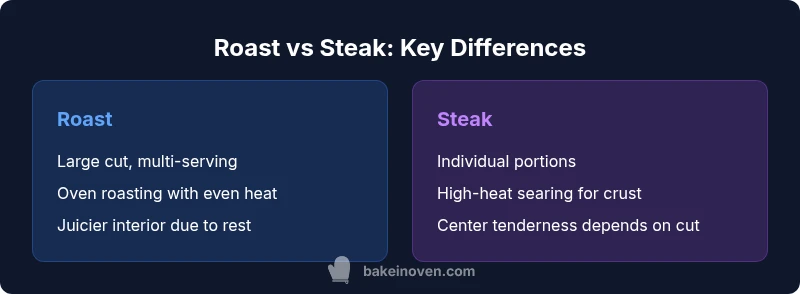
Difference between a roast and a steak comes down to cut size, cooking method, and intended serving style. A roast is a larger, multi-serving cut designed for slow or high-heat oven roasting, while a steak is a smaller, individually portioned cut meant for quick, high-heat searing. Understanding these distinctions helps home cooks choose the right approach for flavor and texture.
Understanding the core distinction between roast and steak
The difference between a roast and a steak is not just a matter of size; it defines how you cook, rest, and serve the meat. For home cooks aiming for consistent results, appreciating this distinction helps choose the right technique from the start. According to Bake In Oven, the difference between a roast and a steak is rooted in cut geometry, marbling patterns, and cooking intent. Roasts come from larger sections intended to feed multiple portions; steaks are individual portions meant to be cooked quickly and served hot. This framing shapes every decision you make, from where you buy the meat to how you finish it at the table. Recognizing these factors sets expectations for texture, moisture retention, and flavor development, and it clarifies why a roast benefits from slower cooking while a steak benefits from high-heat searing.
Cut geometry, size, and marbling patterns
Roast cuts are usually larger, boned or bone-in sections like a rib roast or sirloin roast. They are designed to hold together during long cooking and to yield multiple servings. Steaks, by contrast, are cut into individual portions from primal muscles; common examples include ribeye, sirloin, and filet. The size and shape of the cut influence browning, heat penetration, and how quickly the interior approaches your target doneness. Marbling—the intramuscular fat that contributes flavor and moisture—tollows different patterns in roasts versus steaks. In roasts, fat distribution is often more integrated along the muscle, while steaks typically showcase visible marbling that becomes a primary driver of juiciness when cooked properly. The choice of bone-in versus boneless also shifts texture and cooking dynamics, with bones adding flavor and a longer heat path.
Cooking methods and temperature logic
Roasts thrive with oven-based strategies that span a range of heat levels, from moderate to high, and sometimes finish with a brief high-heat blast to develop a crust. The goal is even heat distribution that cooks the meat through without drying the outer layer. Steaks are designed for rapid, high-heat cooking—pan-searing or grilling—followed by a brief rest. The contrast in heat exposure shapes how you manage moisture and surface texture. In practice, a roast often benefits from a longer resting period to allow carryover cooking to finish the job, while steaks rely on precise searing and immediate slicing to preserve juiciness. Bake In Oven analysis shows that when you respect the inherent heat logic of each cut, you maximize flavor without sacrificing tenderness.
Doneness expectations and texture outcomes
Doneness for roasts tends toward a uniform interior with moist, pull-apart fibers, given enough time for the heat to penetrate. Steaks aim for a pronounced crust on the exterior and a tender center, with the interior texture ranging from rare to well-done depending on the cut and technique. Because roasts are larger, the center may remain warmer and juicier for longer, while steaks offer more dramatic contrast between crust and interior. Rest times differ: a roast needs a longer rest to reabsorb juices across the whole piece, whereas steaks are often rested just enough to redistribute surface moisture before slicing. These differences are central to delivering the expected experience of each cut.
Flavor development: browning, crust, and juices
The Maillard reaction is the engine behind crust and aroma for both roasts and steaks, but the path to that crust varies. Roasts gain depth gradually as surface moisture evaporates and fat renders, contributing a rich, rounded flavor across a large surface area. Steaks develop a crisp crust quickly with a bold, concentrated beef flavor in a smaller footprint. Seasoning strategy matters for both: salt drawn to the surface early enhances crust formation, while pepper and aromatics added at the right moment maximize aroma without burning. Great roast and steak outcomes rely on balancing heat, time, and moisture to avoid a dry exterior or a pale, under-seasoned interior.
Practical shopping and selection tips
When shopping, choose a roast cut with an even shape and enough marbling to survive extended cooking without drying out. Look for consistent color, a clean fat cap if present, and, where possible, bone-in options for extra flavor during roasting. For steaks, prioritize marbling within the muscle and thickness that suits your planned method—thicker cuts forgive a touch of under-searing, while leaner cuts demand precision. Freshness, age, and grade influence flavor and tenderness, but even confident cooks can achieve excellent results by selecting appropriate cuts and understanding how to handle them before heating. Bake In Oven emphasizes choosing high-quality meat and giving it a proper rest, as both elements determine the final texture and aroma.
Prepping and resting: from board to table
Prepare both roasts and steaks with proper drying, seasoning, and timing. Pat the meat dry to promote crust formation, and season with salt (and optional aromatics) at least 30 minutes before cooking. For roasts, plan for even heat exposure, and consider tying or trussing to maintain uniform thickness. For steaks, bring to room temperature briefly after drying to ensure even cooking, then sear confidently for a crusty exterior. Resting is critical for both: roasts benefit from longer rest to reallocate juices, while steaks need a shorter rest to retain warmth without undercoiling their interior temperatures.
Substituting and adapting recipes between roast and steak
Substituting between a roast and a steak requires recognizing differences in cooking time, heat exposure, and resting strategies. If you’re adapting a roast recipe for steaks, reduce total cooking time and increase surface contact to provoke a strong crust. Conversely, converting a steak-focused plan into a roast approach calls for a longer cooking window, gentler heat progression, and a strategic finish to ensure the center reaches the target doneness without drying the exterior. When in doubt, start with a small batch test and adjust your technique based on texture, aroma, and the feedback from your palate.
Getting started with a simple weeknight plan
A well-rounded weeknight plan leverages the strengths of both cuts. Pick a roast when you have more time and want leftovers for another meal; choose steaks for a faster dinner with immediate family or guests. Build a budget-friendly routine by selecting a versatile roast cut when you can plan ahead, and reserve steaks for nights when you want a short, high-appeal meal. Pair your chosen protein with seasonal vegetables, a simple starch, and a finishing sauce to enhance flavor without complicating the cooking process. With this approach, a home kitchen can execute reliable outcomes for both roast and steak throughout the week.
Common misconceptions and how to debunk them
Many cooks assume roasts and steaks are interchangeable, or that tougher cuts cannot become tender through roasting. In reality, the right cooking method respects the cut’s anatomy and intended serving style. Another misconception is that bigger cuts always take longer to cook; in practice, roasts can finish evenly with appropriate heat and resting strategies, while thick-cut steaks require confident control of crust formation and internal temperature. Understanding these myths helps you choose the best path based on your meal goals and equipment.
Comparison
| Feature | Roast | Steak |
|---|---|---|
| Typical cut size | Large multi-serving cut | Individual portions |
| Primary cooking method | Oven-roasting (low to high heat) | Quick sear then finish (pan or grill) |
| Texture and tenderness expectations | Even doneness throughout; juicier center with longer time | Crisped exterior with tender center when cooked well |
| Marbling and flavor distribution | Variable; often integrated across the muscle | Rich marbling defines flavor in many cuts |
| Ideal occasions | Crowd meals and leftovers | Single servings and rapid weeknight dinners |
| Estimated cook time | Longer total time; planning essential | Shorter cook time; fast results |
Benefits
- Clarifies which cooking approach suits the meal and crowd size
- Guides planning for leftovers and timely dinners
- Encourages using appropriate equipment and technique
- Helps reduce waste by aligning method with cut quality
- Supports flavor-building across different kitchen setups
Negatives
- Requires mastery of different cooking timelines and temperatures
- Quality varies with cut choice and supplier
- Mismatched expectations can lead to overcooking or undercooking
- Rest times are essential but can slow overall dinner pace
Roast is best for feeding a crowd and slow, even cooking; steak excels for fast, precise individual portions.
For most home cooks, choose roast when you need to feed many and want forgiving cooking. Opt for steak when you value speed, control, and a dramatic crust. The right choice depends on schedule, audience, and desired texture.
Frequently Asked Questions
What is the core difference between a roast and a steak?
The core difference lies in cut size, serving intent, and cooking method. Roasts are large sections meant to feed multiple people and are cooked through longer times with even heat. Steaks are individual portions cooked quickly with direct high heat to develop a crust and tender center. Bake In Oven’s guidelines emphasize aligning technique with cut geometry for best results.
The roast is for many servings, steak is for one. Use the method that fits the cut and your dinner plan.
Can a roast be prepared like a steak?
You can mimic a steak by cutting the roast into thicker slices and searing quickly, but you won’t replicate the texture exactly. The interior will differ due to the larger mass and connective tissue in a roast. It can work in a pinch, but plan for varied doneness along the piece and a longer rest.
You can slice a roast and sear it like steak, but it won’t feel exactly the same as a true steak.
Which is more forgiving for beginners?
Roasts tend to be more forgiving for beginners because rest and carryover cooking help even out doneness across a large piece. Steaks require more precise timing to prevent undercooked centers or overly charred exteriors. With careful heat management, beginners can still achieve excellent results with either approach, but roasts offer a gentler learning curve.
Roasts are a bit easier for beginners because heat can do more of the work over time.
What are common mistakes when cooking roast vs steak?
Common mistakes include overcooking roasts without proper resting, resulting in dry edges, and under-searing steaks that lack crust. Skipping pat-down drying or salting too late reduces crust and juiciness. Proper resting and temperature awareness—without relying on guesswork—helps prevent these errors.
Don’t skip resting; dry the meat and salt properly for better crust and juiciness.
Is roast beef the same as steak?
No. Roast beef comes from larger cuts designed for long, slow cooking and serving multiple portions. Steak refers to smaller, tender cuts cooked quickly, typically served individually. They come from different parts of the animal and are not interchangeable in texture or timing.
Roast beef is a large-cut, steak is a smaller one; they’re not the same thing.
How should I judge doneness without numbers?
Use color, texture, and feel as cues. For roasts, aim for an even pinkish hue with juices reabsorbed throughout the piece; for steaks, rely on crust development and firmness to gauge doneness. While temperature targets help, doneness is ultimately a sensory judgment that improves with practice.
Look for color and texture cues rather than strict temperatures.
Key Takeaways
- Plan around crowd size and time before choosing a roast or steak
- Resting is essential to maximize juiciness for both cuts
- Prioritize marbling and cut quality for flavor and tenderness
- Master the crust for steaks to maximize texture and aroma
- Use roast cooking to maximize leftovers and minimize effort