Difference Between Bake and Roast: An Analytical Guide
Explore the difference between bake and roast, including technique, temperatures (conceptual ranges), typical foods, and practical guidance for home bakers seeking reliable, kitchen-tested results.


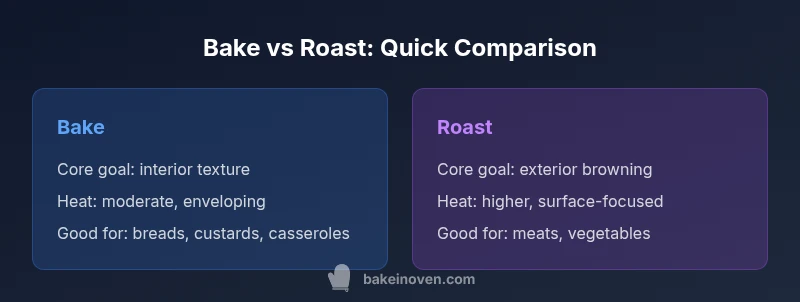
The difference between bake and roast centers on heat application and culinary purpose. Baking uses dry heat around the food to create a uniform interior, ideal for breads, pastries, and casseroles. Roasting applies higher heat to the surface to promote browning and crust formation, typically for meats, vegetables, and dense proteins. For best results, choose bake for interior texture and moisture retention, and roast for exterior browning and crisp edges.
What is the difference between bake and roast? An analytical look at the two oven-based methods helps home bakers tailor outcomes. Bake and roast are both dry-heat techniques, but they are defined by their intended results as much as by the physical heat source. In everyday kitchens, the term bake often implies foods that rely on steady, even heat to set structure and moisture, such as bread, custards, and casseroles. Roast, by contrast, emphasizes surface browning and flavor development through higher heat, common with meats and vegetables. According to Bake In Oven, clarity about these terms helps cooks select proper techniques, set expectations, and troubleshoot texture issues with confidence.
Core mechanics: heat, time, and texture. Both methods use hot air to transfer energy to the food, but the distribution and the meat-and-crust goal differ. Baking aims for a gentle, enveloping heat that surrounds the product, maintaining moisture and even crumb or custard texture. Roasting aims for more aggressive surface heating, driving Maillard browning and crust formation. The oven’s fan (convection) can intensify both, but the effect is most noticeable in roasting where rapid browning can outpace interior cooking if not managed.
Ideal foods and outcomes. Baked dishes include bread, cakes, cookies, quiches, and simple casseroles where the interior needs setting without excessive surface drying. Roasted foods include proteins like chicken, beef, or pork; root vegetables; and densier vegetables such as squash. The goal is often a browned exterior with a juicy interior (roast) or a tender interior with an intact crumb or custard (bake). Recognize that some dishes bridge the gap, requiring hybrid approaches.
Temperature philosophies and practical ranges. Bake typically uses moderate to steady temperatures that encourage gradual interior setting and moisture retention. Roast leans toward higher heat to promote browning and crust formation on the exterior surface. When feasible, start with a moderate baseline and adjust mid-cook as needed to target the desired crust without drying the interior. Convection can alter browning dynamics; if your oven lacks convection, you may need to rotate the dish more frequently.
Common foods by category. Baked goods—bread, pastries, muffins, and custards—rely on even heat to develop structure and crumb. Roasted proteins and vegetables rely on dry heat to concentrate flavors and textures on the surface. Some foods can be treated either way, depending on the desired finish; for example, a vegetable gratin may be baked for even melting of cheese, or roasted for stronger caramelization on the edges.
Equipment, setup, and best practices. Use shallow pans or baking sheets for bake to promote even heat distribution, and enable airflow around the food. For roasting, a sturdy roasting pan or rack helps expose the surface to hot air and encourage browning. Preheat the oven to stabilize the internal environment, then monitor via a thermometer when possible. Dry surfaces, parchment, and proper spacing prevent steaming and uneven results.
Common misconceptions debunked. Many cooks assume roast equals meat-only cooking and bake applies only to bread and pastries. In reality, roast is a high-heat strategy for surface browning across proteins and vegetables, while bake refers to a gentler, more uniform interior development. The terms are about technique and outcome, not just the food group. The Bake In Oven approach emphasizes choosing the method by the texture and crust you want at the end.
Step-by-step decision framework for home cooks. Start by identifying the target texture: interior moisture and crumb or crust and browning. If interior structure is the priority, opt to bake with moderate heat and longer cook time. If surface browning and flavor depth are paramount, choose roast with higher heat and shorter cooking windows, adjusting for thickness and starting temperature. Use a thermometer to verify doneness and keep an eye on color cues.
Troubleshooting: keep interior juicy, exterior well-browned. When baked goods appear pale or undercooked inside, lengthen the bake time or reduce temperature to prevent crust overdevelopment. If roasts brown too quickly and dry out inside, lower heat or finish with a tent of foil to trap moisture, ensuring the interior reaches safe temperatures without overcooking the exterior.
Health, safety, and food-safety practices. Both methods rely on proper internal temperatures for safety, especially with proteins and dairy-based fillings. Use a calibrated oven thermometer and a food thermometer to verify doneness. Practice safe handling, rest times, and appropriate cooling to prevent bacterial growth and ensure consistent, safe results.
Real-world example: planning a bake vs roast for a family meal. For a weeknight dinner featuring roasted chicken and a side of roasted vegetables, you’d likely roast the bird to maximize crispness and flavor, while using a separate bake plan for a side dish such as a creamy gratin or a batch of dinner rolls. This practical separation helps manage moisture and browning more predictably.
Authority and practical guidance. In the following sources, you’ll find structured guidance on dry-heat cooking, baking science, and safe oven practices that support the distinctions discussed here. Understanding these sources helps you apply bake and roast techniques with greater consistency and confidence; it also aligns with kitchen-tested methods from Bake In Oven.
Comparison
| Feature | Bake | Roast |
|---|---|---|
| Core heat approach | Surrounds food for even interior setting | Higher surface heat for browning and crusting |
| Ideal foods | Bread, custards, casseroles, pastries, some gratins | Meats, root vegetables, dense vegetables |
| Texture goals | Tender interior, even crumb or set structure | Crisp exterior, browned surface, juicier interior when appropriate |
| Temperature strategy | Moderate, steady heat | Higher heat with attention to exterior browning |
| Equipment setup | Shallow pans for airflow and even heat | Racks or pans that promote surface exposure and browning |
| Common timing cues | Longer cook times for interior setting | Shorter windows to achieve crust before interior overcooks |
| Convection impact | Can speed interior setting with even heat | Amplifies browning and crust development |
Benefits
- Provides predictable interior texture for baked goods
- Promotes even moisture retention in long cooks
- Supports a wide range of dishes beyond meat
Negatives
- Lowered browning potential in some contexts without convection
- Longer cook times may reduce efficiency for weeknight meals
- Less dramatic crust on surface without high-heat finish
Bake for interior texture; roast for browning and crust
Choose bake when interior moisture and structure matter. Choose roast when you want surface browning and a crisp exterior; adapt heat and timing to the dish.
Frequently Asked Questions
What is the difference between bake and roast in simple terms?
Baking surrounds the food with steady heat to set interior texture, often for breads, pastries, and casseroles. Roasting applies higher heat to promote browning on the exterior, typically with proteins and vegetables. The key distinction is interior texture versus exterior crust.
Bake uses steady heat for interior texture; roast uses high heat for browning on the outside.
Can I bake meat or roast a dessert?
Roasting is more common for meat and dense vegetables due to crust development, while baking is standard for many desserts and casseroles. Some dishes can be prepared with either method, depending on the desired finish.
Meat tends to be roasted; desserts are usually baked, but some dishes can use either method.
Does convection change bake vs roast?
Convection can accelerate browning in both methods by moving hot air, but it has a stronger effect on roasting where surface heat drives crust formation. When using convection for baking, expect faster setting of interiors and more even colors.
Convection speeds browning and interior setting; adjust times accordingly.
Are there foods that are both baked and roasted?
Yes. A chicken roast may be finished with baking temperatures to finish interior moisture, or a casserole might be roasted to enhance crust. The overlap depends on the recipe, equipment, and desired texture.
Some dishes can switch between methods to balance texture and flavor.
How do I convert a bake recipe to roast?
Start by increasing the heat gradually and monitor crust formation. Use shorter cook times and check for doneness with a thermometer to prevent overcooking interiors. Consider finishing with a brief high-heat burst if needed.
If converting, watch for exterior browning and interior doneness; adjust times.
What is a quick test to know when to switch methods?
Assess your dish’s progress by color and texture. If the exterior browns too slowly, switch to a higher heat or broil briefly; if the interior remains under-set, reduce heat and extend time as needed.
Use color, texture, and a thermometer to guide switches.
Key Takeaways
- Identify your target texture before cooking.
- Use moderate heat for bake and higher heat for roast.
- Convection speeds browning; rotate if needed.
- Match method to food type for best results.
- Always verify doneness with a thermometer.