Bake or Broil: A Practical Guide for Home Bakers
Understand when to bake or broil, how to judge doneness, and practical steps for achieving perfect finishes in the oven. This analytical comparison helps home bakers decide quickly and confidently.


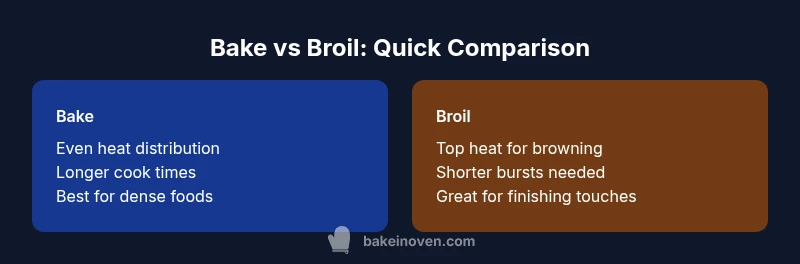
Bake and broil are two distinct oven techniques: baking uses even, surrounding heat for thorough cooking, while broiling relies on intense top heat to brown, crisp, and finish dishes quickly. For most casseroles, breads, and baked sweets, use bake; for finishing touches, browning, or rapid crust formation, switch to broil briefly. By understanding these roles, you can plan cook times and monitor results to optimize texture and flavor.
The Core Idea: bake or broil — what's the difference?
In everyday home cooking, the phrases bake or broil describe two very different heat delivery methods. Baking distributes heat from all sides through the oven, creating an even environment that cooks food through gradually. Broiling, by contrast, concentrates heat at the top element, delivering rapid surface browning and crust formation. For home bakers, understanding bake or broil helps you predict texture, moisture retention, and doneness. According to Bake In Oven, a practical rule of thumb is to use bake for uniform cooking and broil for finishing touches. This distinction matters across proteins, vegetables, and desserts, where a misapplied method can yield rubbery interiors or burnt exteriors.
In this guide, we’ll compare bake and broil across core factors like heat direction, timing, and equipment, so you can make informed decisions without guessing. The goal is functional clarity: when to rely on steady heat, and when to unleash top heat for a desirable crust or glaze. By practicing with simple tests, you’ll build intuition that makes bake or broil second nature.
For context, the Bake In Oven team emphasizes that choosing between bake or broil should reflect the dish’s desired finish rather than a universal rule. This mindset helps home bakers adapt to every recipe and oven variability, delivering consistent results across techniques.
When to choose bake: best scenarios
Baking is the default technique for most foods that require steady, even cooking. This includes casseroles, sheet-pan meals with a mix of proteins and starches, breads, pastries, and many desserts where uniform interior texture matters. When you want a light, even color throughout without heavily browned surfaces, bake is the safer, more predictable path. A central benefit of bake is moisture retention and risk management; foods stay tender with fewer risk of scorching on top, provided you monitor heat and time.
Another strong case for bake is when you’re cooking multiple items at once. A stable oven temperature can accommodate different components with minimal risk of uneven results. For fruit fillings, custards, and most dough-based items, bake supports even heat distribution and gentle development of flavors. When you’re following a recipe that specifies a bake setting, you’re aligning with a tested approach that balances crust formation, interior doneness, and aroma development.
From a technique perspective, bake excels in building structure: bread rises, cakes set, and vegetables soften through ambient heat rather than direct surface exposure. Bake is also friendlier for beginners since the heat is less prone to sudden, dramatic changes. In practice, you’ll often start with bake to reach doneness, then switch to a finishing method if a dish requires browning or crisping.
When to choose broil: advantages and limits
Broiling exposes the food to intense, direct heat from above, which makes it ideal for browning, crisping, and finishing dishes with a caramelized glaze. Foods that benefit from broiling include steak slices for a crusty exterior, fish fillets with a crisp top, vegetables like peppers or zucchini with blistered surfaces, and casseroles that need a browned topping. The advantage of broiling is speed and the ability to achieve a lacquered surface quickly, often without overcooking the interior.
However, broiling also carries risks. Because the heat is concentrated on the top, delicate surfaces can scorch if left unattended. It’s essential to monitor closely, especially when your oven runs hot or has hotspots. Broiling is less forgiving for thick or densely packed items, where the interior may lag behind the surface in doneness. In practice, use broil as a finishing technique after an initial bake or for a quick glaze, crust, or color boost. Then, move the food away from direct heat to finish safely if needed.
A prudent approach is to prep a dish for broiling by drying surfaces, brushing with oil or glaze, and positioning the rack close to the top element. With supervision, broil can deliver a restaurant-worthy crust while saving time compared to extended bake times.
Temperature and time guidelines: practical framing for bake or broil
Rather than fixating on specific temperatures, think in terms of heat direction and expected outcomes. Bake relies on even heat with longer cooking times and less surface browning on its own. You’ll typically see gradual color development as moisture is allowed to escape slowly. Broil, conversely, uses intense top heat for rapid browning, blistering, and crust formation, so it requires shorter exposure and frequent visual checks.
When baking, start with a moderate heat setting and allow the oven to come to temperature before inserting food. If your dish relies on a crust, consider ending with a brief broil to achieve the desired surface color. If you must brown an ingredient that is not fully cooked through, plan a short broil interval toward the end of the bake phase. Remember: oven performance varies, so use visual cues—color, surface texture, and internal moisture—as your doneness guide rather than timing alone.
For best results, reserve broiling for thin or exposed surfaces, and use bake for the core cooking. This dynamic pairing helps home bakers achieve consistent textures across a range of dishes while minimizing the risk of scorching. Bake or broil decisions should hinge on finish rather than a fixed time, and always include a monitoring plan to prevent overcooking.
Equipment and setup: racks, pans, and positioning
The equipment you choose defines how bake or broil performs. For bake, a sturdy baking sheet, shallow pan, or loaf pan placed on an middle rack promotes even heat circulation. If you’re baking bread, a perforated pan or a stone can help with crust development while maintaining interior moisture. When broiling, a broiler pan, a rack placed toward the top of the oven, or a cast-iron skillet can optimize high-heat exposure and browning while allowing fats to drain away from the surface.
Position matters more in broiling because heat intensity diminishes with distance. A common tactic is to broil on the top rack for a brief burst, then move the dish down to finish with bake if needed. Use oven-safe tools and long-handled tongs to guard against splatters. Proper tray spacing and avoiding overcrowding prevent steam buildup and ensure even browning across surfaces.
If you’re unsure of how your oven performs, run a quick test with a small batch of vegetables or a thin piece of meat to observe browning patterns. This experiment helps you map where to place items for bake versus broil in future sessions.
Food type profiles: vegetables, proteins, casseroles, and desserts
Certain foods respond distinctly to bake or broil. Vegetables with natural sugars, like peppers or zucchini, benefit from a short broil finishing step to achieve blistered edges while preserving interior texture. Dense proteins (like chicken breast or pork chops) often do well with bake first to ensure interior doneness, followed by a quick broil to create a crisp exterior.
Casseroles and bakes love even heat to ensure uniform cooking, while pastries and cookies generally respond better to bake settings that evenly set dough without scorching. Desserts with a top layer—think crème brulée-style tops or glazes—can finish under broil for color and texture. A practical practice is to plan the finish: bake the majority of the dish, then add a brief broil step to finish the surface.
Always consider thickness, moisture content, and surface exposure when deciding whether bake or broil is appropriate for a given dish. The goal is to maximize texture contrast without compromising interior texture or moisture.
Troubleshooting and common pitfalls
A common pitfall with bake is underdeveloped crust or uneven browning across a dish, especially on the edges. If you notice pale edges, consider extending the bake time by short increments and rotating the pan halfway through. With broil, scorching is the primary risk; guard against this by watching closely and using a timer with alerts, or broiling in short bursts and checking after each interval.
Another issue is moisture overload on top surfaces, which can inhibit browning. If you’re broiling and see steam, move the food down a rack or place a foil shield to deflect some heat. For dense items, use a two-phase approach: bake to cook through, then broil briefly for surface finish. Remember that ovens vary, so adjust expectations and refine your workflow with small tests.
Finally, avoid overcrowding, which traps heat and slows progress. Spacing items evenly ensures better heat exposure and more reliable results when bake or broil are employed.
Safety considerations and maintenance
High-heat cooking carries safety considerations: use oven mitts, keep a safe distance, and ensure the vent is clear to prevent smoke buildup. Regularly clean the oven racks and bottom to reduce residual grease that could flare during high-heat broiling. Use the proper cookware; metal pans with solid bottoms perform better under broil than flimsy ones that may warp or melt.
Ventilation is important when broiling, so consider turning on a range hood or opening a window if your kitchen tends to accumulate steam. Regularly check the oven’s heating elements for signs of wear, and calibrate your oven if you notice consistent temperature differences between the dial and actual heat. By maintaining equipment and following straightforward safety steps, bake or broil can be both productive and safe in a home kitchen.
Quick-start workflows: bake or broil in practice
Workflow 1 — Bake a chicken breast: Preheat, season, and place on a rack to promote even cooking. Bake until the internal doneness meets your target, then rest before slicing. Workflow 2 — Broil finishing: After a bake, switch to broil for 2–4 minutes to develop a crisp exterior and golden surface, watching constantly to avoid scorching. Workflow 3 — Veggies with a glaze: Bake to soften, then broil briefly to caramelize the glaze without drying the vegetables.
These workflows illustrate a practical approach to using bake or broil based on the dish’s finish. Start with a base bake, then add a finishing broil when appropriate to achieve color, texture, and flavor complexity. With practice, you’ll intuitively know when to swap between modes to optimize results.
How to adapt recipes originally written for bake to broil
Many recipes assume a bake setting; adapt by reducing total time and planning a finishing broil step. If a dish is intended to brown on top, you can start with bake to reach doneness and then switch to broil for color and texture. Conversely, you might finish a long, low bake with a quick broil to add contrast to the surface. The key is to monitor color development and adjust rack position to optimize heat exposure.
Keep in mind that broiling can be less forgiving because heat is intense and localized. Use short bursts, rotate dishes, and remove items promptly when the desired color is achieved. Practice on simple dishes first, measure internal temperatures where relevant, and rely on visual cues for doneness, texture, and crust formation. As you gain experience, you’ll be able to adapt a wider range of recipes using either bake or broil.
Debunking myths: hot air and browning myths
A common myth is that broiling always cooks faster than baking. In reality, cooking speed depends on dish thickness, moisture content, and oven performance. Another misconception is that broiling automatically dries foods; moisture can be retained with proper technique and timing. A practical takeaway is to view heat direction as a tool—top heat for browning, ambient heat for even cooking—rather than a universal rule.
Lastly, some home cooks fear that broiling is unsafe. When done correctly, with proper cookware and monitoring, broiling is a safe and effective method. The key is to stay attentive and avoid leaving the kitchen while the top heat is active. By distinguishing myths from practical steps, you can reliably harness bake or broil for flavorful results.
Decision rubric: a simple bake or broil checklist
Use these quick checks to decide between bake or broil for a given dish:
- Is even doneness more important than surface brown? Bake.
- Do you need rapid browning or crisping on the surface? Broil.
- Will the dish be thick or dense? Bake, with a possible brief broil finish at the end.
- Are you cooking multiple items at once? Bake to ensure uniform cooking.
- Is moisture retention critical? Bake is generally better for interior moisture.
By applying this checklist, you’ll reduce guesswork and select the technique that best suits texture, flavor, and doneness goals.
Comparison
| Feature | Bake | Broil |
|---|---|---|
| Heat direction | Even heat from all sides | Direct top heat only |
| Best for | Uniform cooking for casseroles, breads, pastries | Finishing touches, browning, and surface crisping |
| Time sensitivity | Longer cook times with steady progress | Shorter, intense bursts; watch closely |
| Equipment | Baking sheets, pans, racks | Broiler pan or rack, oven-safe skillet |
| Food types | Thick, dense dishes; items needing interior doneness | Thin cuts, surface browning, glaze finishing |
| Watching needed | Moderate monitoring; rotate if needed | Frequent monitoring to avoid scorching |
Benefits
- Even cooking is predictable for large or layered dishes
- Less risk of surface scorching during the main cook
- Highly versatile across meals (bread, pastries, casseroles)
- Greater control for interior texture and moisture retention
- Suits recipes designed for standard bake settings
Negatives
- Longer overall cook times compared to braising or broiling in short bursts
- Broiling can scorch surfaces quickly if not monitored
- Not ideal for very thick or dense items without a prior bake
- Requires post-cook vigilance to prevent overcooking on top during finish
Bake for reliable, even cooking; broil for rapid browning and finishing touches
Use bake as the default for interior doneness and uniform texture. Switch to broil to develop color or crust quickly, keeping a close eye to prevent burning. This balanced approach yields consistent results across a wide range of dishes.
Frequently Asked Questions
What is the main difference between baking and broiling?
Baking uses even heat from all sides to cook food through, while broiling applies intense top heat to brown the surface quickly. The choice depends on whether you want even interior doneness or a brown, crisp finish.
Baking uses even heat across the dish; broiling uses top heat to brown the surface quickly.
Can I substitute bake for broil or vice versa?
They aren’t directly interchangeable. You can bake to cook through and finish with a brief broil, or broil briefly to brown after baking. Timing and attention are key.
They aren’t fully interchangeable; use finishing with broil after baking if needed.
What foods are best for broiling?
Thin cuts of meat, fish fillets, and vegetables that benefit from browning are ideal for broiling. Desserts or glazes that require surface caramelization can also be finished under the top heat.
Great for browning thin cuts and finishing glazes.
How do I prevent burning when broiling?
Keep a close watch, use short bursts, and move the food away from direct heat if it starts browning too quickly. Use a rack and monitor color closely.
Watch closely and use short bursts to avoid burning.
Should I preheat the oven for bake or broil?
Yes. Preheating helps ensure even cooking for bake and consistent top heat exposure for broil. Tailor preheat time to your oven’s behavior.
Yes—preheating helps both methods work as intended.
Are there safety tips for broiling in a small kitchen?
Ventilation is important; keep a safe distance, use long-handled tools, and avoid crowding the oven rack to prevent flare-ups.
Ventilate and use long tools to stay safe.
Key Takeaways
- Assess dish thickness and moisture to choose bake or broil
- Prefer bake for even cooking of dense foods
- Use broil for finishing browns and crisp surfaces
- Monitor closely when broiling to avoid scorching
- Reserve a brief broil finish after baking for best crust
- Rotate or reposition food to prevent hotspots