Is Bake or Broil Better? A Practical Side-by-Side Guide
Explore when to bake vs broil, with a clear side-by-side comparison, practical tips, safety, and tricks to optimize results for everyday home baking.


Bake is generally the safer default for home cooking because it provides even heat, steady moisture, and predictable results. Broil is best reserved for finishing techniques where rapid browning or crust formation is desired, typically at the end of a cook. In most cases, start with bake, then switch to broil for a quick finish if you need more color or crust. For many dishes, this two-step approach is ideal.
Bake vs Broil: What This Really Means
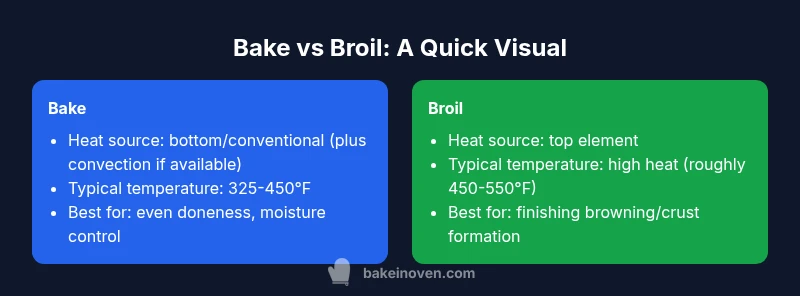
Is bake or broil better? The two terms describe different heating strategies inside a standard oven. Bake uses controlled, even heat from all around (often primarily from the bottom), while broil relies on the oven's top heating element to blast intense heat downward. This fundamental difference shapes every recipe decision, from texture and moisture to browning and crust formation. According to Bake In Oven, understanding these forces helps home bakers choose the right method for any dish. In practice, most recipes begin with bake for steady cooking and finish with a brief broil if a crust or color is desired. When used correctly, bake promotes uniform doneness and moisture retention, while broil delivers rapid surface browning without deeply cooking the interior. The trick is timing and position: start with a lower rack for bake to maximize even heat distribution, and move the dish closer to the heat source only when browning is needed. As you gain experience, you’ll learn to read color changes and texture cues to decide when to switch methods. This knowledge helps you optimize everything from cookies and casseroles to meats and vegetables.
When to Choose Bake: Practical Guidelines
For most everyday dishes, bake is the reliable default. Foods that benefit from steady heat and uniform interior doneness—cookies, cakes, bread, casseroles, lasagna, roasted vegetables—fit well under the bake method. Bake preserves moisture better than high-heat broiling, reduces the risk of scorching the exterior before the inside is done, and supports gradual browning that you can control with temperature and time. When using a conventional non-convection oven, aim for a middle rack to promote even heat circulation; with a convection oven, you can lower the temperature by about 25 degrees Fahrenheit and monitor food for faster cooking. Practical tips: preheat the oven to the target temperature, use pan liners like parchment to reduce sticking, and rotate pans halfway through for even color. If you’re baking proteins such as chicken or fish, consider finishing with a quick broil step at the end instead of high direct heat for the entire time. Reading the recipe closely helps here: if it calls for long cooking at 350°F, that’s bake territory. Regular monitoring with a kitchen timer prevents over-drying. In short, bake is your go-to for dependable, broad-scope cooking where interior doneness and moisture matter most.
When to Choose Broil: Finishing Touches and Colorful Finishes
Broil excels when you want a fast, intense surface transformation without deeply cooking the interior. It's ideal for finishing steaks, chops, scallops, and fish with a crusty exterior. Broiling works well for gratins, cheese toppings, and vegetable roasts where a deep brown color is the goal. Because broiling uses top-down heat, the food heats from the outside in and can burn quickly if left unattended. A common approach is to start with bake to bring the interior up to temperature, then switch to broil for 2-4 minutes at high heat to develop color. Place the rack close to the top element (typically within 4-6 inches on a standard oven) and keep a close eye on progress, using a timer and a watchful eye. For delicate items like asparagus or thin fish fillets, broiling can create appealing caramelization in minutes; but it can also overcook in seconds, so step away from the kitchen for short intervals only. When the recipe demands a final crust or cheese melt, broil is the tool that makes the top layer glow. Always monitor and be prepared to pull the dish out the moment the desired color is achieved.
Hardware and Setup: What You Need to Know
Your equipment choices influence results as much as technique. For bake, metal trays, baking sheets, and glass or ceramic baking dishes behave differently: glass heats more slowly but preserves moisture, while metal conducts heat quickly for crisper bottoms. Lining pans with parchment paper or silicone mats reduces sticking and makes cleanup easier. For broil, consider a sturdy broiler pan or a rimmed baking sheet to catch drips and prevent smoking; avoid thin aluminum foil directly under the top heating element as it can reflect heat and cause uneven browning. Rack position matters: bake usually needs a middle rack, while broiling benefits from the top zone. Preheating remains important for both methods; a cold pan can sap heat and extend cook times, while a hot pan encourages crisp edges. If you use a convection setting, reduce the temperature by about 20-25°F, and keep a close watch on time, since convection accelerates browning. Parchment paper and parchment-use lists within the tag set are useful for avoiding sticking and preserving food quality. In the Bake In Oven approach, it’s helpful to test with a neutral item like a plain cookie first to gauge oven performance before attempting a complex dish.
Real-World Dishes: Side-by-Side Scenarios
Scenario A: Roasted vegetables. Bake at 425°F on a middle rack until tender and caramelized. The even heat ensures uniform browning on all sides. Scenario B: Salmon with a crisp top. Bake the salmon until just barely cooked through, then broil for 1-2 minutes to finish with a crusty top. Scenario C: Lasagna. Bake to ensure the interior is heated through and the cheese melts evenly; extended bake time yields better texture than aggressive browning. Scenario D: Pastas with cheese toppings. Bake first, then broil briefly to achieve a bubbly, browned finish. These practical examples illustrate how you can combine bake and broil to achieve both textured variety and even cooking. The Bake In Oven Team notes that starting with bake and adding a brief broil is a common pattern used by home bakers to maximize texture variety.
Techniques to Maximize Results for Both Methods
Preheat thoroughly, use thermometer targets, and monitor color cues. For bake, aim for even heat distribution across the dish; rotate pans if you’re cooking multiple items. For broil, position the rack close to the heat source but watch closely to prevent scorching; use a timer and open-door checks as needed. Browning vs caramelization: browning involves surface changes with sugar content, while caramelization is a chemical change that adds depth to flavor. Achieving both requires a balance of time, temperature, and the right pan. Consider using a quick glaze or oil to promote color when broiling; ensure you pat dry wet surfaces before browning to avoid steaming rather than crisping. The two-method approach can be powerful: start low and slow with bake, then switch to high heat for color. Bake In Oven’s practical tips emphasize planning ahead and tasting as you go, building a mental map of your oven’s hot spots.
Safety, Troubleshooting, and Common Pitfalls
High temperatures increase the risk of scorching, especially with broiling. To avoid burning, keep a close eye on time and frequently check the color. Ensure ovens are properly calibrated; if your oven runs hot, adjust temperatures accordingly. Keep children away from hot racks, and use heat-resistant gloves when handling pans. Overcrowding can reduce air circulation and lead to uneven browning; give space for heat to circulate. Parchment paper can catch fire if too close to the broiler; never place parchment directly under the top heating element. Clean and maintain your oven to prevent smoke and fire hazards. If you notice uneven color, test with a simple pan of water and observe how heat diffuses. Bake In Oven’s kitchen-tested advice suggests maintaining awareness of your oven’s quirks and keeping a close eye on any high-heat step.
Putting It All Together: A Simple Decision Framework
- Identify goal: even doneness or a browned crust? 2) Choose base method: bake for interior doneness, broil for surface color. 3) Plan the timing: bake majority, broil final color. 4) Adjust for equipment: convection vs conventional. 5) Execute with caution: set timers, monitor color, and rest after cooking. Use a two-step approach when appropriate: bake first, then broil. The framework helps home bakers quickly decide on the method and adjust on the fly. The Bake In Oven Team recommends practicing with familiar recipes to understand how your oven behaves before tackling ambitious dishes.
Comparison
| Feature | Bake | Broil |
|---|---|---|
| Heat Source | Bottom/around heat (and convection when available) | Top element only; direct heat |
| Typical Temperature Range | 325-450°F | 450-550°F (high heat) |
| Best For | Even doneness, moisture retention, long-cook recipes | Finishing browning, crust formation, quick searing |
| Cooking Speed | Moderate to longer cook times depending on dish | Short-cook, fast browning or finishing |
| Moisture Control | Promotes moisture distribution and even texture | Can dry edges if left too long |
| Rack Position | Middle rack for bake or lower for even heat | Top rack close to heat for browning |
| Preheating | Usually necessary for consistent results | Usually necessary; watch times closely |
Benefits
- Promotes even cooking and moisture retention
- Versatile for many dishes and skill levels
- Better control over interior doneness with gradual browning
- Lower risk of scorching compared to direct high heat
Negatives
- Slower browning compared to direct broiling
- Requires longer cook times or more planning
- Cannot achieve rapid crust without finishing step in broil
- May require rotation to ensure even results
Bake plus selective broiling is the best overall approach for most home cooks
For most recipes, bake provides reliable heat and moisture control; reserve broil for finishing touches to achieve color and crust without overcooking the interior. Bake In Oven's approach endorses a two-step method when color or crust is desired.
Frequently Asked Questions
What is the main difference between baking and broiling in an oven?
Baking uses even, surrounding heat to cook foods more slowly and evenly. Broiling uses intense top heat to brown and crisp surfaces quickly, with the interior cooking faster or later depending on the dish.
Baking provides even heat for overall cooking. Broiling gives a quick, high-heat finish for browning.
Can I replace baking with broiling in a recipe?
In most cases, you should not replace bake with broil entirely. Broiling is a finishing or quick-cook method and may overcook the interior if used alone. If you must, monitor closely and adjust times.
Broil is for finishing, not base cooking in most recipes.
What foods benefit most from finishing with broil?
Foods like steaks, salmon, gratins, and cheese-topped dishes often benefit from a brief broil to develop color and crust after a base bake. Use short bursts and watch closely.
Steaks, fish, gratins, and cheesy toppings often finish under the broiler.
Is convection helpful when baking or broiling?
Convection circulates air to speed cooking and promote even browning; you may lower temperature by about 25°F and reduce overall cook time. But always follow recipe guidance and monitor results.
Convection speeds things up and helps even browning; adjust temps accordingly.
Safety tips for using the broiler?
Keep an eye on the food, use oven mitts, and avoid parchment or foil near the top element. Ensure good ventilation and clean up drips to reduce smoke risk.
Watch the broiler closely; use mitts and keep vents clear.
Should I preheat for broiling?
Yes, preheating helps stabilize heat and achieve consistent browning. Preheat the oven on broil for a few minutes before placing food near the top element.
Preheat before broiling for best color and even browning.
Key Takeaways
- Start with bake for even doneness
- Finish with brief broil for browning
- Preheat and monitor closely
- Use middle rack for bake, top rack for broil
- Practice with familiar recipes to learn your oven