What is Bake vs Broil? Practical Comparison for Home Bakers
Explore what bake vs broil means, how each method works in a home oven, when to use them, and practical tips to combine both for perfect texture and doneness. A data-driven, kitchen-tested guide from Bake In Oven.


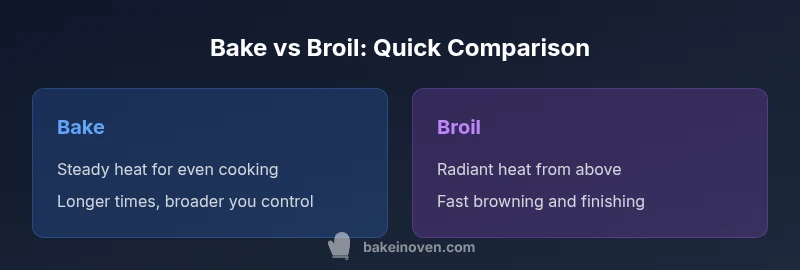
Bake and broil are two classic dry-heat methods in home ovens. Bake uses steady interior heat to cook food evenly, while broil directs intense radiant heat from above to finish surfaces quickly. The choice depends on texture, thickness, and the desired finish; many recipes benefit from starting with bake and finishing with broil for the best results.
What bake vs broil mean in home cooking
In practical kitchen terms, what is bake vs broil? Bake refers to cooking food with steady heat circulating inside the oven, producing even doneness throughout. Broil relies on the oven's top heating element to radiate intense heat onto the food's surface, creating quick browning and a crisp exterior. For home bakers, understanding these two methods helps decide how to approach recipes and achieve texture goals. Bake is usually the default method for casseroles, breads, and desserts, while broil is often used for finishing touches on dishes with toppings or delicate surfaces. In this article, Bake In Oven explains how to use each technique effectively, including common pitfalls and practical tips for switchbacks between baking and broiling.
The science behind the heat sources
Bake uses ambient heat that heats the air and the food's surface, while broil shoots radiant energy from above. The difference matters not only for texture but for moisture retention and browning patterns. When you bake, the air inside the oven helps cook the food evenly from all sides; convection fans, if used, accelerate heat transfer and may shorten times. When you switch to broil, the top layer receives the majority of heat, pushing surface browning fast. Because the energy is concentrated, you must monitor closely to avoid burning; many ovens include a broil setting with adjustable distance between food and element. Amateurs often over-simply equate broil with "hot," but the best results come from understanding your oven's performance and using rack positions intentionally. Bake In Oven's guidance emphasizes testing with simple recipes first, then applying the method to more complex dishes.
Decision framework: bake first, broil last, or both
A practical rule of thumb is to bake first for even cooking, then broil briefly to finish browning the top or crust. For items like casseroles, you can start with bake to reach doneness, then switch to the broil setting for 1–3 minutes at the end to achieve a golden surface. For delicate items where surface protection matters, plan a longer bake followed by a short broil boost. This approach minimizes guesswork and helps you replicate restaurant-like finishes at home. If your goal is a uniform interior with a crisp top, layering these techniques in stages yields consistent results.
Food groups and examples
Baking shines with dense or multi-component dishes: casseroles, gratins, bread, cookies, cakes, and pastries. It’s also ideal for roasting vegetables that benefit from steady heat without scorching. Broiling excels for finishing touches: cheese on gratins, crusts on fish, thin steaks, scallops, and browning breadcrumbs or toppings. When you’re unsure, err on the side of bake first to avoid undercooking, then add a broil burst for the desired crust or color. In practice, many recipes call for a short bake, then a quick broil lift to seal in moisture while developing a crust.
Techniques to optimize bake results
- Use evenly sized pieces for uniform heat exposure.
- Preheat fully and use a rack that allows air circulation beneath the food.
- Choose bake when you need even internal doneness rather than surface browning.
- If you rely on convection, reduce stated bake time slightly to avoid overcooking.
- Use an oven thermometer to confirm actual temperature vs. dial setting.
Finishing with broil: timing and safety
- Position the food close enough to the top element to brown quickly but not scorch. A range of a few inches is typical, but personal oven behavior varies.
- Keep a vigilant watch; broiling happens fast and heat is intense. Set timers and check at 30–60 second intervals for delicate toppings.
- Rotate the pan during broiling if your oven heats unevenly to achieve uniform browning.
- Use aluminum foil as a shield or to catch drips if needed. Always keep flammable residues away from the heating element.
Combining bake and broil for best texture
- Start with bake to reach the desired interior doneness. 2) Move to broil for finishing browning, watching the surface closely. 3) If the top browns too quickly, temporarily shield with foil and continue baking at a lower setting until the rest cooks through. 4) Rest briefly before serving to allow juices to redistribute and flavors to settle. This combined approach is common in home kitchens and yields restaurant-like results without specialized equipment.
Equipment and setup: racks, pans, and sizes
- Use sturdy, oven-safe pans; avoid thin sheet pans that warp under high heat. For broiling, a shallow pan helps fat drain and browning occur more evenly.
- Position racks to balance heat exposure: bake on the middle rack, broil with the food closer to the top element for faster browning.
- Consider a pan with a grid or perforated surface for better air circulation when baking, and a solid pan for broiling to protect toppings from direct contact with the element.
Quick-start plan: a 30-minute practice session
- Preheat to a moderate oven setting (for bake). 2) Bake a small test item until halfway done, noting time. 3) Finish under broil for 1–2 minutes and observe browning. 4) Repeat with different rack positions to learn how your oven’s heat behaves. 5) Translate these findings to real recipes, adjusting times as needed. This hands-on practice builds confidence with bake and broil in everyday cooking.
Comparison
| Feature | Bake | Broil |
|---|---|---|
| Heat source | Interior heated air (convection possible) | Radiant heat from top element |
| Texture outcome | Even doneness throughout | Rapid surface browning and crisping |
| Best for | Large, thick items; even cooking | Finishing touches and browning on surface |
| Control & monitoring | Moderate control with temperature and time | More vigilant oversight due to rapid browning |
| Typical use cases | Cakes, casseroles, bread, vegetables | Steaks, fish, gratins, toppings |
Benefits
- Offers versatile results with minimal equipment
- Bake provides even cooking for dense items
- Broil finishes with browning and crisp texture
- Simple technique that most home cooks can master
- Allows combining methods for restaurant-quality finishes
Negatives
- Broil can burn tops if not watched closely
- Uneven browning on thick or irregular pieces without rotation
- Requires careful heat control to avoid drying out foods
- Not ideal for large roasts or dense items that need even interior heat
Bake is the foundation; broil is the finishing touch.
For most home cooks, bake provides even, reliable results across a range of dishes. Broil excels at finishing by browning surfaces quickly. Use both when appropriate to maximize texture and doneness, with careful monitoring and timing.
Frequently Asked Questions
What is the main difference between bake and broil?
Bake cooks with steady internal heat for even doneness, while broil applies intense radiant heat from above to quickly brown the surface. Understanding this helps you decide when to use each method.
Bake uses even heat inside the oven; broil browns quickly from the top.
Can I substitute baking for broiling or vice versa in a recipe?
Substituting can work but will change texture and timing. If a recipe relies on browning, broil near the end; replacing broil with baking often requires longer time and careful moisture management.
Yes, but expect changes in texture and timing.
Which foods are best suited for baking vs broiling?
Baking suits dense dishes like casseroles, breads, and pastries; broiling is ideal for finishing toppings on fish, meat, or vegetables and for browning cheeses.
Baking for even cooks; broiling for finishing browns.
How do I prevent burning when broiling?
Keep food at an appropriate distance from the top element, use a timer, and monitor closely; rotate the pan as needed to promote even browning.
Keep it far enough from heat and watch closely.
Does oven type affect bake vs broil performance?
Yes. Gas vs electric ovens heat differently, and convection can level bake heat. Broil performance depends on element layout and oven design.
Different ovens heat differently; convection helps bake more evenly.
Can I finish a bake by switching to broil in the last minute?
Yes, finishing with a brief broil is common to add browning; watch closely and remove when the top is toasty but not burned.
Yes—finish with a quick broil, but watch closely.
Key Takeaways
- Choose bake for even cooking and thicker items
- Use broil to finish with browning or crisping
- Monitor distance and time closely when broiling
- Employ a thermometer to avoid overcooking
- Combine methods strategically for the best texture