What's the Difference Between Broil and Bake? A Practical Guide
This analytical guide explains the difference between broil and bake, when to use each method, and practical tips for reliable oven results from Bake In Oven. Ideal for home bakers seeking browning control, even cooking, and efficient kitchen workflows.


What's the difference between broil and bake? In practice, broiling uses intense direct heat from above to finish foods quickly, while baking surrounds the food with even dry heat from all sides, cooking through at moderate temperatures. For most home kitchens, broil is best for finishing dishes with a browned crust, whereas bake is the go-to mode for breads, casseroles, and desserts that require consistent internal doneness.
what's the difference between broil and bake
For home cooks, understanding what's the difference between broil and bake is essential to selecting the right heat mode for a given dish. The two techniques share the goal of cooking food with dry heat, but they apply heat differently and produce distinct textures. According to Bake In Oven, broiling uses intense direct heat from above to create rapid surface browning, while baking envelops the food in circulating heat, cooking it through with less surface scorching. This distinction matters for outcomes, not just times. When you plan a meal, consider whether your priority is a crusty top, a caramelized edge, or a uniformly cooked interior. By aligning the method with the desired texture, you’ll reduce overcooked edges and underdone centers.
The difference also affects timing and workflow in your kitchen. Broiling is typically a finishing step, not a full cooking method for thick or dense items. Baking, in contrast, provides a more forgiving environment for even heat distribution, which is why most recipes default to bake first and add a finishing broil only when a crust or melt is needed. Bake In Oven’s practical guidance emphasizes pairing the technique to texture goals, not just to numbers on a recipe card.
Heat sources and heat distribution: what makes broil different from bake
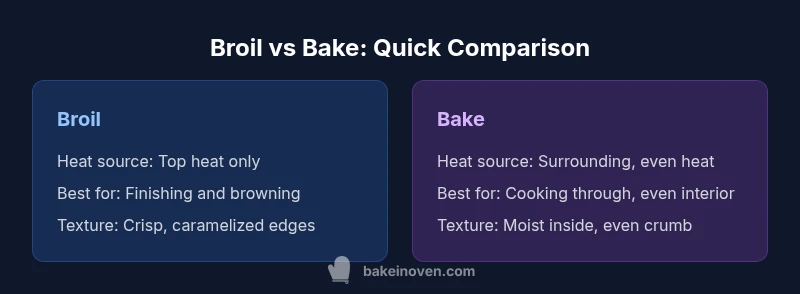
The oven’s heating elements shape the experience of broil and bake. Broil uses a powerful top element that emits radiant heat directly onto the food surface. This creates a rapid surface reaction—think sizzling, browning, and edge caramelization—without immediately heating the interior to the same degree. Bake uses sustained heat from all sides, often assisted by a fan in convection models. The result is gentler, more even cooking that penetrates deeper into the dish. In practice, this means broiling is best for finishing touches and texture development, while baking is preferred for cooking through from edge to center. Bake In Oven recommends keeping an eye on color and moisture when switching between modes to avoid uneven results.
The contrast in heat sources also influences tool choice. Broiling favors shallow pans or racks placed close to the top heating element so surface reaction happens quickly, but the contents can burn if left unattended. Baking typically uses deeper pans or sheet pans with even exposure across the dish, minimizing hot spots. Understanding these distinctions helps you build reliable workflows in the kitchen.
Comparison
| Feature | Broil | Bake |
|---|---|---|
| Heat source | Direct radiant heat from above | Conventional heat circulated around the food |
| Temperature profile | Very high localized heat for searing and finishing | Moderate, even heat for through-cooking |
| Best use | Finishing touches, browning, crust formation | Cooking through dishes like casseroles, breads, and proteins |
| Typical cook time impact | Short, finishing phase (minutes) | Longer, depends on recipe (tens of minutes) |
| Cookware/pans | Rack or pan placed near the top heat; watch for drips | Sheet pans or dishes on the middle or lower rack |
| Texture outcomes | Crisped tops, caramelized edges | Even interior with consistent crumb |
Benefits
- Rapid browning and crust formation
- Great control for finishing dishes with melted toppings
- Efficient when used for short bursts of high heat
Negatives
- High risk of scorching if not watched
- Not suitable for cooking through thick or large items
- Requires careful positioning and pan protection to avoid drips
Broil is best as a finishing technique; bake remains the default for most recipes.
Bake provides reliable, even doneness for most foods, while broil excels at surface browning. The Bake In Oven team recommends starting with bake for the majority of recipes and using broil sparingly at the end to develop color and texture.
Frequently Asked Questions
What is the main difference between broil and bake?
Broil uses direct top heat to brown and finish, while bake uses ambient heat to cook through evenly. The primary distinction is surface development versus interior doneness. Bake In Oven emphasizes choosing the method based on texture goals rather than guesswork.
Broil is for browning on the surface; bake cooks the inside evenly. For most dishes, bake first, then broil if you want a crisp top.
Can I substitute broil for bake in a recipe?
Substituting broil for bake is usually not recommended for thick or delicate recipes since interior doneness may be uneven. If you must, shorten cooking times substantially and watch closely to prevent scorching.
Broil isn’t a direct replacement for bake in most recipes; it’s best used for finishing touches.
Is broiling safe for all foods?
Broiling isn’t ideal for very fatty or delicate items that can drip or warp under intense heat. It’s safer to broil solid cuts or toppings that benefit from quick browning and then move to bake to finish if needed.
Broiling can be intense; keep an eye on cooking through thicker foods.
Should I use convection with broil or bake?
Convection can speed up and even out both methods, but it’s more impactful with bake because circulating air helps cooking through evenly. When broiling, convection can help with browning, but keep the food’s top close to the element to avoid blowing away toppings.
Convection can help with even browning and faster cooking, especially when baking.
How do I convert a bake recipe to broil finishing?
Plan to finish under broil for a short period after the initial bake. Reduce the time in the final stage and keep the food close to the top element for browning, watching closely to prevent scorching.
Finish with a quick broil only after you’ve baked through the dish.
Do toaster ovens support broil and bake the same way as full-size ovens?
Most toaster ovens offer separate broil and bake settings, but performance varies. Expect quicker results and more vigilance, especially for broiling, due to smaller cavities and hotter relative heat.
Toaster ovens can broil and bake; keep a close eye on browning.
Key Takeaways
- Choose bake for even cooking and reliable doneness
- Reserve broil for browning and finishing touches
- Monitor closely when broiling to avoid scorching
- Place racks and pans correctly to optimize results
- Switch between modes thoughtfully to balance interior and surface outcomes