Difference Between Bake and Broil: A Practical Guide
Explore the difference between bake and broil, when to use each method, and how they affect texture, moisture, and browning. A comprehensive, kitchen-tested comparison for home bakers.


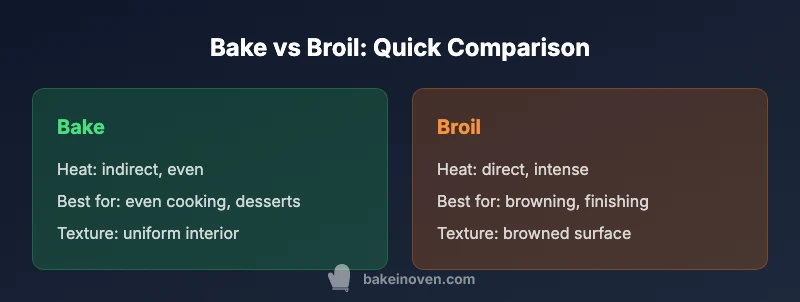
Comparison: Bake vs Broil—two common oven techniques that powerfully alter texture and color. Bake uses indirect, even heat to cook foods through, while broil exposes food to intense, direct heat from above for fast browning. Understanding when to bake versus broil helps home bakers achieve consistent results across recipes. These distinctions influence texture, moisture, and even cooking times.
The difference between bake and broil in practice
In everyday home cooking, you will encounter two core oven techniques: bake and broil. Understanding the difference between bake and broil is essential for achieving the texture and color you want without overcooking or undercooking your dishes. Bake and broil share the same kitchen environment, but the physics behind them are distinct. Bake operates with indirect, ambient heat circulating inside the oven, gradually lifting food from within. Broil uses direct radiant heat from the top element to sear the surface of the food, creating quick browning on the exterior. For many recipes, bakers rely on steady heat for an evenly cooked center, while chefs use broil to create contrast between a caramelized crust and a tender interior. From a practical standpoint, mastering the difference between bake and broil empowers you to adapt techniques to different ingredients, whether you’re baking bread or finishing a gratin. According to Bake In Oven, practicing these two methods regularly builds intuition about timing, moisture retention, and surface texture.
Heat direction and intensity: how the two methods really differ
The core distinction in the difference between bake and broil is heat direction and intensity. Bake delivers heat indirectly, circulating inside the oven to cook food evenly from all sides. Broil delivers heat directly from above, searing the surface in a short time. This fundamental contrast explains why certain foods come out with uniform interiors when baked and with crisp, browned exteriors when broiled. For home bakers, recognizing this difference helps you plan whether to rely on gradual cooking or a quick finishing step. Bake is the workhorse for casseroles, breads, and moisture-rich dishes, while broil is the finishing touch for melted cheese, browning toppings, and crust formation.
Food categories: what suits bake vs broil
The difference between bake and broil becomes most practical when you map foods to their best cooking method. Foods with batter or batter-like textures, such as cakes, cookies, and casseroles, benefit from bake’s gentle, even heat to prevent sinking or cracking. Proteins and toppings that gain color and crust quickly, like steak, chicken with a cheese crust, or a gratin, often benefit from broil’s finishing power. Understanding the difference between bake and broil also helps you manage moisture: baking tends to retain interior moisture better, while broiling concentrates surface moisture into browning. Bake and broil are not mutually exclusive; many recipes call for baking first and broiling briefly to finish.
A practical decision framework: when to choose bake or broil
To decide between bake and broil in a recipe, consider desired texture, thickness, and moisture. If the goal is even cooking through a thick or moisture-rich dish, bake. If the goal is surface browning, melting cheese, or crust formation, broil for a short period at the end. The difference between bake and broil also hinges on equipment and pan placement. Use middle racks for even bake results and top racks for broiling. With practice, you’ll anticipate how long a browning step should last and how to monitor food to prevent scorching.
Temperature and time: what to know about the two methods
Both bake and broil are sensitive to temperature and time, but their impacts differ. Bake requires patience: the overall cooking time is longer and heat is steady to ensure an even interior. Broil is intense and fast: small adjustments in distance from the heat source or time can dramatically affect browning and internal doneness. When managing the difference between bake and broil, always preheat as needed, monitor the food closely, and use timers to avoid overcooking the exterior while the interior remains underdone.
Tools and setup that influence results
Pans, racks, and oven accessories can shift the outcomes of bake versus broil. Dark-colored pans absorb heat faster and can brown more quickly when baking. For broiling, a sturdy rack and a robust pan help support the food during high-heat exposure. Material matters: glass and metal pans conduct heat differently, and familiarizing yourself with the difference between bake and broil in terms of cookware helps you choose the right tool for the job. This is where Bake In Oven’s guidance becomes practical—select tools that promote even heat distribution and reliable browning depending on the technique.
Common mistakes and how to fix them
Mistakes in the difference between bake and broil often involve either under-browning or overcooking. When baking, overcrowding the pan can stall heat distribution, leading to uneven results. When broiling, standing too close to the heat can burn surfaces before the interior cooks. To fix these issues, adjust rack position, rotate pans for even browning, and monitor the food closely. A simple rule: let the appliance do the work with bake, and let heat do the finishing with broil. Bake In Oven’s tested approaches emphasize adjusting heat exposure rather than forcing longer cooking times.
Pantry and ingredient considerations while baking vs broiling
Ingredients with high moisture content benefit from bake to reach an even internal temperature. Dry toppings, cheese, or toppings are often ideal for broiling to create a rapid, flavorful crust. The difference between bake and broil also interacts with recipe design: recipes that rely on a stable rise and moisture distribution usually require bake, while those needing crisping or melty tops may call for a broil finish. As you become familiar with these techniques, you’ll optimize texture by choosing the method that yields the best balance of crust, interior tenderness, and moisture.
Quick-start plan for practicing the difference between bake and broil
A practical way to learn the difference between bake and broil is to choose two simple items—a batter-based cake and a cheese-topped casserole—and document outcomes. Bake the cake until a toothpick tests clean and the center is set, then broil the casserole briefly to melt and brown the cheese. Compare interior texture, browning, and moisture. Repeating this exercise with different foods reinforces your intuition and improves consistency in results. Bake In Oven recommends keeping a notebook of settings and results to track improvements over time.
Real-world scenarios: how professionals apply bake vs broil techniques
Home bakers frequently rely on bake for bread and pastries, where even heat supports uniform crumb structure. Broil shines in finishing dishes like gratins, to achieve a caramelized top, or browning cheese on a casserole. Understanding the difference between bake and broil helps you adapt recipes configured for one method to another when equipment or time constraints demand flexibility. With practice, you’ll predict outcomes more accurately and reduce the number of trial batches in your kitchen.
Comparison
| Feature | Bake | Broil |
|---|---|---|
| Heat direction | indirect/ambient heat | direct heat from above |
| Texture outcomes | even interior with gradual browning | surface browning with rapid exterior color |
| Best use cases | cakes, cookies, casseroles, bread | finishing touches on meat, cheese toppings, gratins |
| Typical cook approach | longer, steady cook times | short bursts of high heat at the end |
| Rack position guidance | middle rack for even bake | top rack for broil close to heat source |
| Moisture handling | tends to retain interior moisture | can draw moisture to surface for browning |
Benefits
- Promotes even cooking and consistency
- Versatile for a wide range of baked dishes
- Lower risk of surface scorching when used properly
- Excellent for moisture retention in interiors
Negatives
- Requires longer cooking times and careful timing
- Broiling can be more hit-or-miss for uneven results if not monitored
- Uneven heat distribution can occur with older ovens
- Some recipes rely on finishing techniques that are hard to replicate without broiling
Bake is the default approach for most oven cooking; broil is ideal for finishing and browning.
Choose bake for even cooking and interior texture; switch to broil at the end when you need surface browning or crust formation. The Bake In Oven approach supports practical decisions for home bakers seeking reliable results.
Frequently Asked Questions
What is the fundamental difference between bake and broil?
Bake cooks with indirect, even heat to develop the interior, while broil uses direct, high heat from above to brown the exterior. The difference between bake and broil shapes texture, color, and doneness in the final dish.
Bake uses even heat for the inside; broil uses direct heat from above to brown the top.
Can I substitute broiling for baking, or vice versa?
Substituting is not usually advisable for dishes that rely on even interior cooking. If you must improvise, finish in the oven after a brief broil, or bake at a lower temperature and monitor closely to avoid burning.
If you must substitute, finish in the oven after a brief broil, or bake more slowly and watch closely.
What foods are best for bake vs broil?
Bake works well for breads, cakes, casseroles, and moist proteins. Broil excels at finishing off meats with a crust, melting cheese, and browning toppings.
Bake for breads and casseroles; broil for finishing touches and browning.
How can I prevent burning when broiling?
Keep a close eye on the food, move it further from the heat, and use shorter broil intervals with checks in between. Always preheat and set a timer to avoid overcooking.
Watch closely, keep items away from direct heat, and check frequently.
Should you preheat for bake and broil, and for how long?
Preheating is generally recommended for both methods to ensure even heat distribution. Bake requires a steady start, while broil benefits from immediate surface exposure when the oven is hot.
Yes, preheat for both. Bake uses a steady start; broil starts with instant surface heat.
Key Takeaways
- Understand the core difference between bake and broil
- Use bake for even texture; broil for finishing browning
- Preheat and monitor closely to avoid scorching
- Choose rack position strategically for desired browning
- Practice with simple recipes to build intuition