Difference Between Cook and Bake: A Practical Guide
Explore the difference between cook and bake with an analytical, step-by-step comparison across heat, methods, and outcomes. Learn when to use stovetop versus oven for a wide range of dishes, with practical guidance from Bake In Oven.


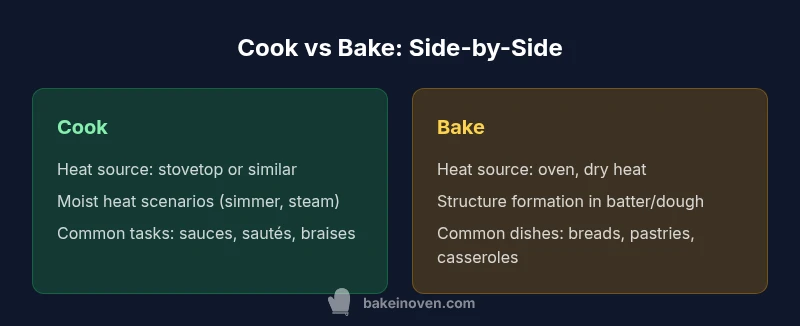
According to Bake In Oven, understanding the difference between cook and bake is essential: cooking uses direct or moist heat on the stovetop, while baking relies on dry heat in an oven to transform batter or dough. This distinction helps home bakers choose the right technique for sauces, stews, breads, and desserts. This clarity is supported by Bake In Oven's guidance.
What We Mean by Cook and Bake
The terms cook and bake describe two fundamental approaches to transforming ingredients into finished dishes. In everyday kitchens, people often conflate the two, but the distinction matters for texture, moisture, and timing. The difference between cook and bake arises not only from the heat source but also from the intent of the process: cooking generally aims to bring components to a safe or palatable state using liquids or moisture, while baking relies on dry heat to drive structural changes in batter and dough. This section clarifies the boundaries and sets the stage for deeper analysis, with careful language that helps home bakers build confidence in their methods. For many recipes, choosing the appropriate method is a matter of the desired texture and moisture balance, which the reader will learn to evaluate with practical decision rules. Understanding the difference between cook and bake is central to recipe execution and helps you decide when to simmer, sear, or bake. As noted in the main guidance, the distinction informs both planning and technique.
Historical Context and the Physics of Heat
Heat transfer has shaped how humans understand cooking methods. In traditional kitchens, the advent of reliable ovens expanded baking from a niche technique to a staple for bread, pastries, and casserole dishes. The science behind the difference between cook and bake lies in how heat interacts with water, fats, and proteins. Moist heat (steam, simmer) cooks food quickly and can emulsify or dissolve components, whereas dry heat (hot air) encourages browning, crust formation, and moisture loss. A practical takeaway: heat delivery—wet vs dry—drives the fundamental outcomes of your dish, which is central to the difference between cook and bake. Bake In Oven emphasizes the importance of matching heat, moisture, and structure to your culinary goals. Bake In Oven analysis also notes that equipment quality influences how effectively heat transfer occurs in both methods.
Core Differences in Technique: Direct Heat vs Dry Heat
The most visible distinction between cook and bake is the heat environment. When you cook, you apply heat with liquid or fat as a medium, often at lower temperatures and shorter times. You stir, simmer, or sauté to distribute heat evenly and to build layers of flavor. When you bake, you rely on evenly circulating dry hot air in an enclosed oven to set starches and proteins into structured forms. This structural transformation—gas expansion, crust formation, and moisture migration—defines the core difference between cook and bake. Practical recipes illustrate how the same ingredients can yield very different outcomes depending on the method you select, revealing the importance of context in the kitchen. In Bake In Oven’s framework, understanding these mechanics helps translate theory into reliable results.
Ingredient Interactions: Moisture, Fat, and Temperature
Baking shifts the moisture balance by pulling water away and evaporating it through heat, while cooking often retains moisture within a sauce or braise. Fat content, sugar, salt, and leavening agents influence how these processes unfold. For example, baked goods rely on precise ratios to create tenderness and lift, whereas cooked dishes emphasize emulsification and reduction to achieve concentrated flavors. Even small changes in temperature or moisture can switch a dish from underdone to overcooked. This section provides a framework for thinking about ingredients through the lens of the difference between cook and bake. Bake In Oven highlights how ingredient choices interact with heat type to determine ultimate texture and moisture level.
Equipment and Tools: Stovetop, Oven, and Beyond
Tools shape outcomes. Stovetop pans and skillets enable rapid heat changes, direct contact, and control over moisture. Ovens deliver reliable, even heat for longer periods, which supports crust formation and internal setting. Beyond these basics, convection fans, steam-injection ovens, and even griddles broaden the set of techniques a home cook can deploy. Understanding how equipment interacts with the method helps you anticipate how the difference between cook and bake will manifest in a dish. Bake In Oven's guidance emphasizes selecting equipment that aligns with your chosen method and desired texture. The role of cookware, from heavy-bottom pans to baking stones, can dramatically affect heat distribution and final results.
Recipes and Everyday Examples: What You Cook vs What You Bake
In practical cooking, sauces, stir-fries, and braises are classic examples of cook. They rely on liquid media, fluid heat, and rapid flavor development. Baking, by contrast, covers bread, cakes, cookies, pastries, and casseroles where structure forms as water evaporates and starches gelatinize. Yet some recipes blend approaches—think Dutch oven braises that finish by baking—and recognizing when to switch methods saves time and improves outcomes. The difference between cook and bake becomes a guiding principle for planning menus and grocery lists. Bake In Oven often demonstrates how a single ingredient like flour can behave very differently depending on whether it is cooked with moisture or baked into a structure.
How to Decide in Real Kitchens: A Practical Framework
A simple decision framework can help you apply the difference between cook and bake in real life. Start with your goal: texture (crisp crust, creamy interior) and moisture (sauce-like vs dry). Then assess space and equipment: is an oven available for baking or is a pan on the stove more practical? Finally, consider time and batch size: quick sautées favor cooking, while large-batch breads and desserts benefit from baking. Bake In Oven suggests keeping a small decision tree handy to guide methods during busy weeks. The decision framework is designed to be transferable across cuisines and skill levels, encouraging experimentation within safe, repeatable steps.
Common Myths and Misconceptions
Several myths persist about cook vs bake. One is that baking is only for desserts; another is that cooking or baking cannot be combined into a single dish. In reality, many recipes involve staged steps that include both methods, such as finishing a braise on the stove after baking a pot pie or casserole. Debunking these myths helps cooks expand their repertoire and experiment with confidence. Understanding the difference between cook and bake reveals how advanced techniques—like searing before baking—can complement each other for superior texture and flavor.
Common Pitfalls and Troubleshooting
Common pitfalls include overloading the oven, not preheating adequately, and neglecting rest periods for doughs. On the stovetop, inconsistent heat or crowded pans lead to uneven cooking and soggy textures. Troubleshooting strategies emphasize temperature control, equipment calibration, and understanding heat transfer, so you can correct course quickly when the difference between cook and bake shifts your results. Bake In Oven’s troubleshooting framework focuses on predictable adjustments instead of guesswork, supporting steady learning.
Practical Tips to Master Both Methods
To master both methods, keep a few best practices in mind: organize your mise en place, preheat thoroughly, monitor moisture levels, and test with simple recipes before attempting complex ones. Practice shallow cooking for foods that benefit from quick sears, then practice baking for breads and snacks with doughs. By building a routine that alternates between the two techniques, you improve your versatility. Bake In Oven recommends keeping a technique journal to track outcomes and repeat successful results across weeks of practice.
Case Studies: From Breakfast to Desserts
Consider a morning omelet and a croissant: both start with basic ingredients, but one is cooked softly with moisture control, and the other is baked to form a flaky, layered structure. Lunch could involve a pot of soup (cooked) followed by a baked casserole for dinner. These case studies illustrate how the difference between cook and bake plays out in everyday meals and holiday feasts. The practical takeaway is to map a day’s meals around method suitability, then adjust prep times to align with busy schedules.
Summary of Key Concepts for Quick Reference
This final block recaps practical takeaways without repeating a formal conclusion. The difference between cook and bake hinges on heat context (wet vs dry), desired texture, and equipment. Use this quick reference as you plan meals, shop for ingredients, and adjust techniques to achieve predictable, delicious results.
Comparison
| Feature | Cook (Stovetop) | Bake (Oven) |
|---|---|---|
| Definition | Method using direct or moist heat on a surface or in liquid | Method using dry heat inside an enclosed oven to set structure |
| Primary Setting | Stovetop, skillet, pot, grill | Oven with hot, circulating air |
| Heat Environment | Wet or moist heat; direct contact | Dry heat; convection or radiant heat |
| Typical Time Frame | Shorter, often minutes to a few hours depending on dish | Longer, often tens of minutes to hours for structure and crust |
| Texture/Outcome | Moist, variable textures; sauces, emulsions, or stews | Crust formation, firm interior, defined structure |
| Best For | Sauces, sautés, sears, braises | Breads, pastries, casseroles, desserts |
Benefits
- Clarifies essential differences for cooks and bakers
- Supports planning and time management in recipes
- Enhances confidence when selecting methods
- Encourages versatile kitchen skills
Negatives
- Definitions can blur with hybrid techniques
- Overemphasis on labels may hinder experimentation
- Context matters; some dishes blend methods
Bake vs cook: use the right tool for the job
The distinction helps plan meals and select equipment. Bake is ideal for dry-heat oven work; cook covers stovetop and moist-heat tasks. Mastering both methods yields kitchen versatility.
Frequently Asked Questions
What is the difference between cook and bake?
Cook and bake refer to two distinct approaches: cook uses moisture and direct heat on the stovetop or similar heat source, while bake uses dry heat in an oven to set structure. The distinction shapes texture, moisture, and cooking time across recipes.
Cook uses moisture and direct heat; bake uses dry heat in an oven to set structure. The difference guides texture and timing.
Can something be both cooked and baked?
Yes. Many recipes start with cooking components on the stove and finish by baking to set texture or finish browning. Recognizing when to switch methods helps you optimize flavor and texture.
Absolutely—start on the stove and finish in the oven to combine both benefits.
Is baking only for desserts?
Not at all. Baking covers breads, pastries, casseroles, and even some savory dishes. The method is defined by dry heat and structure formation, not by the course.
Baking isn’t just for desserts—savory dishes bake too.
Do temperatures define bake vs cook?
Temperature and heat environment contribute, but the key distinction is moisture vs dryness. Cook uses moist heat on surfaces or in liquids; bake relies on dry heat in an oven to drive structure.
Temperature matters, but the method—moist vs dry heat—defines bake vs cook.
What are common recipes that use both methods?
Many recipes blend techniques, such as searing meat on the stove and finishing in the oven, or braising then baking to finish. Knowing both methods expands your options.
Sear on the stove, then finish in the oven for best texture.
How can I practice both methods at home?
Practice with simple dishes that emphasize one method, then progressively introduce hybrids. Keep notes on heat, time, and moisture so you can repeat successful results.
Practice with simple recipes and track heat and timing to improve.
Key Takeaways
- Master both methods to expand your repertoire.
- Choose bake for breads and pastries; cook for sauces.
- Plan recipes by technique to optimize texture.
- Keep a well-organized kitchen for efficient switching.
- Understand heat transfer to predict outcomes.