Bake vs Convection Bake: What Home Bakers Need to Know
Explore the essential differences between bake and convection bake, including heat distribution, cooking times, and best-use scenarios. Practical guidance from Bake In Oven helps home bakers master oven techniques with confidence.


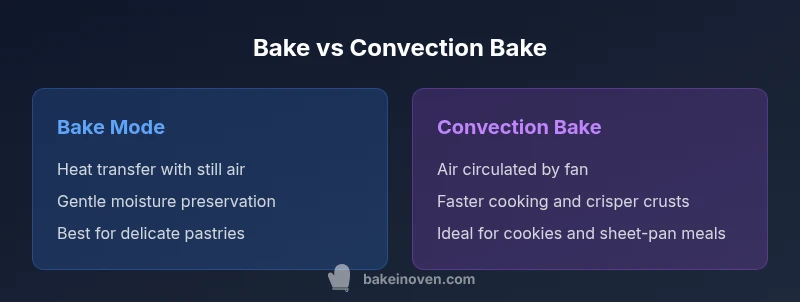
For most home bakers, bake and convection bake are not interchangeable. Convection uses a fan and exhaust to circulate hot air, baking faster and more evenly. Use standard bake for delicate loafs or tender pastries; use convection for cookies, roasted vegetables, or sheet-pan items where you want browning and speed.
Understanding the basics: bake vs convection bake
For home bakers, the difference between bake and convection bake is foundational to predictable results. Bake mode relies on still air inside the oven, relying on radiant and ambient heat to transfer warmth to the food. Convection bake, by contrast, uses a fan (and often an exhaust) to move hot air around the cavity. This circulation speeds heat transfer, promotes more even browning, and can shorten cooking times for many foods. According to Bake In Oven, understanding the difference between bake and convection bake helps home bakers select the right method for each recipe and oven configuration. Whether you’re baking a loaf, a batch of cookies, or a sheet-pan dinner, recognizing which mode your oven is using is the first step toward consistent results.
The core concept is simple: convection adds air movement. If you want crusty edges and faster cooking, convection can be your ally. If you’re protecting delicate textures, moisture, or layered doughs, still air (bake) may be preferable. Additionally, the two modes can behave differently across oven brands and models, so it’s wise to test and calibrate based on your own device. Bake In Oven’s practical approach emphasizes experimentation and note-taking so you can tailor settings to your pantry and preferences.
Comparison
| Feature | Bake mode | Convection bake |
|---|---|---|
| Heat distribution | Still air in the oven cavity | Circulated air with a fan and exhaust |
| Cooking speed | Typically standard pace, depending on recipe | Often faster due to air movement |
| Browning and crust | Even browning but can be less intense | Promotes crisper crusts and more even browning |
| Best uses | Delicate pastries, custards, tender loaves | Roasted vegetables, cookies, sheet-pan meals |
| Temperature adjustments | Follow recipe temps without inherent adjustments | Lower temperature or shorter times are common |
Benefits
- Larger range of recipe compatibility when using bake mode
- Convection can reduce cooking times and improve browning
- Better results on sheet-pan meals and roasted vegetables
- More even heat distribution across a shallow cavity
Negatives
- Convection isn’t ideal for delicate pastries or layered doughs
- Requires recipe adjustments (temperature/time) for accurate results
- Some ovens have uneven convection due to placement of the fan
- Overuse can dry out baked goods if not monitored
Convection bake is a powerful tool for many home bakers, but it isn’t universally better.
Choose convection for sheet-pan meals, cookies, and foods where browning and speed matter. Opt for bake for delicate pastries and tender loaves where moisture control and texture are critical.
Frequently Asked Questions
What is the main difference between bake and convection bake?
Bake uses still air, while convection bake circulates hot air with a fan. This changes heat transfer, speed, and browning. Understanding this difference helps you choose the right mode for each recipe.
Bake uses still air; convection uses a fan to move hot air, changing how quickly and evenly foods cook.
Should I always use convection bake?
No. Convection is ideal for sheet-pan meals, cookies, and roasted vegetables. For delicate pastries or layered doughs, bake mode can produce better moisture and texture.
No—convection isn’t always better. Try it for robust items, but revert to bake for delicate pastries.
How should I adjust temperature when switching to convection?
A common guideline is to lower the oven temperature by about 20–25°F (10–14°C) and start checking earlier than the recipe indicates.
Lower the temp by about 20 to 25 degrees and watch cooking times carefully.
Are there foods that bake better in conventional bake?
Yes. Delicate pastries, custards, soufflés, and certain laminated doughs can benefit from the gentle, still-air environment of bake mode.
Delicate pastries and custards often do best with bake mode.
Can I bake bread using convection?
Lean breads and some artisan loaves can benefit from convection for crust development, but very rich or moist doughs may not. Experiment and adjust.
Some breads work with convection, but not all—test and adjust.
How do I preheat when using convection?
Preheat the oven to the intended temperature with convection mode selected, then monitor early as temperatures can stabilize differently than bake mode.
Preheat with the convection setting and monitor early for timing shifts.
Key Takeaways
- Know which oven mode matches your dish.
- Start with recipe temps and adjust timing.
- Use convection for sheet-pan items and cookies.
- Avoid convection for delicate pastries.
- Test with your own oven and keep notes.