When to Use Convection Bake vs Bake: An Analytical Guide
A detailed, analytical guide comparing convection bake and traditional bake, with practical rules, temperature adjustments, and real-world scenarios to optimize texture, browning, and efficiency for home bakers.


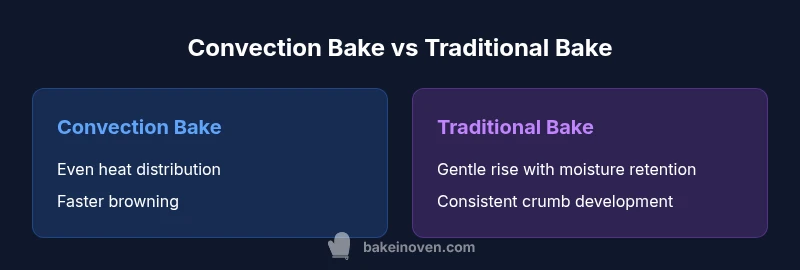
Convection bake uses a fan to circulate hot air, delivering faster, more even browning and a crisper finish than traditional bake. Use convection for cookies, roasted vegetables, and sheet-pan pastries where edge browning and short bake times matter. For delicate cakes or casseroles that rely on gentle, uniform rise, opt for traditional bake.
Framing the Question: when to use convection bake vs bake
In home baking, choosing convection vs traditional bake changes texture, crust, and moisture. When you know which method to apply, you can reliably reproduce results across recipes. According to Bake In Oven, understanding the practical differences helps home bakers decide before they preheat. The goal is not to dogmatically follow one method, but to match heat delivery to the food's goals: browning, tenderness, rising, and moisture retention. In many ovens, the convection fan reduces hot spots and speeds heat transfer, which is especially helpful for large sheet pans and multi-rack loading. However, the same airflow can lead to overly dry edges on delicate cakes if not managed. The phrase "when to use convection bake vs bake" captures a spectrum of decisions rather than a single rule. The Bake In Oven team emphasizes starting with a clear objective: do you want crisper edges, shorter bake times, or gentler rise? From there, you tailor temperature and time, and you monitor closely. The guidance below translates theory into practical steps you can apply in real baking sessions. This approach sets a reliable baseline for readers who want to cook with confidence rather than guesswork.
Key Differences Between Convection Bake and Traditional Bake
The core difference is heat distribution. Convection bake relies on a small fan and exhaust system that circulates hot air, creating a more uniform environment and accelerating moisture evaporation on surface layers. Traditional bake uses radiant heat from the top and bottom elements without forced air, which often produces a crisper exterior later but can leave the interior slower to finish. Temperature adjustments are a practical consequence; many recipes assume still air and thus require little to no change when first tested in a convection-enabled oven. As you adopt convection, you’ll notice faster browning on pastry tops, more even color across multi-rack trays, and a tendency for edges to crisp before centers. In short, convection emphasizes surface texture and speed; traditional bake emphasizes controlled rise and crumb development. A mindful baker treats convection as a different toolkit, not a direct swap, and develops a habit of testing one variable at a time.
When to Use Convection Bake: Practical Scenarios
This section translates theory into kitchen practice. For cookies and pastries, convection promotes uniform spread and edges that brown evenly without overcooking the centers. Sheet-pan vegetables benefit from rapid caramelization and crisp edges as air circulates around each piece. Roasted poultry and potatoes develop crisp skin with the same finish across pieces, and multi-rack baking becomes more predictable because hot spots are diminished. Reheating leftovers with convection can restore crispiness to fried components and baked pasta. Finally, when baking at higher temperatures or seeking quick browning of surfaces, convection helps achieve the goal without extending cook times.
When to Use Traditional Bake: Practical Scenarios
Traditional bake remains the default for recipes that rely on steady, gentle heat and a slow rise. Cakes requiring delicate aeration, custards, and many fillings will often perform best without a fan. Rich casseroles or gratins benefit from even heat without excessive surface drying, preserving moisture inside. For certain breads and some puff pastries, a balanced approach—starting with traditional bake and adjusting heat later—can help control crust formation and crumb structure. When humidity or a steam-initial stage is important, traditional bake is easier to manage. If you’re tracking consistency, run side-by-side tests with both methods before committing to a long bake.
Temperature and Time Management: Best Practices
The practical rule of thumb is to start with standard recipe times and temperatures, then adjust for convection. For most foods, reduce the oven temperature by about 25°F (14°C) and begin checking earlier than the usual bake time. If your oven has a strong fan, you may need to shorten the time by 5–15 minutes depending on the dish. Place baked goods on the middle rack and avoid overcrowding pans to ensure even airflow. Preheating remains essential, but convection often benefits from a short stabilization period to let the airflow settle. Use a reliable oven thermometer to verify that the actual oven temperature matches the display, and rotate trays halfway through for even browning. Bake In Oven analyses show that small, systematic adjustments early in the bake prevent overbrowning or undercooking when switching from traditional to convection.
Equipment and Pan Tips
Choice of bakeware matters with convection. Dark, heavy pans absorb more heat and may over-brown; light-colored metal pans are typically ideal for even browning. Avoid glass or thick ceramic for high-heat convection bakes, as they can slow heat transfer and bias browning. The rack position remains critical; start with the middle rack and adjust up or down depending on the needed browning. For foods requiring steam or a soft interior, use traditional bake. Aluminum foil or parchment can help shield delicate tops from overbrowning when needed. Keep an extra oven thermometer to monitor actual temps and note differences across different racks. With the right pan materials and rack strategy, convection can deliver consistent results across a wide range of recipes.
Common Mistakes and How to Avoid Them
One frequent error is skipping temperature adjustments when moving recipes from traditional to convection; this leads to faster browning and potential dryness. Another is overcrowding the oven, which disrupts airflow and creates uneven results. Starting with cold pans can cause temperature shock when convection is engaged. Relying on recipes designed for still air can yield crusty exteriors and undercooked centers if times aren’t shortened. Opening the oven door too often during convection bakes wastes heat and disrupts airflow, so use a timer and glance quickly. Finally, using glass bakeware in convection modes can complicate timing and browning; favor metal pans for predictability. Practicing with a few trusted recipes helps you tune the method over time.
Real-World Case Studies: Cookies, Roasted Vegetables, and More
In a typical home kitchen, cookies baked with convection often show uniform browning and evenly risen centers, enabling you to bake multiple sheets at once with fewer rotations. Roasted vegetables become uniformly caramelized on all sides, thanks to consistent airflow around each piece. A sheet-pan chicken and vegetable tray can achieve crisp skin with even texture across pieces. Pastries such as puff pastry sheets can reach a glossy, flaky finish when the temperature is managed carefully, but you may need to shield delicate tops from over-browning with a light foil cover. The Bake In Oven Team notes that starting with a proven recipe and adjusting one factor at a time—temperature, rack position, or bake time—produces reliable learning. By keeping notes, you’ll build a personal reference library for your oven.
How to Calibrate Your Oven for Consistent Results
Calibration starts with placing an oven thermometer in the center of the rack and running a standard bake cycle. Compare actual vs displayed temperatures, then adjust according to your oven’s manual if needed. For convection, verify the fan runs smoothly and maintains even airflow. If your oven allows, set a lower convection temperature and test until you observe consistent browning without scorching. Maintain a log of adjustments for different foods—cookies, vegetables, and meats may each require slightly different settings. Recalibrate seasonally or whenever you notice a drift in performance. A few minutes of checking ahead can save hours of trial-and-error in future bakes.
Comparison
| Feature | Convection Bake | Traditional Bake |
|---|---|---|
| Heat distribution | Even, air-circulated | Static, radiant heat |
| Recommended temp adjustment | Reduce by ~25°F (14°C) | Typically no adjustment |
| Best for | Cookies, sheet-pan meals, crispy textures | Delicate cakes, custards, moist casseroles |
| Bake-time impact | Often shorter by 5–25% | Follows standard times with slower surface browning |
| Pan recommendations | Metal, light-colored pans preferred | Metal or glass can work but timing varies |
| Energy considerations | Potentially more efficient due to shorter times | Comparable energy use to standard methods |
Benefits
- Faster cooking times and more even browning
- Improved performance on multi-rack baking
- Crisper edges on cookies and pastries
- Better heat efficiency for large batches
- More predictable results with airflow-controlled recipes
Negatives
- Requires temperature and time adjustments for many recipes
- Not ideal for delicate structures like certain cakes
- Over-browning risk if left unattended
- Can dry out surfaces if mismanaged
Convection bake is the strong default for crisp textures and faster results; traditional bake remains best for delicate structures and moisture retention
Choose convection when you want even browning and speed, especially on sheet pans and multi-rack loads. Opt for traditional bake for gentler rises and moisture-sensitive dishes; test with a couple of recipes to calibrate your oven.
Frequently Asked Questions
Should I always use convection bake when the recipe calls for bake?
No. Some recipes rely on a gentle rise or moist interior, which is easier with traditional bake. Test on a small batch if you’re unsure, then apply the method that best matches the desired texture.
Not always. Convection is great for crisp edges and quick browning, but delicate cakes or custards often do better without a fan.
How do I adjust temperature for convection baking?
A common rule is to reduce the temperature by about 25°F (14°C). Start there and monitor the bake, especially during the first trial of a recipe.
Cut the temperature by about 25 degrees and watch closely.
Can I use convection bake in a conventional oven?
If your oven has a true convection setting, you can use it with the same guidelines. If not, follow traditional bake settings and avoid forcing air.
Only if your oven has a convection option; otherwise stick to standard bake.
What pans work best with convection bake?
Metal pans with light colors are usually best for even browning. Avoid heavy glass; use parchment to prevent sticking when needed.
Metal pans help air flow, and light colors reduce heat absorption.
Is convection bake more energy-efficient?
Convection can be more energy-efficient because it often reduces bake time, but overall savings depend on the dish and oven performance.
Usually yes, since cooking time is shorter.
What foods benefit most from convection bake?
Cookies, pastries, roasted vegetables, and foods that benefit from rapid surface browning. Delicate soufflés and custards may struggle with a fan.
Great for cookies, veggies, and pastries; delicate items may not respond well.
Key Takeaways
- Start with a clear texture goal before baking
- Use convection for cookies, pastries, and roasted vegetables
- Reduce convection temperature by about 25°F (14°C) and monitor early
- Avoid overcrowding and use metal pans for best airflow
- Calibrate your oven with a thermometer for consistency