Difference Between a Roast and a Stew: A Practical Comparison
A thorough, analytical look at how roast and stew differ in method, cuts, moisture, flavor, and kitchen planning, helping home bakers choose the right approach.


What defines a roast vs a stew
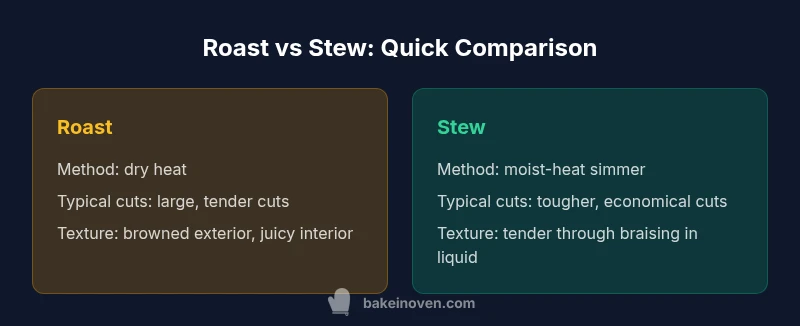
In cooking terms, the difference between a roast and a stew isn't just what you call them; it's how you cook and what your meat does as it hits heat. At its core, the difference between a roast and a stew lies in the combination of cooking method, moisture management, and the intended texture outcome. According to Bake In Oven, mastering roast vs stew hinges on moisture control and temperature, which shapes browning, juiciness, and tenderness. A roast uses dry heat to brown the surface and seal in juices, producing a savory crust on larger, tender cuts. In contrast, a stew uses moist heat to braise tougher cuts in flavorful liquid, breaking down connective tissue over time. This distinction matters because it influences your prep steps, pan choice, and how you plan resting or serving. Home cooks who understand this first principle can adapt seconds, sides, and sauces to suit either approach without overcooking meat or drying it out. The key takeaway for this section is to recognize that the roast emphasizes a crust and quick finish, while the stew emphasizes moisture and depth of flavor through braising.
Core cooking methods: dry-heat vs moist-heat
Roasting relies on hot air circulating around food, typically with little added liquid, to create Browning reactions (Maillard) that add depth and texture. Stewing uses liquid both as a cooking medium and as a flavor vehicle, allowing the meat to become tender through prolonged exposure to heat. For home bakers, this means planning oven rack position, pan depth, and whether you want a tight, closed braising environment. Bake In Oven recommends reserving a portion of liquid for after-braising to control thickness and richness. In contrast, a roast prioritizes surface development and a relatively short finish, which means timing is more forgiving for a correct internal temperature, but you must watch for overcooking the interior. Both methods can produce delicious results, but your choice should align with texture goals, available equipment, and the amount of time you have to cook and rest your dish.
Anatomy of a roast: cuts, browning, temperature
Roasts rely on large, forgiving cuts such as beef rib roast, pork loin, or whole poultry where the goal is a browned crust with a juicy center. Key steps include season–pat dry–brown in a hot pan or oven to initiate Maillard browning, then finish by gentle heat to bring the interior to a safe, tender state. Internal temperature targets vary by protein, but the principle remains: a crusty exterior with a controlled, pinkish or fully cooked interior is ideal. Resting after roasting helps redistribute juices and stabilize texture. The choice of fat, aromatics, and pan fond influences the final glaze or sauce you’ll serve alongside. Bake In Oven emphasizes keeping moisture in check during the final minutes to avoid a dry finish, especially for lean cuts.
Anatomy of a stew: braising, liquid, flavors
Stews are defined by their moist-heat technique: ingredients are submerged or nearly covered in flavorful liquid, then simmered slowly until the meat becomes fork-tender and the sauce thickens. Common stew cuts include chuck, shoulder, and other tougher fibers that benefit from long braising. Flavor layers arise from browning (for depth) followed by the simmered aromatics, herbs, and vegetables. The liquid itself acts as a sauce base, which you can enrich with wine, stock, or tomato, as well as starches to adjust body. Stews benefit from gradual reduction and occasional skim to maintain clarity of flavor.
Cut selection and meat fiber: which cuts for roast vs stew
Choosing the right cut is foundational. For roasts, select larger, muscle-rich cuts with marbling that remains tender after dry-heat cooking, such as rib roasts or tenderloin, depending on budget. Stews favor tougher, connective-tissue-rich cuts like chuck, brisket, or neck, which soften through braising. The muscle fiber composition determines how fast heat penetrates and how moisture is retained. Slicing across the grain for roasts helps maximize tenderness, while shredding or cubing stew meat facilitates even braising. Planning your grocery list around the method you choose ensures consistent texture and flavor.
Browning, searing, and moisture management: techniques
Browning is not just for aesthetics; it locks in flavors through the Maillard reaction. For roasts, a hot initial sear on all sides develops a crust, then the meat finishes with ambient heat or a moderate oven temperature to preserve juiciness. Stews benefit from browning the meat first to unlock flavor, then simmering in liquid where moisture balance matters—too much evaporation can tighten flavors, too little can leave the sauce thin. Managing moisture means adjusting lid placement, adding broth or wine slowly, and occasionally skimming fat for clarity. The choice of pan—heavy-duty steel, cast-iron, or enamel-coated—affects heat distribution and browning consistency.
Flavor development through liquids, aromatics, and herbs
Stews excel at layered flavors because the liquid acts as a continuous conduit for aroma compounds. Aromatics such as garlic, onions, carrots, and celery build a savory foundation, while herbs like bay leaves, thyme, and rosemary impart long, slow diffusion. With roasts, you gain flavor primarily from surface browning and from pan juices that reduce into a concentrated glaze. You can finish both methods with a bright acidity or fresh herbs to balance richness. A crucial tip is to adapt the liquid type to your target profile: wine-forward stews gain complexity; stock-forward roasts benefit from a denser sauce.
Practical kitchen planning: timing and meal planning
From a planning perspective, roasts suit menus where speed matters or where you want a dramatic centerpiece. Stews work well when you have time to spare and desire a deeply comforting meal with generous leftovers. Bake In Oven analysis shows that aligning meat readiness with side dishes and dessert can create a cohesive dinner plan, particularly when you meal-prep for multiple nights. If you’re cooking for a crowd, consider roasting a large cut first and using the leftovers for stews or sandwiches, maximizing both flavor and value. Equipment choices like Dutch ovens or roasting pans influence technique and flavor outcomes.
Common pitfalls and how to fix them
Common mistakes include under-searing roasts, which leads to pale color and weak crust; under-braising stews, resulting in tough meat; and overly aggressive boiling that makes stew meat gritty. Always blot meat before searing to remove surface moisture, don’t crowd the pan, and monitor liquid levels to avoid scorching. If a sauce is too thin, reduce it with a simmer until it thickens, or whisk in a small amount of slurry. If the roast finishes too early, tent and rest to redistribute juices; if a stew is too thick, thin with stock or water and re-season to balance flavors.
Quick-reference guidelines and decision tree
- If you want crust, quick finishing, and a strong centerpiece, choose roast. - If you want deep flavor, tender meat, and generous sauce, choose stew. - Check your cuts: large, marbled or fatty for roasting; tough, connective-tissue cuts for stewing. - Control moisture: minimize evaporation for roasts; maintain steady simmer for stews. - Resting is crucial for roasts; stews can simmer a bit longer during final adjustments to sauce.