Difference Between a Casserole and a Stew: An Analytical Guide
An analytical comparison of the difference between a casserole and a stew, detailing cooking methods, vessels, ingredients, and textures to help you choose the best technique.


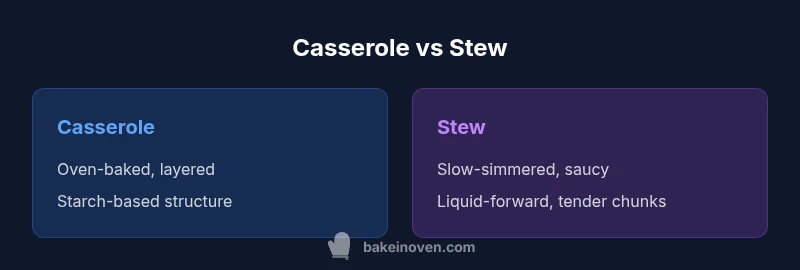
The difference between a casserole and a stew is primarily about cooking method, vessel, and texture. Casseroles bake in the oven, often in a single dish, creating a cohesive interior with a browned top. Stews simmer on the stove, producing a saucier broth with tender chunks. Understanding these distinctions helps you choose the right technique for your ingredients and schedule.
Understanding the difference between a casserole and a stew
The difference between a casserole and a stew is about more than ingredients—it hinges on cooking method, the vessel used, and the resulting texture. In practical terms, casseroles bake in the oven, often in a single broad dish, which promotes browning, crust formation, and a cohesive interior where flavors meld. Stews, on the other hand, are simmered on the stove (or in a slow cooker), producing a saucy broth and tender chunks that almost melt into the liquid. This fundamental divide guides everything from ingredient choices to timing and equipment.
Whether you’re shopping for pantry staples or planning a week of meals, recognizing the core dichotomy between casserole and stew helps you forecast moisture levels, cooking times, and serving style. Bake In Oven notes that casseroles tend to rely on starches—pasta, rice, or potatoes—as integral structure, while stews lean on meat or sturdy vegetables held in a simmering liquid. The difference between a casserole and a stew also influences how you thicken the sauce: casseroles often depend on starches and baking reduction, whereas stews may use a roux, slurry, or reduction during simmering.
In this article, we dissect the two methods, weigh key variables like heat, time, and texture, and map out best-use scenarios so home bakers can choose the technique that fits their ingredients, equipment, and schedule. The goal is a practical, evidence-based guide rooted in kitchen-tested guidance from Bake In Oven.
How the cooking vessel shapes the dish
The vessel you choose largely determines the final character of a casserole versus a stew. Casseroles are designed for oven-based cooking in a wide, shallow or deep casserole dish, sometimes with a lid, sometimes not. The vessel encourages even heat distribution and surface browning, especially if the dish includes a dairy or cheese topping, breadcrumbs, or a starch layer that benefits from dry heat. In contrast, stews rely on a heavy pot, Dutch oven, or deep skillet that can hold a generous amount of liquid and withstand long simmering. The closeness of the lid helps trap moisture and gelatin, producing a lush, sauce-heavy finish rather than a crusted top.
The Bake In Oven approach emphasizes that vessel selection isn’t just about convenience; it shapes texture, moisture, and flavor integration. For casseroles, the dish itself often becomes the vehicle of flavor, with ingredients stacked in layers or mixed to form a unified bake. For stews, the pot acts as a heat sink that maintains steady simmer, allowing collagen to dissolve slowly and aromas to intensify through prolonged contact with the liquid. Understanding vessel practicality helps home cooks choose the right pot or pan before they start cooking.
Moisture, heat, and texture dynamics
Moisture management is a central differentiator between casserole and stew. In a casserole, moisture is typically built into the ingredients and the baking process, with a finite amount of liquid that reduces as the dish bakes and the starches gelatinize. The result is a cohesive, sometimes creamy, mass with a browned top that adds texture. In a stew, moisture remains fluid throughout cooking; you expect a generous amount of liquid that thickens only slightly, either by natural reduction or by a deliberate thickening agent. The heat profile also differs: oven heat is dry and penetrates from the sides, encouraging surface browning, while stovetop simmering uses moist heat that sustains gentle, even cooking and flavor extraction.
Texture outcomes reflect these moisture and heat dynamics. Casseroles often deliver uniformly tender ingredients with a soft, compact interior and a possible crust or crust-like topping. Stews emphasize succulent chunks, often with distinct pieces of meat or vegetables surrounded by a rich, flavorful liquid. The adaptation of thickeners—starch-based, flour-based, or cornstarch slurry—depends on the desired final mouthfeel. Bake In Oven notes that small adjustments to liquid ratios, starch content, and cooking duration can move a dish from casserole-like to stew-like in practice.
Across kitchens, the difference between a casserole and a stew informs equipment choices and timing.
Ingredient architectures: starches, proteins, and vegetables
Ingredient structure plays a critical role in distinguishing casseroles from stews. Casseroles commonly build around a starch backbone—pasta, rice, or cubed potatoes—that forms the structural matrix of the finished dish. Protein choices can vary, from chicken and turkey to beef or tuna, but the starch often remains essential for binding and bulk. Vegetables are typically cut into bite-sized pieces that cook through within the bake and blend with the starch to create a unified texture. Dairy components—cream, cheese, sour cream—are frequent finishers that enrich body and promote browning.
Stews focus more on protein-rich bases and robust vegetables suspended in liquid. Beef, lamb, pork, or poultry can take center stage, supported by root vegetables, mushrooms, and aromatics. Liquids come from stock, wine, or tomato-based broths, and thickening is usually achieved through reduction, natural collagen release, or modest roux/paste additions. The dynamic between starch and liquid is less pronounced in stews than in casseroles; however, some rustic stews incorporate grains or dumplings to create heartier textures. Understanding these architectures helps cooks select ingredients that play to the strengths of the intended method.
Time, timing, and meal planning considerations
Time management is a practical lens through which to view casserole versus stew. Casseroles are often favored for batch cooking and meal-prep sessions because they can be assembled in advance, refrigerated or frozen, then baked when needed. The oven-based cook time tends to run longer, often with a dedicated bake window that accommodates layering, browning, and rest periods. Stews, by contrast, are frequently praised for one-pot convenience and flexibility. A stew can often be started in a single pot and finished in under two hours, though some recipes crawl into longer simmer times to develop deep flavors. The advantage of stews is the simplicity of assembly, fewer steps, and minimal equipment, which makes them ideal for weeknight meals or slow-cooker schedules.
From a planning perspective, consider the audience, portion size, and storage needs. Casseroles typically yield more servings per batch and reheat well, especially when composed of starch and cheese structures. Stews tend to reheat beautifully as separate components, with liquid content persisting and enhancing subsequent meals. Bake In Oven’s guidance emphasizes aligning cooking times with your calendar, ensuring you have the right equipment ready, and choosing a method that minimizes last-minute prep.
Regional captures: common dishes and flavor profiles
Both casseroles and stews reflect regional traditions, but their flavor profiles and signature ingredients diverge. American classics such as the green bean casserole showcase a creamy, baked texture, with a topping that becomes crisp under oven heat. In contrast, hearty stews like beef stew or Irish stew rely on browned meat and root vegetables simmered in a savory liquid, often enriched with wine, stock, or tomato. European comfort foods frequently blend looser stews with aromatics such as thyme, bay leaves, and pepper, while casseroles might feature dairy-forward finishes or cheese gratings that create a comforting, casserole-barrier layer. Seasoning strategies differ as well: casseroles often balance savory and creamy notes, while stews emphasize savory depth through slow-simmered bones, meat, or mushrooms.
These variations illustrate why a recipe categorized as a casserole might be responsive to a warm, baked environment, whereas a stew thrives on gradual extraction of flavors in moist heat. The regional approach also informs ingredient substitution and dietary accommodations; for instance, low-starch diets might influence the choice of starch base in a casserole, while gluten-free stews depend on natural thickening from reductions or gluten-free flours. Understanding regional captures helps cooks adapt recipes to pantry constraints and personal taste preferences.
Practical kitchen tips: converting and troubleshooting
If you need to convert a casserole recipe into a stew, or vice versa, the kitchen rules are simple: adjust moisture, modify thickening methods, and tailor cooking time. To switch a baked casserole into a stovetop stew, reduce the starch component or increase liquid until you reach a broth-like consistency, then simmer until flavors deepen and meat becomes tender. Conversely, to turn a stew into a casserole, thicken the liquid with a light roux or cornstarch slurry, add a starchy base (pasta or potatoes), and finish with a short bake to set the top texture. Practical tips include using a heavy pot or Dutch oven to maximize browning, selecting an oven-safe dish with the right depth, and monitoring temperature to prevent scorching.
Seasoning differences are notable too. Dried herbs and bold aromatics can overwhelm a long bake, so balance is essential in casseroles. For stews, generous amounts of garlic, pepper, thyme, and bay subtly intensify during long simmers. A final gloss of cream cheese, sour cream, or yogurt can unify a casserole’s texture without compromising its baked finish. Bake In Oven’s test kitchen suggests starting with a baseline of stock and starch, then adjusting as needed based on texture, moisture, and browning.
Common mistakes and how to avoid them
No two dishes are identical, but some missteps are universal when distinguishing casseroles from stews. Overloading a casserole with too much starch or dairy can lead to a heavy, pasty interior that never browns properly. Skipping browning steps in a casserole misses a key flavor contributor and results in pale, flat layers. In stews, under-seasoning, insufficient browning, or too-rapid simmering can yield bland or stringy textures. Another frequent error is using the wrong vessel size; a crowded pan traps steam rather than encouraging evaporation, and a shallow pan can bake unevenly. Finally, miscalculation of timing—leaving a casserole unattended for too long or cooking a stew at too high a heat—can produce tough meat or dry vegetables. Bake In Oven’s practical guidance highlights the importance of aligning technique with ingredients, test cooking, and adjusting moisture levels to achieve the desired texture.
Comparison
| Feature | Casserole | Stew |
|---|---|---|
| Cooking method | Oven-baked in dish | Slow-simmered on stovetop |
| Typical vessel | Casserole dish or baking pan | Heavy pot, Dutch oven, or wide pot |
| Moisture level | Less saucy, includes a finishing top browning | More liquid-based, sauce-heavy |
| Texture outcome | Cohesive, sometimes creamy with crisp top | Tender chunks in flavorful liquid |
| Common starch/base | Rice/pasta/potatoes + mix-ins | Meat/vegetables with broth |
| Typical cooking time | 60-90 minutes baking plus rest | 60-120 minutes simmering |
| Best use-case | Batch cooking, crowd-pleasing baked textures | Comfort meals, one-pot efficiency |
Benefits
- Excellent for batch cooking and meal prep
- Browning and texture development add depth
- Great compatibility with dairy-based finishes
- Reheats well and stores with structure
Negatives
- Longer overall time due to oven baking
- Less flexible during a busy weekday
- Requires an oven-safe dish and sometimes more cleanup
Casserole and stew fulfill different needs; pick casseroles for batch-worthy, baked textures and stews for quick, saucy meals.
Use casseroles when you want a cohesive, browned finish and the ability to prepare in advance. Choose stews for speed, flexibility, and rich, liquid-centered servings.
Frequently Asked Questions
What defines a casserole?
A casserole is a baked dish, typically assembled in a single oven-safe vessel and finished with browning on top. It often combines starch, protein, vegetables, and dairy. Textures are cohesive and can be creamy.
A casserole is baked in the oven, usually in one dish, with a topping that browns.
What defines a stew?
A stew is a meat-and-vegetable dish simmered in liquid on the stove, yielding a flavorful, saucy broth and tender chunks.
A stew is simmered on the stove to create a rich, saucy dish.
Can you turn a casserole into a stew?
Yes. Increase liquid, reduce starch, and simmer until the mixture reaches stew-like tenderness; adjust thickening as needed.
Yes—add liquid and simmer until saucy.
Can you bake a stew?
Some stews finish in the oven to develop flavor and soft textures; otherwise, simmer on the stove is standard.
A stew can bake for deep flavor, but it's usually simmered.
What equipment is essential?
An oven-safe casserole dish for casseroles and a heavy pot or Dutch oven for stews; both benefit from a lid.
You need a casserole dish and a heavy pot.
How do I thicken a stew or casserole?
Thickeners include reduction, roux, or a slurry; cereals and dairy can also help casseroles, while stews rely on natural reduction.
Use reduction, roux, or slurry to reach the right thickness.
Key Takeaways
- Plan for oven time when choosing casseroles.
- Base starch drives casserole structure.
- Stews rely on liquid and simmered tenderness.
- Vessel choice shapes texture and moisture.
- Adapt recipes by adjusting moisture and thickening.