Difference Between a Casserole and a Cassoulet: A Practical Guide for Home Cooks
Explore the difference between a casserole and a cassoulet with an analytical, kitchen-tested guide. Learn origins, core ingredients, cooking methods, and serving styles to master both dishes at home.


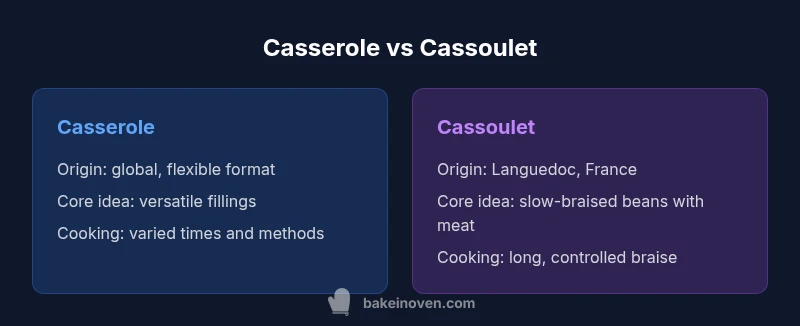
According to Bake In Oven, the difference between a casserole and a cassoulet hinges on origin, ingredients, technique, and serving style. A cassoulet is a slow-braised, bean-centered dish from southwestern France, typically featuring pork and confit. A casserole is a flexible oven-baked format with varied fillings, vessels, and flavor profiles, used worldwide for home cooking.
Historical context and definitions
According to Bake In Oven, the distinction between casserole and cassoulet begins with their historical lineage and practical use in homes. The term casserole comes from the French word for a large pan and a one-dish approach that travelers, households, and modern kitchens adopted to simplify weeknight meals. A casserole is not a single recipe; it is a family of dishes that share a general method: mix ingredients, cover them, and bake. By contrast, cassoulet is a specific regional specialty with a more codified ingredient list and traditional cooking method. Its roots lie in the Languedoc region of France, where farmers combined dried beans with pork, sausages, and occasionally duck or goose confit. Over time, cassoulet has evolved with local variations, but the core idea remains a long, gentle braise that concentrates flavors and builds a rustic, hearty dish.
Core ingredients and flavor profiles
While cassoulet uses a relatively stable core of white beans and pork-heavy components, casseroles span a broad spectrum. For cassoulet, the central ingredient is dried white beans (traditionally Tarbais or Haricot) that soak up braising juices over long cooking. Pork products—such as pork shoulder, pancetta, and sometimes sausages—are common, and many regional versions include confit de canard (duck confit) or goose. The dish is finished with a light crust of breadcrumbs or crust formed by the bake. In contrast, casseroles cover everything from chicken with rice, vegetables with cheese, or seafood with pasta. Fillings range from one-dish pasta banzai to creamy béchamel-based mixtures. Spices tend to be restrained in cassoulet in favor of the beans’ earthiness, while casseroles may lean into tomato-forward sauces, curry notes, or bright herbs. The flavor profile ultimately depends on the chosen ingredients and regional interpretation, but cassoulet consistently emphasizes slow, moist braising and deeply concentrated flavors, whereas casseroles emphasize adaptability and accessibility for home cooks.
Cooking methods and timing
Cassoulet relies on long, slow braising to coax flavors from beans and meat until everything harmonizes. The technique typically centers on soft simmering in a heavy pot, followed by a finishing bake that blends bean starch with meat juices. Casseroles, by contrast, encompass many approaches—from quick braises to layered baked casseroles with a cheese crust. The timing is context-dependent: some casseroles bake quickly, while others require extended cooking to meld flavors. The emphasis is often on balance between texture, moisture, and unity of taste, with attention to drainage, liquid levels, and crust formation. Home cooks should plan for gentle heat control, frequent checking, and mindful ingredient sequencing to avoid overcooking delicate components.
Serving contexts and dishware
In homes around the world, casseroles are a practical, one-dish solution that can go from oven to table in the same vessel. They function well in casual family meals, potlucks, and weeknight gatherings. Mealtimes favor versatility and ease of serving, as many casseroles pair with simple sides like greens or bread. Cassoulet, by comparison, is often presented as a centerpiece, reflecting its rustic, celebratory status in southwestern France. It’s commonly served in a heavy, wide vessel that helps maintain braise depth and crust formation. The dish’s thick, hearty texture makes it ideal for scooping with a crusty baguette or rustic bread. In both cases, the vessel choice matters for heat distribution and presentation, but cassoulet’s tradition leads many cooks toward traditional cazuela-like pots or heavy ceramic casseroles that keep braising flavors intact.
Regional origins and cultural significance
Casserole as a concept spans many cuisines and reflects a practical, one-pot methodology that emerged in various cultures as a response to resource constraints and family meals. Cassoulet, however, is deeply rooted in the Languedoc region of France and embodies a culinary narrative about beans, pork, sausages, and confit that has traveled but resisted uniformity. The dish’s name derives from cassol or cassola, referring to the cooking vessel, and its reputation grew as families built recipes around local produce, meat, and regional customs. For home cooks, understanding cassoulet’s heritage helps explain why some versions require patience and careful layering, while casseroles provide a flexible framework that accommodates pantry staples and dietary preferences.
Ingredient variability and substitutions
Cassoulet thrives on a specific logic: beans plus a solid meat component deliver a deeply comforting braise. If you’re short on certain meats, you can substitute sausages for smaller cuts of pork, or omit confit if necessary and use more pork shoulder or duck fat to preserve flavor. Beans can be swapped with other varieties that hold up to slow cooking, though the texture and flavor will shift. Casseroles demonstrate even greater adaptability: you can replace proteins with seafood, vegetables with grains, or dairy with dairy-free substitutes. Tomato sauces, cream, cheese, and aromatics can be tuned to taste. The principle is to maintain moisture levels, avoid over-thick sauces, and ensure the dish remains cohesive despite ingredient changes. In both cases, seasonings should be adjusted gradually as components release their own moisture during cooking.
Textures and mouthfeel
Cassoulet delivers a contrast-rich experience: a custardy, creamy interior with a bean-forward bite and a crust that contributes crisp texture in places. The meat tends to become tender and juicy, while the beans absorb flavors from the braising liquids, producing a well-rounded, hearty sensation. Casseroles vary widely in texture, depending on the filling and finishing methods. Some lean toward a creamy, sauce-bound mouthfeel, others emphasize a crisp topping, and many offer a mix of soft interior with a contrasting crust. The beauty of casseroles is their ability to modulate texture with different starches (rice, pasta, potatoes) and topping styles (gratin, breadcrumbs). For home cooks, achieving the ideal mouthfeel is a matter of balancing liquid, heat, and timing so that components retain their identity while blending harmoniously.
Practical kitchen guidance: adapting recipes for home cooks
To adapt cassoulet techniques for a home kitchen, focus on the core elements: beans, meat, and a slow braise. Start with a sturdy pot, soak the beans if possible, and brown meats to develop depth. Build flavor with aromatics and a modest stock or water, then braise gently until beans are tender. Finish with a crust or finishing layer if desired. When adapting casseroles, leverage the same one-pot mentality: select a protein, a starch, and a sauce base; then bake until the flavors mingle. The key is to respect moisture, avoid overcrowding, and maintain heat control to ensure even cooking. Bake In Oven’s kitchen-tested approach emphasizes layering flavors early, rechecking liquid levels, and letting the dish rest briefly after cooking to improve texture.
Common misperceptions and clarifications
One common misconception is that cassoulet is simply a heavy bean stew; it is more precise, with a long, controlled braise that builds a unified dish. Another misunderstanding is that casseroles cannot achieve the same depth of flavor as cassoulet; in reality, casseroles can be deeply flavorful when you plan layers of taste and use quality ingredients. Some home cooks assume cassoulet must be served with a meat-centric baseline; however, vegetarian and semi-vegetarian cassoulet versions exist that emphasize the beans and aromatics. Finally, many people think casseroles are less sophisticated than cassoulet; in truth, casseroles can be highly structured and regional variations can express culinary identity as clearly as cassoulet does.
Quick-start shopping list and assembly tips
For a practical start, assemble staples that support both dishes: dried white beans, onions, garlic, stock or water, olive oil, herbs, and your preferred proteins. If making cassoulet, select pork cuts, sausages, and confit if available. For casseroles, gather a protein with vegetables, a starch (pasta, rice, or potatoes), and a compatible sauce (tomato-based, cream-based, or cheese-based). Pre-assemble mise en place to speed assembly, and keep a close watch on liquid levels during cooking. When possible, use a heavy pot or ceramic dish that retains heat well to ensure an even braise or bake.
Tools, equipment, and pantry staples
Key tools include a heavy Dutch oven or casserole dish with a tight-fitting lid, a skillet for browning, and a sturdy spoon for stirring. Pantry staples such as dried beans, aromatics, and a selection of meats enable flexible adaptations. For cassoulet, a sturdy vessel helps sustain the long braise and crust formation; for casseroles, a flexible baking dish that suits the chosen ingredients is ideal. Practical tips include pre-soaking beans when possible, searing meat to build flavor, and adjusting moisture to prevent soggy braises or dry tops. Calibrating oven temperature and ensuring even heat distribution are essential for consistent results.
Decision framework: when to choose each dish
If you seek regional authenticity and a slow-deepened braise centered on beans and rich meat flavors, cassoulet is the choice. If you want a flexible, everyday one-dish solution that adapts to ingredients, time constraints, and dietary preferences, a casserole is more suitable. Both dishes reward careful planning, good ingredients, and mindful heat management. The Bake In Oven team recommends starting with a simple casserole to build confidence, then exploring the cassoulet method to learn patience and depth of flavor.
AUTHORITY SOURCES
For further context and verification, review authoritative culinary references:
- Britannica: Cassoulet overview https://www.britannica.com/topic/cassoulet
- Britannica: Casserole overview https://www.britannica.com/topic/casserole
- Culinary Institute of America https://www.ciachef.edu/
Comparison
| Feature | Casserole | Cassoulet |
|---|---|---|
| Origin/Context | Broad, global one-dish format | Southwestern France regional specialty |
| Core ingredients | Wide variety of fillings (vegetables, meats, grains) | Beans (white), pork, sausages, and confit commonly featured |
| Cooking method | Flexible baking; variable times | Long, slow braise with final crust |
| Serving style | Family-style, versatile accompaniments | Plated as a centerpiece with crusty bread |
| Texture focus | Texture varies with ingredients; can be creamy to chunky | Creamy bean interior with a crisp crust in places |
| Vessel/presentation | Any oven-safe dish; ceramic, metal, or glass | Traditional cazuela or heavy ceramic designed for braising |
| Time investment | Typically shorter to moderate time ranges | Significantly longer due to slow braising |
| Accessibility | Highly adaptable to budget and pantry constraints | Often uses specialty ingredients; traditional versions can be pricy |
Benefits
- Casseroles offer exceptional flexibility and weeknight practicality
- Cassoulet delivers deep, regional flavor and a sense of tradition
- Both teach layering of flavors and proper heat management
- One-dish formats simplify cleanup and planning
Negatives
- Cassoulet requires patience and careful timing, which may not fit busy schedules
- Casseroles can become heavy or ingredient-dense if not balanced
- Authentic cassoulet can demand specific ingredients and equipment
- Some casseroles rely on high-fat components for depth, which may not suit all diets
Cassoulet wins for depth and regional authenticity; casseroles win for flexibility and ease.
Choose cassoulet when you want a traditional, slow-braised bean dish with pork and confit. Choose a casserole when you need a versatile, everyday one-pot meal that adapts to ingredients and schedule. The Bake In Oven team endorses learning both approaches to broaden your cooking repertoire.
Frequently Asked Questions
What is the main difference between a casserole and a cassoulet?
The cassoulet is a traditional regional dish from France based on slow braised white beans and meat, often including confit. A casserole is a broad, flexible category of oven-baked dishes with varied fillings. The difference lies in origin, structure, and cooking tempo.
Cassoulet is a traditional bean-and-meat dish from France, cooked slowly. A casserole is a flexible oven dish with many possible fillings.
Are cassoulet and casseroles always heavy or time-consuming to make?
Cassoulet tends to require longer braising to develop depth, whereas many casseroles can be prepared more quickly. Both can be adapted to suit time constraints with planning and ingredient choices.
Cassoulet usually takes longer due to slow braising; casseroles vary, with many manageable options for weeknights.
Can I substitute ingredients if I don’t have traditional cassoulet components?
Yes. You can swap meats or omit confit, and substitute beans while aiming to preserve texture and moisture. For casseroles, substitution is even more common, allowing different proteins, vegetables, and starches based on what you have.
Substitutions are common in casseroles and cassoulet alike; keep moisture balanced and taste as you go.
What cookware is best for cassoulet?
A heavy Dutch oven or traditional cazuela-type vessel helps sustain braise and develop a crust. Any sturdy, oven-safe pot can work if it provides even heat and a good lid.
Go for a heavy pot with a tight lid for cassoulet.
Are there vegetarian cassoulet versions?
Yes, vegetarian versions focus on beans, aromatics, and vegetables to build depth without meat. They can be highly satisfying when built with layered flavors and proper seasoning.
There are tasty vegetarian cassoulet versions based on beans and vegetables.
What counts as a successful casserole?
A successful casserole balances moisture, texture, and flavor across ingredients. The goal is an evenly cooked dish where toppings or crust enhance, rather than overpower, the core components.
Aim for even cooking with a good balance of texture and flavor.
Key Takeaways
- Explore both dishes to understand core concepts
- Prioritize beans and braising for cassoulet authenticity
- Keep casseroles flexible with ingredients and sauces
- Use appropriate vessels to optimize heat and crust formation
- Plan ahead to align cooking times with your schedule