Casserole vs Quiche: The Difference for Home Bakers
Learn the difference between a casserole and a quiche, including crust, fillings, textures, and baking methods. Practical guidance for home bakers to choose the right dish for any occasion.


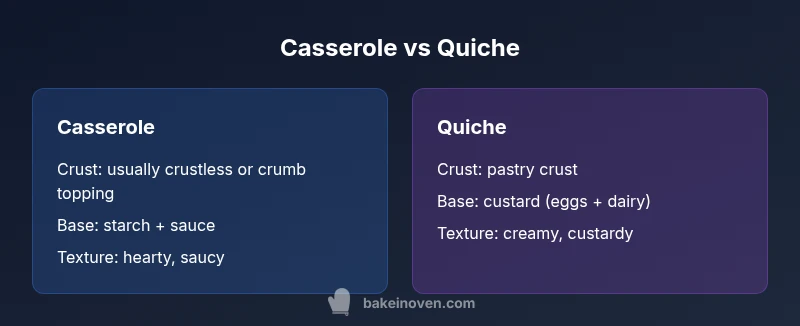
Understanding the difference between a casserole and a quiche helps home bakers plan meals with confidence. A casserole is usually crustless and built from mixed ingredients bound by sauce; a quiche uses a pastry crust and a custard filling. Recognizing crust, fillings, and texture differences makes it easy to choose the right dish for any occasion.
Defining the two dishes: casserole vs quiche
At its core, the difference between a casserole and a quiche stems from structure and intended texture. A casserole is a flexible, one-dish meal that combines starch, protein, vegetables, and often a binding sauce. It is typically baked in a wide, shallow dish and served in slices or scooped portions. The lack of a specialized crust makes casseroles forgiving: ingredients can vary widely, and seasonings can be adjusted after the bake. A quiche, on the other hand, is a more formal, pie-like construct. It uses a pastry crust (shortcrust pastry) and a custard made from eggs and dairy, set to a gentle, creamy texture. Quiche fillings lean toward balanced flavor with dairy and egg binding, rather than heavy sauces. The consequence is a dish that profiles a custard center with a crisp outer crust, often accompanied by subtle, refined flavors.
Structural differences: crust, filling, and binding
Crust presence is the most obvious structural difference. Quiche relies on a pastry crust that provides a firm shell and a contrasting crisp edge, while casseroles typically skip the crust entirely or rely on a crumb topping or a toasted edge for texture. The filling binders also diverge: quiche uses eggs and dairy to create a custard that sets into a smooth, cohesive slice; casseroles often depend on a sauce or cheese to bind a mixture of proteins, starches, and vegetables. This difference in binding affects moisture, sliceability, and mouthfeel. Finally, the cooking vessel itself reinforces these distinctions: quiche is often baked in a pie or tart pan, while casseroles bake in wide, shallow casserole dishes that maximize surface area and even heat distribution.
Ingredient patterns: proteins, starches, and dairy
Casseroles thrive on heterogeneity: meat, poultry, fish, or beans combine with starches like pasta, rice, or potatoes, plus vegetables and a binding agent such as cheese, cream, or a tomato-based sauce. The result is a hearty, full-bodied dish with a substantial bite. Quiches center on a custard foundation—eggs beaten with dairy or dairy-free substitutes, sometimes with cheese—and are complemented by a lighter range of fillings: sautéed vegetables, herbs, and modest meat portions. This pairing yields a milder, creamier texture and a more delicate balance of flavors. Understanding these ingredient patterns helps bakers plan menus that suit dietary needs and occasions.
Cooking methods and equipment
Quiche requires gentle heat to set the custard without curdling, typically in the 325–375°F (165–190°C) range, and is baked in a pie dish or quiche pan. Casseroles can tolerate higher heat and longer bake times, often 350–375°F (175–190°C) in a larger casserole dish, providing longer cook times to ensure all components cook through. Equipment choice influences outcomes: the fluted edges of a quiche pan can help with even heat distribution and edge crispness, while a deep casserole dish promotes thorough heat penetration and moisture retention. In practice, the crust, bake time, and heat exposure collectively shape texture and flavor in each dish.
Flavor profiles and texture expectations
Quiche presents a refined profile: a crisp pastry shell, a creamy custard interior, and a gentle cheese note that harmonizes with the fillings. The texture is smooth and cohesive, with a light, melt-in-the-mouth center. Casseroles offer more robust contrasts: a hearty, saucy bite with chunky ingredients and a more forgiving mouthfeel. Flavor may be intensified with bold seasonings, herbs, and toppings like crunchy breadcrumbs or grated cheese, which can add textural variety. The contrast in mouthfeel—silky custard versus hearty, low-sauce bites—defines the core experience of each dish.
Common recipes and serving occasions
Common quiche variations include Lorraine or spinach-and-feta quiche, often served as brunch or a light lunch with a simple salad. Casseroles span a wide spectrum from chicken noodle casseroles to vegetable or beef-and-potato variants, frequently appearing at family dinners, potlucks, and weeknight meals. Because casseroles typically require less precise technique than a custard-set quiche, they’re popular for busy cooks needing reliable, crowd-pleasing results. When planning menus, consider whether guests prefer a crusted, refined dish or a hearty, crustless staple that can feed many without fuss.
Substitutions, dietary adaptations, and troubleshooting
Crust substitutes for quiche include a crustless version or a nut-based crust for gluten-free needs. Dairy-free quiche can be made with alternative milks and a flaxseed or chickpea flour-based custard. For casseroles, you can adapt fillings to accommodate dietary restrictions by using gluten-free noodles, low-fat dairy, or plant-based proteins. Common pitfalls include overfilling the pan, under-seasoning, or failing to fully cook thick components. Use a sharp knife to test set, and consider tenting with foil if the top browns too quickly. These strategies help you adapt both dishes to a wide range of dietary needs without sacrificing flavor or texture.
Regional variations and historical context
Quiche has deep roots in Lorraine, France, evolving from a rustic tart into a refined custard-based pie enjoyed worldwide. Casseroles, as a category, reflect a broader American and modern culinary concept, emphasizing one-dish meals designed for convenience and large servings. While both formats serve as practical solutions for family meals, their origins and regional interpretations influence ingredients, seasoning profiles, and serving contexts. Understanding these historical context factors can help bakers appreciate the dish’s place in a repertoire of home-baked meals.
Quick-start guide for home bakers
To begin, decide whether you want a crusted, custard-based dish or a crustless, hearty bake. If aiming for a quiche, start with a basic shortcrust pastry, blind bake briefly, and prepare a custard with eggs and dairy. For a casserole, choose a starch base like pasta or potatoes, add protein and vegetables, and bind with cheese or cream. Pre-measure spices and herbs, prepare fillings ahead of time, and bake until set or bubbly. A simple test is to insert a knife near the center; if the custard is set or the sauce is steaming without a liquid pool, you’re ready to serve.
Comparison
| Feature | Casserole | Quiche |
|---|---|---|
| Crust presence | Usually crustless or with crumb topping | Pastry crust or shortcrust |
| Primary base | Starch + sauce + vegetables + protein | Egg-dairy custard with fillings |
| Texture outcome | Hearty, saucy, variable chunkiness | Creamy, custard-like with crisp crust |
| Serving vessel | Casserole dish or wide baking pan | Pie dish or quiche/tart pan |
| Best for | Casual meals, potlucks, family dinners | Brunches, lighter meals, elegant servings |
| Dietary considerations | Often gluten-free if crust omitted; gluten content varies | Typically gluten-containing crust; dairy and egg content are central |
Benefits
- Clarifies when to choose a crusted pie versus a crustless bake
- Helps plan menus with texture and binding in mind
- Aids shopping with base ingredients and common fillings
- Supports dietary adaptations through substitutions
- Improves confidence in grouping similar recipes
Negatives
- Can overemphasize taxonomy at the expense of culinary creativity
- Some recipes blur lines between casserole and quiche
- Requires familiarity with crust handling for quiche
Quiche earns points for refined texture and crusted presentation; casseroles shine in versatility and one-dish practicality
Choose quiche if you want a defined crust and creamy center; choose casserole for hearty, flexible, crustless meals that feed a crowd with fewer steps.
Frequently Asked Questions
What is the main difference between a casserole and a quiche?
The main difference lies in crust and binding. Quiche uses a pastry crust and a custard-bound filling, giving a creamy, sliceable texture. Casseroles are typically crustless or topped with crumbs and rely on sauces or cheese for binding, resulting in a hearty, varied texture.
Quiche has a crust and custard, while casseroles are crustless or crumb-topped with a sauce binding.
Can a quiche be made crustless?
Yes. A crustless quiche uses a custard filling baked directly in a pan, which saves time and reduces fat from pastry. The texture becomes creamier and the bake time may be shorter. You’ll miss the crisp edge of a crust, but the flavor remains rich.
Absolutely—try a crustless version to save time while keeping the custard richness.
Are casseroles always gluten-free?
Not inherently. Casseroles can include gluten-containing ingredients such as pasta, sauces, or bread crumbs. To keep gluten-free, swap in gluten-free starches and thickening agents and skip crumb toppings. Always check labels for hidden gluten.
Casseroles can be gluten-free with careful ingredient choices.
Which dish is better for brunch?
Brunch favors quiche for its elegant crust and custard, which presents well in slices and pairs nicely with salads or fruit. Casseroles can also fit brunch, especially when they feature lighter fillings and fewer heavy sauces.
Quiche works great for brunch because of its crust and custard, but casseroles can be a solid alternative too.
How can I convert a quiche recipe to a casserole?
You can convert by using a crustless approach and increasing filling variability with starch bases like pasta or rice. Eliminate the pastry shell and adjust the liquid binding to a sauce or cheese-based mixture. Bake until the center is set and the edges are golden.
To convert, skip the crust and adapt the custard into a saucy, hearty bake.
Are there regional variations that mix concepts of casserole and quiche?
Yes. Some regional dishes blend crusts and custards or use regional ingredients that blur the line between casseroles and quiches. The distinction often depends on whether a crust is used and how the binding is achieved.
There are regional twists, but crust and binding determine the classification.
Key Takeaways
- Identify crust presence to distinguish quiche from casserole
- Match texture expectations: custard vs hearty sauce
- Plan ingredients around dietary needs and crust options
- Use appropriate bakeware to optimize results
- Consider serving context: brunch vs casual dinner
- Experiment with substitutions to suit diets without losing structure