Bake vs Casserole: Key Differences for Home Cooks Today
A practical, analytical guide to the difference between bake and casserole, with definitions, ingredient patterns, techniques, and meal-planning tips for home bakers.


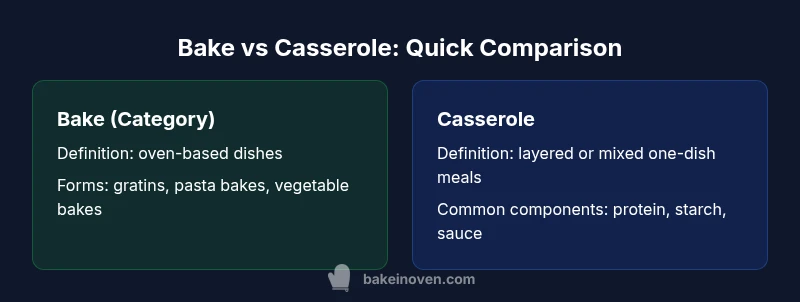
Bake is a broad oven-cooked category of dishes, ranging from vegetables to pasta bakes, while a casserole is a specific one-dish meal with multiple components (protein, starch, vegetables) bound by sauce and baked together. For home cooks, understanding this difference helps plan meals, timing, and portions more effectively.
What the terms mean: bake vs casserole
The difference between a bake and a casserole is easier to grasp when you separate the ideas of process from product. A bake refers to oven-roasted foods produced by applying dry heat to a dish, and it covers a wide range of outcomes—from simple vegetable bakes to multi-component pasta bakes. A casserole, by contrast, is a defined dish form: a one-dish meal that combines protein, starch, vegetables, and a binding sauce, then bakes to merge flavors and textures. In practical kitchen terms, bake is a method and a broad family of recipes; casserole is a specific recipe category within that family. According to Bake In Oven, recognizing this distinction helps home bakers forecast bake times, plan portions, and decide whether a recipe should be assembled as layers or mixed components before going into the oven. This nuanced understanding matters when you want consistent results, predictable leftovers, and a clear plan for meal prep.
Historical context and culinary usage
The terms bake and casserole emerged from everyday European and North American home cooking, evolving in response to available ingredients and cookware. Baking as a method has ancient roots, encompassing a wide range of food forms that emerge when dry heat envelops ingredients. Casseroles, however, became popular in the early to mid-20th century as a practical, one-dish strategy for feeding families with varied flavors and textures in a single bake. In modern kitchens, the lines blur: many “bakes” are de facto casseroles if they’re assembled as a complete meal in a single dish and served in portions. Bake In Oven’s analysis notes that the distinction is most useful for planning: it clarifies bake times, portion sizes, and whether a recipe should be assembled in layers or mixed before baking.
Typical ingredients and base components
A bake can feature a wide spectrum of ingredients—vegetables, grains, pasta, tubers, cheese, sauces, and proteins—depending on the dish. The base components depend on the goal: a vegetable bake emphasizes produce with light seasoning; a pasta bake highlights starch with a binding sauce. A casserole, by design, includes a protein, a starch or grain, vegetables, and a binding element (sauce, cream, cheese, or a roux). The result is typically a cohesive, one-dish meal designed to serve as a complete entree rather than a side or a standalone baked good. In both cases, balance in seasoning and moisture is crucial to avoid dryness or sogginess.
Common dish forms: casseroles and baked pastas
Casseroles come in many forms: tuna noodle casserole, chicken and rice casserole, and green bean or mushroom casseroles are classic examples. Bakes include baked ziti, potato or vegetable bakes, and gratins where a crispy crust forms on top. A baked pasta is commonly labeled as a bake when the emphasis is on the oven technique and the dish is intended as a single serving or family-size entree. The key distinction lies in structure: casseroles are assembled as a complete meal in one dish, while bakes are defined by their baking method and ingredient variety.
Texture, sauce, and starch roles
Texture is a central axis of differentiation. Bakes often prioritize a crusty top, a golden edge, or a crisp exterior, with textures that develop through baking directly on the surface or in a shallow dish. Sauces in bakes may be lighter or simply melted cheese, depending on the recipe. In casseroles, the sauce or binding medium is typically thicker and more cohesive, designed to mingle flavors across layers. The starch component (pasta, rice, potatoes) serves as the backbone of a casserole, helping to integrate proteins and vegetables into a unified dish. Understanding these roles helps you tailor recipes toward desired results, whether you want a crisp edge or a comforting, saucy center.
Cooking techniques and timing
Baking a broad range of dishes requires attention to oven temperature, moisture, and timing. Bakes often rely on steady, moderate heat to develop crusts or browns without over-drying interior components. Casseroles usually bake longer, especially when dense ingredients are involved, to ensure the center heats through evenly. When planning, keep in mind that stacking layers increases required bake time and that more moisture in the mix can extend cooking. The technique you choose—whether layering or mixing—affects not only texture but also how you portion servings and manage leftovers.
Equipment and bakeware differences
Bakeware selection influences how the dish browns and cooks through. Shallow, wide pans are common for bakes to promote even browning and moisture evaporation; deeper, casserole-style dishes support layering and even heat distribution for dense mixtures. Material choices (metal, glass, ceramic) impact heat conduction and timing; glass shows interior browning slower but helps monitor progress. For casseroles, a heavy, oven-safe casserole dish with a lid can help maintain moisture and prevent evaporation, while a shallow baking dish is ideal for bakes that benefit from a crisp top. Your choice in bakeware shapes expectations about texture and cook time.
Flavor and seasoning considerations
Flavor formation in bakes emphasizes surface interactions: browning, caramelization, and a crust that adds texture and depth. Seasonings should be balanced to survive longer bake times and to complement the dish’s moisture level. For casseroles, the emphasis is on integrated flavors across layers, ensuring that every bite contains a mix of protein, starch, and vegetables. When seasoning, you may choose stronger herbs or spices for bakes with leaner bases, or richer, creamier seasoning for casseroles where binding sauces mellow flavors. Understanding how moisture and heat interact helps you avoid bland outcomes or overpowering notes.
Nutritional and dietary considerations
Both bakes and casseroles can be crafted to meet dietary goals—whether you’re aiming for higher protein, more vegetables, or lower sodium. Because casseroles often rely on creamy sauces and canned ingredients, they can be higher in fat and sodium unless you adjust with lighter dairy or homemade sauces. Bakes offer more flexibility to highlight vegetables, whole grains, or lean proteins with controlled sauces. In planning meals, consider portion size, added fats, and sodium content to align with dietary objectives while preserving flavor. Bake In Oven’s approach emphasizes practical substitutions that maintain texture and taste without sacrificing nutrition.
Regional variations and naming differences
Around the world, terms for baked dishes vary. In some regions, what Americans call a casserole may be described as a ‘one-dish bake’ or simply a baked entrée, while other places reserve ‘casserole’ for layered, dish-based meals with culturally specific components. Regional differences influence preferred ingredients, sauces, and serving styles. Recognizing these variations helps home cooks adapt recipes to local ingredients, equipment, and taste preferences, while still appreciating the underlying distinction between a bake (method/category) and a casserole (one-dish meal).
How to plan meals with these dishes
When planning a weekly menu, distinguishing between bakes and casseroles assists with shopping efficiency and oven scheduling. If you want variety and a crisp or browned top, you might lean toward bakes and baked pastas. If you need a reliable, crowd-pleasing main dish that travels well and holds leftovers without losing texture, casseroles are often the better option. Consider leftovers, meals per cook, and your family’s preference for layered textures. With a clear plan, you can rotate between bakes and casseroles to minimize waste and maximize flavor.
Recipe templates: how to craft a bake vs a casserole
A simple bake template focuses on a primary base ingredient (vegetables, potato, or pasta), a light binding or sauce, and a finishing topping (cheese, breadcrumbs). A casserole template centers on three layers: protein plus starch, vegetables or filler, and a binding sauce or cheese. For variety, you can interchange components while preserving the core template. Start with a base recipe and adapt it into a bake by increasing top-crust or browning elements, or into a casserole by adding a cohesive, semester-long sauce that binds layers. Practicing with these templates helps you build confidence in both formats.
Common mistakes and how to fix
Mistakes in bakes and casseroles often come from moisture imbalance, uneven heating, or overcooking. If the top browns too quickly, cover with foil or lower the oven temperature slightly. If the center remains undercooked, extend bake time or cut larger pieces to ensure even heat penetration. Overly thick sauces can become stubborn; balance moisture content with steady reductions or supplemental liquids. If you notice soggy bottoms, try a higher oven rack or a lighter sauce. Finally, taste is essential—adjust salt, acidity, and umami to achieve a harmonious final dish.
Quick-reference comparison criteria checklist
- Determine whether your goal is a technique (bake) or a complete one-dish meal (casserole).
- Choose base ingredients with moisture balance appropriate to the dish type.
- Pick cookware that supports your desired texture: shallow pans for browning, deep dishes for layering.
- Plan bake time with attention to center doneness and top browning.
- Consider leftovers and portioning when deciding between bake vs casserole.
Comparison
| Feature | Bake (category of oven-baked dishes) | Casserole (one-dish baked meal) |
|---|---|---|
| Typical purpose | Versatile category for many dishes | Structured, complete meal in a single dish |
| Base ingredients | Varies widely (vegetables, grains, proteins) | Protein + starch + binder in one dish |
| Sauce and binding | Can be dry or saucy; consistency varies | Usually cohesive sauce or binding agent (cream, cheese, soups) |
| Common cookware | Any bakeware or oven dish | Deep casserole dish or baking dish |
| Typical bake time | Depends on dish; often shorter or similar to casseroles | Often longer due to layered ingredients and sauce |
| Meal planning | Great for variety, sides, desserts; flexible | Better for weeknight meals; pre-planned servings |
| Flavor and texture | Seasoning highlights vary by dish | Textural contrast with toppings and binding |
Benefits
- Easy to customize with seasonal ingredients
- Excellent for meal-prep and batch cooking
- One-dish dinners reduce cleanup
- Comfort-food appeal
- Adaptable to dietary needs with pantry swaps
Negatives
- Potential for uneven texture if layers aren’t balanced
- Some recipes rely on canned soups or high-sodium sauces
- Longer bake times can affect weeknight planning
Casseroles bring reliable one-dish meals; bakes offer variety and texture.
For busy weeknights, casseroles simplify planning and serving. If you crave variety or a crisp top, opt for a bake. Use this guide to decide which format suits your goals, ingredients, and time.
Frequently Asked Questions
What is the key difference between a bake and a casserole?
The key difference is that a bake describes the oven-cooked category of dishes, while a casserole is a specific one-dish meal with layers or mixed ingredients bound by sauce. A bake focuses on technique and form, whereas a casserole focuses on meal structure and convenience.
A bake is a cooking method and category; a casserole is a complete one-dish meal.
Is a pasta bake a bake or casserole?
A pasta bake is typically treated as a bake, since it centers on the baking method and a cohesive dish. Some cooks call it a casserole when emphasizing layers and a single-serving meal, so the naming can vary by tradition and recipe style.
Pasta bakes are usually bakes, but can be called casseroles depending on emphasis.
Can I turn a casserole into a bake?
Yes. To convert, focus on oven-baking the components with minimal layering and rely on a thinner binding or a simpler sauce so the dish bakes through uniformly. The goal is to retain the flavors while emphasizing the baking technique.
You can convert by adjusting layering and moisture.
What cookware is best for casseroles vs bakes?
For casseroles, use a deep casserole dish or oven-safe ceramic that can evenly distribute heat for layered ingredients. For bakes, a shallow, wide pan helps crisp edges and promote browning. Material choice affects browning and heat retention.
Deep dishes for casseroles, shallow pans for bakes.
Do casseroles require canned soup?
Canned soups are common in traditional casseroles for quick binding, but they’re not required. You can make a homemade sauce or reduce dairy to achieve a similar cohesive result while controlling sodium and fat.
Canned soup is common but not mandatory.
Can you freeze baked casseroles or bakes?
Both can be frozen, though texture and moisture may shift after thawing. Freeze before baking for best results or freeze fully baked dishes if their ingredients handle freezing well; always reheat thoroughly.
Yes, both freeze well with some texture changes.
Key Takeaways
- Choose based on meal planning needs, not just ingredients.
- Bakes emphasize top textures and variety; casseroles emphasize cohesion.
- Use appropriate bakeware to influence texture and cooking time.
- Balance moisture to avoid soggy or dry outcomes.
- Experiment with templates to build confidence in both formats.