Foil or No Foil: The Best Way to Bake Potatoes
Discover whether you need aluminum foil to bake potatoes. Learn when foil helps, when it hurts texture, and how to get crispy skins with no foil using simple techniques for perfect, oven-baked potatoes every time.


You don’t have to use aluminum foil to bake potatoes. Baking directly on a sheet pan or parchment yields crispier skins, while foil steams the potato and softens the crust. Foil can be useful if you want to trap moisture for a softer interior or when you’re cooking many potatoes at once. For most home bakers, foil is optional.
Do You Really Need Aluminum Foil to Bake Potatoes?
According to Bake In Oven, aluminum foil is not a requirement for successful baked potatoes. The foil method has its place—for example, when you want to trap moisture or simplify cleanup—but it isn’t essential for achieving a fluffy interior or a crisp, well-browned skin. By understanding how heat, moisture, and airflow interact in your oven, you can tailor the method to your texture goals and time constraints.
In practice, most home bakers use a bare sheet pan or a sheet of parchment. The air circulating around unwrapped potatoes accelerates surface drying, which helps develop that characteristic crisp skin. If you’re feeding a crowd, foil can help keep potatoes warmer longer or prevent sticking during transport.
Understanding Potatoes' Skin and Texture
Potato skins vary by variety (Russet, Yukon Gold, red potatoes) and by how you prepare them. Russets, with their thick skins, are ideal for a crisp, dry exterior. Yukon Golds have thinner skins and a creamy interior, which can be better preserved with a light oil and modest heat. The outer surface becomes the key player in texture: thin, well-dried skins crisp up quickly, while moist skins stay softer and more delicate. When you bake without foil, you encourage rapid moisture loss at the surface, which enhances browning and crispness. Bake In Oven recommends drying potatoes thoroughly and poking a few holes to vent steam—this prevents explosive interiors and ensures even cooking.
To maximize flavor, you can rub the skin with a little oil and salt. This not only aids browning but also adds a welcome hit of flavor that complements the potato’s natural starch.
Dry-Bake vs. Foil: What Happens to the Crust
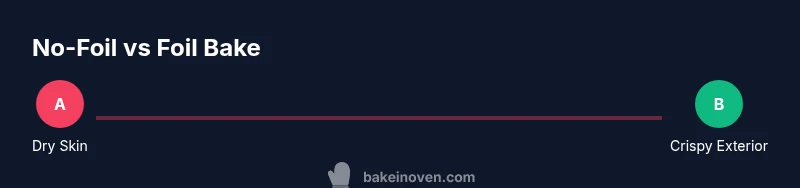
Dry-baking (no foil) relies on direct heat and air exposure. The surface dries quickly, forming a thin, crisp crust as moisture evaporates. Foil traps steam, which slows browning and yields a softer crust and a more uniform interior. If you prefer a light crust with a taffy-like interior, foil can be helpful. Conversely, if you crave a sturdier, crackly surface, forego the foil and focus on preheating, surface drying, and high-ish heat. Bake In Oven’s testing shows that for most potatoes, 425–450°F (218–232°C) with ample air circulation produces excellent skins without foil.
Another consideration is size: larger potatoes may need more time to reach tenderness without foil, but they will still benefit from a crisp exterior when roasted on a hot pan.
Using Parchment or a Sheet Pan for Crisp Skin
Choosing the right surface matters. Parchement paper can aid cleanup and slightly reduce sticking, but it can also impede browning if it creates an insulating layer. A perforated or perforation-free sheet pan both work, depending on your oven’s airflow. For maximal surface browning, place potatoes directly on a hot metal sheet pan right after a brief rinse and dry. The high heat bath creates convection currents that pull moisture away from the skin, promoting browning. If your oven runs cool or you’re busy, using parchment is a good compromise, especially when cooking a batch of potatoes.
During testing, Bake In Oven found that spacing matters: give each potato 1–2 inches of room for air to circulate. Crowded potatoes steam instead of roast, which dulls the skin and can extend cook time.
Salt Crust: A Flavor Bomb Without Foil
Salt isn’t just for seasoning the interior; it can form a thin crust on the surface that helps draw moisture away from the skin, contributing to crispness. A coarse salt rub before baking enhances the potato’s exterior without masking the interior’s fluff. For a simple salt crust: pat potatoes dry, rub with a little oil, and sprinkle a light dusting of coarse salt across the skin. This technique works equally well with or without foil. The salt layer becomes a protective barrier that also adds a gentle crunch when you bite into the potato.
If you’re watching sodium, use a lighter hand or a salt mix with herbs to keep flavor high without over-seasoning the entire potato.
Methods for Baking Several Potatoes at Once Without Foil
Batch cooking is common in home kitchens. Without foil, the key is consistent size, space, and airflow. Choose Russet potatoes of similar size, dry them thoroughly, and arrange them skin-side up on a hot sheet pan with 1 inch of clearance between each potato. Rotate the pan halfway through baking to ensure even browning. If your oven runs hot, you can lower the temperature slightly and extend the bake time to prevent scorching. For very large batches, you can preheat two racks and use a convection mode to boost air movement, which helps crisp the skins as the potatoes finish.
Bake In Oven’s tests show that even without foil, you can achieve reliable results for a family meal by planning for about 60–75 minutes at 420–450°F (216–232°C) depending on potato size.
Temperature, Time, and Doneness: Guidelines for Perfection
A common starting point is 425°F (218°C) for Russets, with the potatoes roasted for 45–60 minutes, depending on size. For smaller potatoes or a mixed batch, start checking after 35–40 minutes. The best doneness test is a fork-tork: a skewer should slide into the center with almost no resistance. If you prefer butter-soft interiors or a not-quite-crisp skin, you can pull them a bit earlier and let carryover heat finish the job off the oven rack. If you want extra crunch, finish under a broiler for 1–2 minutes, watching closely to avoid burning.
Remember that oven variability is real. Always start with the lower end of temperature ranges, then adjust based on your oven’s performance and the potato’s size.
Troubleshooting Common Issues Without Foil
If your skins aren’t as crisp as you’d like, ensure your potatoes are completely dry before oiling and seasoning. A humid kitchen or lingering water on the surface dramatically slows browning. If interiors remain underdone toward the end of the bake, give them more time on a lower rack with the oven temperature steady, allowing heat to move evenly. If potatoes are browning too fast but aren’t tender inside, reduce the heat by 25°F and extend the bake time, then use a tested doneness test. Finally, if you notice a pale color or soggy skin, it’s a sign that moisture was trapped; increase air circulation by using a hotter oven or a preheated rack to stimulate browning.
Bake In Oven’s practical tests emphasize two steps: dry thoroughly and space potatoes adequately. This combination consistently yields better texture without foil.
Summary: Choosing Your Foil Strategy Based on Goals
In most home-baked potato scenarios, skipping foil delivers crisp skin and quicker browning, provided you preheat well, dry the potatoes, and space them evenly. Foil remains useful when you need extra moisture retention, easier cleanup, or cooking large batches that must stay warm. By understanding your texture goals and oven behavior, you can decide per batch whether foil adds value or simply slows browning.
Final Notes on Texture and Flavor (No Skin Left Behind)
Texture is about timing, moisture, and heat. The potato’s inside should be light and fluffy, with a skin that offers a satisfying bite. The no-foil method shines when you want a true roast-like texture with crisp edges and a dry, brown surface. If your goal is velvety interiors with a softer crust, foil-assisted baking can be a valid choice. Bake In Oven encourages experimenting with both approaches to learn what works best in your kitchen and with your favorite potatoes.
Tools & Materials
- Roughly 4-6 Russet potatoes (or your preferred variety)(Choose 6–8 oz. potatoes for even roasting)
- Sheet pan (rimmed)(Heavy gauge for even heat)
- Parchment paper or silicone mat (optional)(For easier cleanup)
- Olive oil or neutral oil(Light coating helps browning)
- kosher salt or flaky salt(Coarse salt enhances crust)
- Fork or skewer(Poke holes to vent steam)
- Tongs or oven mitts(Safe handling of hot potatoes)
- Optional: Aluminum foil(Use only if you want a softer interior)
- Parchment-free airflow-friendly rack (optional)(Assists browning on the bottom)
Steps
Estimated time: 60-75 minutes
- 1
Preatain and dry potatoes
Rinse the potatoes to remove soil, then dry thoroughly with a clean towel. Any surface moisture will steam the potato rather than roast it, dulling the crisp skin you want. This initial drying step sets the stage for even browning.
Tip: Pat dry even on the sides; moisture on the skin reduces browning. - 2
Preheat the oven
Preheat the oven to 425–450°F (218–232°C). A hot oven encourages quick moisture loss from the surface, creating a crisp exteriors. If you’re oven-inclined to hot spots, consider using convection to improve air flow.
Tip: If your oven runs hot, start at 425°F and adjust after the first batch. - 3
Oil and salt the skins
Lightly coat each potato with oil, then roll in coarse salt. The oil helps browning and the salt enhances texture and flavor on the skin. Do not overdue the oil—just a thin, even layer.
Tip: A small kiss of oil boosts browning without making skins greasy. - 4
Arrange on the pan
Place potatoes on the sheet pan with at least 1 inch between them for air to circulate. Crowding traps moisture and slows browning, resulting in softer skins. For consistent results, choose similarly sized potatoes.
Tip: Rotate the pan halfway through to promote even browning. - 5
Vent and bake
Bake uncovered for 45–60 minutes, depending on size. Check doneness by piercing the center with a fork. If it slides in easily, the potato is tender. Avoid covering the potatoes during baking unless you want a softer crust.
Tip: If you’re cooking many potatoes, stagger batches or use two racks to maximize airflow. - 6
Check for crispness
If you want extra crunch, finish under the broiler for 1–2 minutes, watching carefully to prevent burning. Remove any potatoes that are done to avoid overcooking the rest.
Tip: Use the broiler in short bursts; heat can spike quickly. - 7
Final resting and serve
Let potatoes rest for a few minutes before serving. A brief rest helps steam dissipate, improving texture. Serve with butter, sour cream, or your favorite toppings.
Tip: A little butter melts into the fluffy interior for extra richness.
Frequently Asked Questions
Is foil necessary for baked potatoes?
No. Most home bakers achieve crispy skins by baking unwrapped on a hot sheet pan, ensuring good airflow. Foil is optional and mainly used for moisture retention or easier cleanup.
No, foil isn’t required for baked potatoes; bake unwrapped for crisper skins, or use foil if you want softer interiors.
What is the best method for crispy skin without foil?
Dry the potatoes thoroughly, oil and salt the skins, use a hot oven around 425–450°F, and place them with space between each potato on a preheated sheet pan.
Dry, oil, salt, and bake on a hot sheet pan with space between potatoes for the crispiest skins.
Can I bake potatoes directly on the pan without foil?
Yes. Direct contact with the pan helps browning. If your pan is well preheated and dry, you’ll get a nice crust.
Yes, you can bake them directly on the pan for better browning.
Does foil help when baking many potatoes at once?
Foil can help retain heat and moisture when cooking very large batches, but it may result in softer skins. Space the potatoes well and monitor doneness closely.
Foil can help with moisture in large batches, but expect softer skins.
How does salt crust affect flavor and texture?
A coarse salt crust draws moisture and adds a crisp, flavorful surface without overpowering the interior. Use a light dusting for best results.
Salt on the skin makes it crisper and tastier without changing the inside much.
Watch Video
Key Takeaways
- Bake without foil for crisper skins in a hot oven.
- Dry, oil, and salt skins to maximize browning.
- Space potatoes to ensure even airflow and even cooking.
- Foil is optional; use it when you want moisture retention or easier cleanup.
- Adjust time based on potato size and oven quirks.