Foil or No Foil: The Guide to Perfect Baked Potatoes
Explore whether foil-wrapping improves texture, moisture, and cook time for baked potatoes. Compare foil-wrapped vs unwrapped methods and follow a practical, step-by-step guide to achieve tender interiors or crispy skins.


Learn how to bake potatoes to the perfect texture by choosing foil-wrapped or unwrapped methods. You'll discover how foil changes tenderness, how to prep for even cooking, and the best approach for crispy skins. By the end, you'll know which method fits your meal, whether it's weeknight comfort or meal-prep.
Should Baked Potatoes Be Wrapped in Foil? Deciding Factors
The question of foil-wrapping boils down to texture, moisture, and timing. The foil method traps steam, which can soften the potato skin and produce a tender interior, making it a good choice when you want a fully creamy bite. Unwrapped potatoes, by contrast, receive direct heat that helps skins dry and crisp as they bake. According to Bake In Oven, the choice should be guided by desired texture and sauce pairing. If you're prepping a batch for weeknight dinners, foil-wrapped potatoes can stay moist longer, while an open bake is ideal when you crave a crisp, bronzed skin. In this guide we’ll explain when each approach shines, and how to tailor the technique to your oven and potato type. You’ll learn how variables like potato variety, oven temperature, and resting time influence results, so you can consistently bake potatoes that fit your dish. The discussion also considers the pros and cons of pre-baking, par-steaming, and finishing with toppings, so you can select a method that aligns with your meal plan and kitchen equipment. For home bakers, this is about control: texture, browning, and timing—all within your reach with careful prep and clear steps.
Foil-wrapped vs unwrapped: Pros and Cons
Foil-wrapped potatoes pros:
- Tender interior due to trapped steam and consistent heat distribution.
- Gentle on the interior moisture level, helping with even cooking for large potatoes. Unwrapped potatoes pros:
- Skins crisp, bronzed, and chewy in the best way.
- Direct heat reduces steam buildup, shortening the window for overcooking the center.
Bake In Oven analysis shows two common approaches: foil-wrapped and unwrapped. Each method serves different goals. If you want a soft, almost mashed texture inside, foil can be your friend; if you want a crisp, bakery-style skin, go open. The key is to align method with plate presentation, toppings, and timing. When you understand your oven’s heat behavior and your potato size, you can switch between methods with confidence. The rest of this guide compares the methods directly and helps you choose the best approach for your dish.
The role of potato variety and oven heat in results
Potato variety matters as much as the method you choose. Russet potatoes, with their high starch and fluffy interiors, respond well to open-bake methods that emphasize crisp skins. Red-skinned and Yukon Gold potatoes hold moisture better and can become satisfying when roasted with a modest amount of steam, whether wrapped or not. The oven’s heat also plays a central role. A hotter oven promotes browning and faster surface drying, while a gentler heat yields more uniform center tenderness. Preheating ensures the entire potato starts cooking at the same time, reducing the chance of undercooked cores. For best results, test one potato from the batch for tenderness as a quick reliability check. Bake times will vary with potato size, oven accuracy, and rack position. By understanding these variables, you can tune texture to your preference, whether you want a crumbly interior or a creamier bite.
Prep steps and planning for foil vs non-foil
Begin with choosing potatoes of similar size for even cooking. Rinse and scrub to remove dirt, then dry thoroughly. If you plan to season heavily, consider a light coating of oil to promote browning. Decide on foil or open baking: foil-wrapped requires preparing foil sheets large enough to fully encase each potato with a bit of room for steam. For open-bake, place the potatoes directly on a baking sheet or on a rack to encourage air circulation. Preheat the oven to a high enough temperature so that heat reaches the interior efficiently. Prick the skins with a fork to vent steam while preventing bursting. When using foil, ensure the seams are sealed but not crushed; for open-bake, place a rack to elevate potatoes off the sheet for even browning.
Finishing touches: texture goals and toppings
After baking, rest the potatoes for a few minutes to allow steam to rebalance. The interior should yield to gentle pressure; the skin should be crisp or soft depending on the method. A light brushing of melted butter or olive oil adds flavor and sheen, while a pinch of flaky salt or cracked pepper highlights the exterior. If you’re serving with toppings, keep them in mind during the bake so flavors stay cohesive. You can finish open-baked potatoes under a brief broil for extra browning, but watch closely to avoid scorching. Think about what you’ll serve with the potatoes—roasted garlic, sour cream, chives, bacon bits, or a dollop of yogurt—and tailor your finish to complement the dish.
Troubleshooting common issues
Potatoes come out undercooked in the center? Increase bake time in smaller increments and check with a fork. Skin too soft? Switch to the open-bake method next time or increase oven temperature toward the end for better browning. If the potatoes are browning too quickly on the outside, reduce the heat slightly or move the rack to a higher position. If you notice dryness, consider a light drizzle of oil and a re-check on moisture distribution inside the flesh. Finally, ensure you’re using the best potato variety for your goal: fluffy interiors with russets for open-bake, moisture-retentive varieties for foil-wrapped results.
Quick-start cheat sheet: method decision for dinner
Keep this quick reference handy when planning meals. For crispy skins and quick weeknights, choose open bake with a hot oven and a rack. For creamy interiors and softer skins, choose foil-wrapped close to the end of cooking and remove foil near the finish if you want a bit of crispness. For meal-prep, you can cook a large batch, then reheat and finish with toppings. Adjust salt and oil based on whether you’ll add high-tolerance toppings; if you want a lighter finish, omit oil.
Tools & Materials
- Russet potatoes(4-6 medium potatoes per batch)
- Baking sheet( Rimmed sheet for catching drips and even heat contact)
- Aluminum foil(Optional if you plan to foil-wrap)
- Olive oil or melted butter(Light coating promotes browning)
- Salt(To taste, enhances surface flavor)
- Pepper(Optional, for finishing)
- Oven mitts(Heat protection for handling hot trays)
- Fork or knife(Pierce skins to vent steam and avoid bursting)
Steps
Estimated time: 60-75 minutes
- 1
Select and prep potatoes
Choose potatoes of similar size for even cooking. Rinse, scrub, and pat dry. Poke several holes with a fork to vent steam.
Tip: Dry skin well before oiling to maximize browning. - 2
Preheat and prepare the oven
Preheat to a hot, steady temperature. A hot oven helps develop crisp skin and even interior texture.
Tip: Use a baking sheet to catch drips and create even heat contact. - 3
Oil, salt, and season
Lightly coat potatoes with oil or melted butter, then sprinkle salt. This step promotes browning and flavor.
Tip: Evenly coat all sides for uniform texture. - 4
Wrap or skip foil
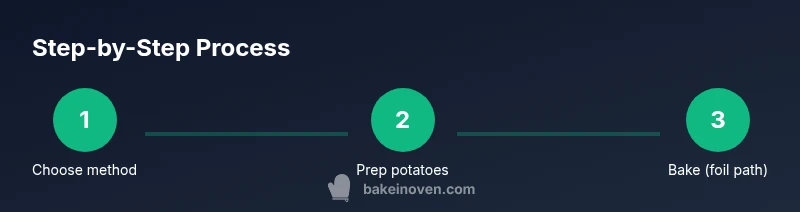
Decide on foil-wrapped or open baking. Foil traps moisture; open baking yields crisper skin.
Tip: If unsure, try one batch foil-wrapped and one batch open. - 5
Bake and test tenderness
Bake until the potato yields to gentle pressure and a fork slides in easily. Use a thermometer if available.
Tip: Check a representative potato from the middle of the sheet. - 6
Rest and serve
Let potatoes rest briefly before serving to redistribute steam. Fluff interior with a fork and finish with toppings.
Tip: Serve immediately for best texture.
Frequently Asked Questions
Should I wrap baked potatoes in foil?
Wrapping potatoes in foil softens the skin and steams the interior, while leaving them unwrapped yields crisper skin. Choose based on the texture you prefer.
Wrapping makes them soft and tender inside; unwrapped gives you crisper skins. Choose based on texture you want.
Do foil-wrapped potatoes cook faster?
Foil can trap moisture and heat, which may alter cooking time compared with unwrapped potatoes. Use tests like a fork to check tenderness rather than relying on time alone.
Foil can change how the inside cooks; test for tenderness rather than chasing a fixed time.
What oven temperature is best for baked potatoes?
A hot oven is recommended to promote browning and tender interiors. Use a temperature that you know your oven maintains well, and adjust based on batch size.
Use a hot oven you can trust to stay steady, and adjust for batch size.
How can I get crisp skin without foil?
Skip foil, pat dry, oil lightly, and bake on a rack or perforated sheet for air flow that promotes browning.
Skip the foil, dry well, oil, and bake on a rack for crisp skin.
Is it safe to eat foil-wrapped potatoes?
Foil-wrapped potatoes are safe to eat as long as the foil is food-grade and not scorched. Remove the foil before serving if you prefer crisper skins.
Yes, foil-wrapped potatoes are safe when foil is food-grade; remove foil for crisper skins if you like.
Watch Video
Key Takeaways
- Choose foil or not based on texture you want.
- Unwrapped skins get crisper browning.
- Dry potatoes well and preheat the oven for even cooking.
- Oil and salt improve flavor and browning.